


The President of the African Export-Import Bank (Afreximbank), Dr George Elombi, has called on African countries to prioritise industrialisation, manufacturing and local processing of raw materials to retain more economic value within the continent.
Elombi said Africa must move beyond exporting raw commodities and focus on producing higher-value goods and services to strengthen its economic position and competitiveness in global markets.
Speaking in an exclusive interview with ARISE News, on the sidelines of the Creative Africa Nexus (CANEX) 2026 in Lagos on Monday, Elombi said the continent must embrace value capture as a central part of its economic transformation.
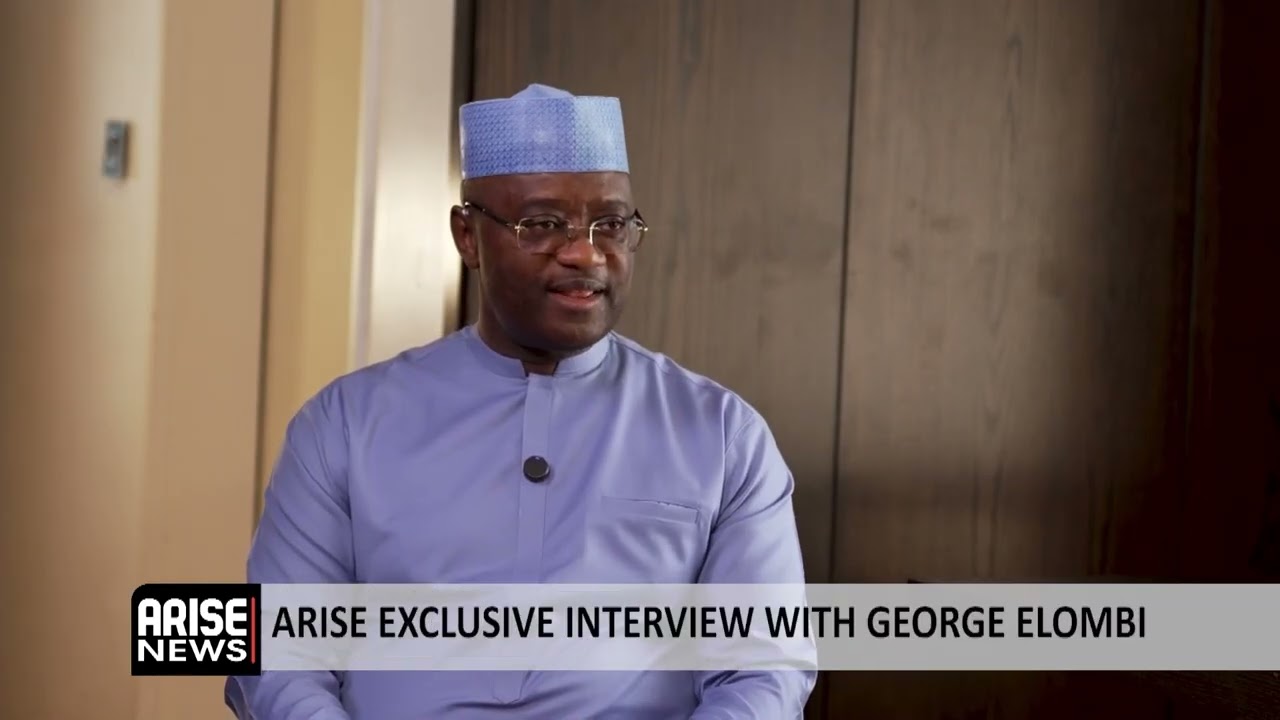
“It seems that unless we prioritize Africa’s development, we will have no place in the global sphere. So we take that head on. It is about what sometimes some call industrialization and some call processing and some call beneficiation and some call raw material processing.
“All of that put together is the ambition. It’s one thing. We would have to move from selling the raw commodities to exporting something which is of a certain value, has increased value.”
He stressed that the objective should not be limited to exporting processed products to international markets, but should also include strengthening trade within Africa.
“And that’s not for export to the rest of the world. Even for export to ourselves, we want to trade more.”
“That’s the ambition of the heads of states. That’s the ambition of the people in our continent.”
Elombi also identified energy infrastructure as critical to achieving Africa’s industrial ambitions, noting that manufacturing and processing require adequate energy supplies.
He cited Afreximbank’s involvement in energy infrastructure projects in Namibia and Djibouti, which are designed to facilitate the movement of petroleum products into other African countries.
The bank recently worked with the Dangote Group on plans for energy infrastructure storage facilities in Walvis Bay, Namibia, alongside pipelines to transport petroleum products into Zambia, Zimbabwe, South Africa and Angola.
A similar infrastructure project in Djibouti is expected to facilitate the transportation of petroleum products into Ethiopia.
“So we need that energy infrastructure in place to face the challenges of development.
“So we also do have other projects in other areas because of what we now see as a critical challenge for our continent. And that challenge is industrial growth. And for that industrial growth, much is needed in the energy sector as you seek to process,” he said.
The Afreximbank president further highlighted the importance of investing in Africa’s creative industries as part of efforts to retain more economic value locally.
He explained that the bank’s assessment of its investment portfolio revealed that young people were largely absent from traditional sectors such as infrastructure, manufacturing, energy and telecommunications.
According to him, this informed the bank’s decision to expand its investments into the creative sector to reach a wider segment of Africa’s population.
Elombi said Africa must learn from other economies by processing raw materials, developing services and strengthening its creative industries rather than allowing much of the economic value generated from its resources to be captured elsewhere.
“We can do other than what has been done elsewhere. And that’s where that question of value capture is important.
“Do what others have done. Take in materials. Process them into goods.
“Get services. Get the creatives. Then seek to capture most of that value at home.
“That has to be the direction,” he said.
Faridah Abdulkadiri
Follow us on:


