


Clinical Oncologist and Chief Executive Officer of Pearl Oncology Specialist Hospital, Dr. Omolola Salako, has warned that tobacco contains more than 3,000 chemicals capable of triggering cancer, while raising concern over the increasing number of young Nigerians developing cancers.
Speaking during an interview on ARISE NEWS on Sunday, Salako also said oncologists were seeing cancer among Nigerians aged between 18 and 39, describing the cancers in that age group as unpredictable and noting that many of those affected are too young for routine cancer screening.
“And for young cancers, that’s another thing we’re seeing in oncology, there are young people between the ages of 18 and 39 that are developing cancers and these cancers are unpredictable, too young to recommend cancer screening in the first place.”
Speaking on cancer prevention, detection and treatment, Salako said tobacco use remained a significant risk factor because of the large number of chemicals it contains. “Smoking contains tobacco. And in tobacco, there are more than 3,000 chemicals that are known to trigger cancer or start cancer.”
She said the risk extends beyond active smokers to people exposed to tobacco smoke, adding that tobacco also suppresses the immune system. “Whether you’re smoking it or you’re leaving or hanging around the person who’s smoking, all of that are risk factors, so the first thing I would say is when we speak cancer control, there’s several pillars. So the first pillar is cancer prevention.”
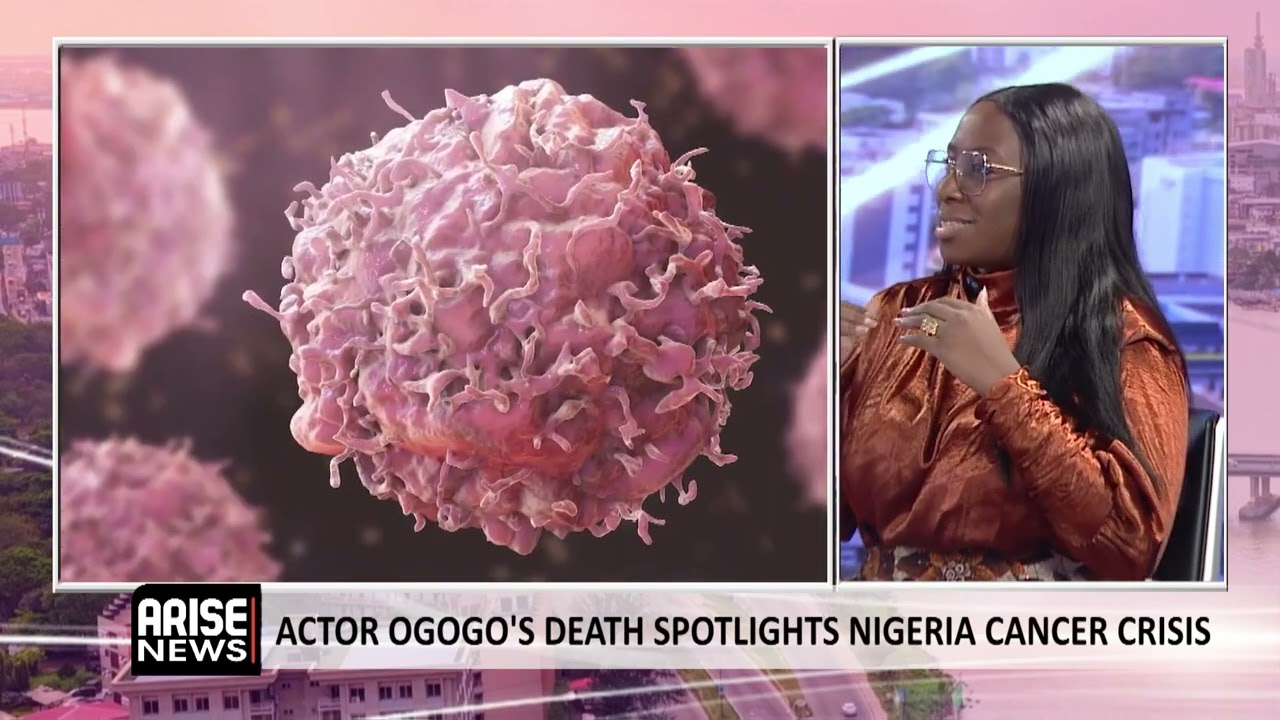
Salako urged Nigerians to make use of primary healthcare, secondary and tertiary facilities for preventive services, including vaccination against hepatitis B and human papillomavirus. “And 40% of cancers are preventable. So it’s important women and men are presented at the primary care health care levels to get screened, get vaccinated against hepatitis B virus, human papillomavirus.”
She said early detection was equally important because some cancers could not necessarily be prevented but could be identified and treated at an early stage. “On the second pillar is early detection. So, you know, 40% of cancers can be prevented, but some cancers can’t be prevented, but we can detect them early, like breast cancer, prostate cancer, part of the challenges we have with the available resources in the government, public sector and the private sector, we have underutilisation of the services. So I would like to pin more on public education.”
Salako emphasised that the high cost of cancer treatment also contributed to patients abandoning treatment, despite improvements in government-backed support programmes. “Where treatment is costing anywhere from 10 million to 15 to 60 million, in reality, many cancer patients are presenting to the hospital early, but they are dropping out of treatment.”
She explained that Nigeria had six major cancer treatment modalities. “There are about six treatment modalities, surgery, chemotherapy, radiotherapy, immunotherapy, target therapy and hormone therapy, we do have health insurance, but very few Nigerians are health insured. And then there’s a huge cap on cancer care.”
Salako urged Nigerians to undergo annual medical check-ups and seek specialist care when symptoms persisted. “As Nigerians, we should focus on our annual medical checkup. That would be the first thing for every age and every gender.”
She recommended age-specific screening and medical checks, including Pap smears for women from age 21. “From age 21, we want you to start getting a pap smear for women. We want you to do your clinical breast examination for men. From age 40, we want you to do the prostate-specific antigen test. From age 45, we want Nigerians to start doing their colonoscopies.”
Salako also advised people with persistent symptoms to seek a second opinion, particularly when initial treatment failed to resolve the problem. “The second thing is when a symptom persists, present to the hospital. If you are not satisfied with the resolution of the symptom, or the symptom continues, it comes, it goes, it’s persistent, then seek a second opinion.”
“The goal is to cure it. We can cure it when it’s, it’s potentially curable at stage one and stage two.”
She, however, stressed that some patients with stage-four cancer could still live long and healthy lives, depending on where the disease had spread and the patient’s overall condition.
“So it depends where the cancer spreads to.”
Salako said cancers that spread to vital organs such as the brain, liver and lungs could become life-threatening because they interfere with the functioning of those organs.
“When cancer spreads to other places like the brain, the liver, the lungs, those are essential organs that we can’t do without.”
She nevertheless said certain stage-four cancers could still be treated when patients remained fit enough to undergo treatment.
“So sometimes patients present with advanced disease and it’s not that there’s no treatment. It is that the organs are not optimal enough, are not working well enough to receive that type of heavy treatment within the body.”
The oncologist also identified family history as another important factor, particularly where several members of the same family had developed cancer, another challenge I must highlight are those with a strong family history of cancer.”
Salako advised people with a strong family history to consult specialists and undergo appropriate genetic tests to identify potential risks early. “When there’s a strong family history, you should see a specialist, you should do some genetic tests and there are some drugs and tests that can be done to detect the cancers when they are at stage zero, pre-cancers, when they are microscopic.”
“So, of course, kidney diseases leading to renal failure, requiring renal transplant is a big issue, uncontrolled hypertension, I would like to say micronutrient deficiency.”
She said colon cancer was particularly being seen among younger adults, who often presented late because cancer was not usually considered at their age. “And with the younger adults, they tend to present, you know, late because that’s the last thing on a 20-something years old mind, so with smoking, the causative agent is tobacco.”
Salako said products containing tobacco remained a concern, including electronic cigarettes, while warning that cannabis use should not automatically be considered a healthy option. “But it doesn’t mean it’s a healthy option, It’s the chronic, heavy alcohol consumption that stresses the liver, induces chronic inflammation and can cause other types of cancers.”
She also explained that prolonged exposure to harmful ultraviolet radiation could damage the skin, particularly among fair-skinned people and people with albinism who have lower levels of melanin. “And so with that less protection and being exposed to harsher UV radiation, there’s more skin damage that is seen as sunburns.”
According to Salako, chronic inflammation was a recurring pathway through which several risk factors could contribute to cancer.
“At the end of the day, almost everything leads to inflammation.”
Salako said repeated damage to the body’s cells could eventually create conditions in which cancer develops. “The problem with cancer is, it just takes one arrow in one cell and finds a way to hide. And that’s how cancer can develop.”
Erizia Rubyjeana
Follow us on:


