


Energy expert Dan Kunle has defended the pricing model adopted by Dangote Refinery, arguing that fluctuations in global crude oil prices, inventory costs and market realities make it impossible for petrol prices to fall immediately whenever international oil prices decline.
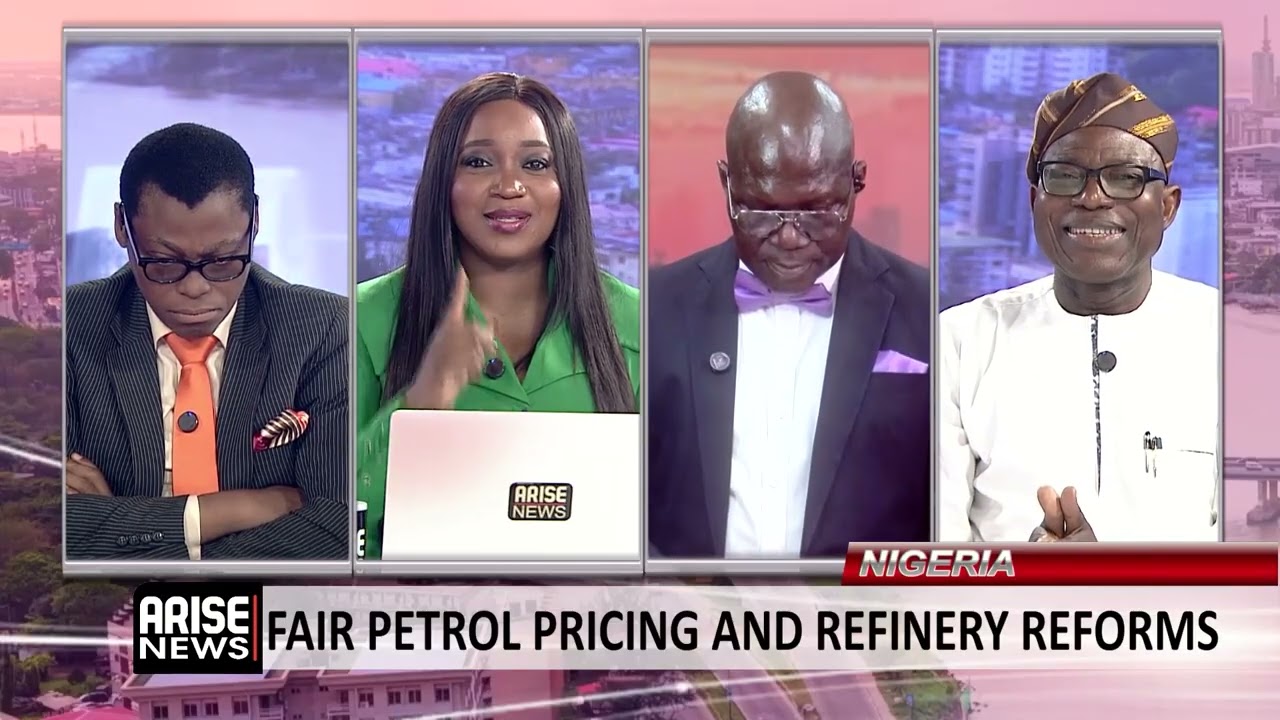
Speaking during an interview on ARISE NEWS on Friday, Kunle said public expectations that petrol prices should automatically reduce whenever crude oil prices fall fail to take into account the complexities of crude procurement, refining and supply chain economics.
He explained that crude cargoes processed by refineries are purchased and paid for several weeks or months before delivery, meaning refiners continue to bear the cost of earlier, more expensive purchases even after global prices begin to decline.
“I think we have a conversation that will continue to engage us as a country, largely because Nigeria is a poorly managed hydrocarbon-based economy. The crude cargoes delivered in May and June were ordered and paid for as far back as February and March. In international crude marketing, you cannot take delivery immediately. It takes about one to one-and-a-half months before the cargo arrives, meaning you have inventory on the high seas, inventory in storage and inventory feeding into the refinery.”
According to him, the cost of crude extends far beyond the purchase price.
“By the time you add freight, handling and every other associated cost before refining, the cost keeps increasing. Petrol is only one of several products refined from crude oil, and its price cannot remain the same every day. It may stay stable for one week or even two weeks, but pricing is determined by many variables.”
Kunle said Nigeria has little control over many of the factors that determine petrol prices because it does not fully control production, refining or the international supply chain.
“You cannot expect a country with limited productive capacity to dictate the prices of commodities it does not fully control. People keep asking for low prices, but what exactly is a low price? What is considered low in Nigeria is not necessarily low in Togo or Sierra Leone.”
He criticised what he described as oversimplified public commentary on petroleum pricing.
“In the commodity business, two plus two is not always four. Sometimes it is minus two, sometimes it is 22 and sometimes even 44 because of the many market dynamics involved.”
The energy expert noted that recent geopolitical developments have continued to influence global energy markets.
“Within the last 72 hours, the renewed hostilities between Ukraine and Russia have already created concerns over possible supply shortages from Russia, while the escalation between the United States and Iran has also signalled possible increases in crude oil prices.”
He said these uncertainties explain why refiners must exercise caution before reducing pump prices.
“In market economics, we have what is called the sticky downward paradox. It is easy for prices to rise when costs increase, but when costs begin to fall, prices come down much more gradually.”
Responding to claims that Dangote Refinery should be selling petrol below ₦900 per litre, Kunle argued that such assertions ignore the refinery’s actual cost structure.
“If anyone is fixing prices for Dangote Refinery, I do not know where they obtained the pricing template. Dangote does not refine one grade of crude alone. The refinery processes WTI, Bonny Light and even Algerian crude, all purchased at different prices.”
He added that several operational expenses significantly increase refining costs.
“When you add freight, handling charges, demurrage and delays at Nigerian export terminals, your marginal cost keeps rising every hour. The average cost to Dangote could be around ₦950 per litre before profit margins, financing costs and interest on loans are added. In some weeks or months, it simply cannot be less than ₦1,000.”
Kunle challenged critics to provide transparent pricing models comparable to those used by refiners.
“Let the Nigerian Midstream and Downstream Petroleum Regulatory Authority publish its own pricing template for imported petrol. Dangote has his own pricing model. We have not seen any pricing template from the regulator, so I do not know where some analysts derive theirs.”
Addressing public concerns over why fuel prices appear to increase faster than they decline, Kunle said refiners cannot ignore crude already purchased at higher prices.
“In management and cost accounting, once you order crude and pay for it, that cargo may not arrive until weeks later. You have already committed funds, paid insurance and freight. If crude prices fall today, you cannot immediately reduce the price of products refined from expensive cargoes purchased earlier.”
He explained that pricing decisions are continuously reviewed.
“Dangote’s team monitors international prices every hour. Any reduction will eventually be reflected, but it cannot happen as dramatically as many people expect because of the sticky downward paradox.”
Kunle also argued that Nigerians rarely scrutinise price increases in other essential commodities with the same intensity.
“People do not complain about medicines or food prices in the same way because those products have different pricing structures from crude oil and refined petroleum products.”
Turning to Nigeria’s refining sector, Kunle described the country’s government-owned refineries as technically non-functional and reiterated his call for their privatisation.
“The government refineries cannot even process crude today. They are technically dead. The only refinery currently refining crude at scale in Nigeria is Dangote Refinery, processing roughly 750,000 to 800,000 barrels per day.”
He said Nigeria’s inability to produce sufficient crude oil and maintain efficient refining capacity has undermined the country’s competitiveness.
“We lack technological advantages, efficient production systems and sufficient productive capacity. If Nigeria consistently produced about 2.5 million barrels of crude oil per day, there would be enough feedstock for domestic refineries.”
Kunle dismissed allegations that Dangote Refinery is operating as a monopoly.
“Dangote is currently meeting Nigeria’s domestic refining needs. People call it a monopoly, but I believe we should remove that word from our vocabulary because the government-owned refineries are simply not functioning.”
He also criticised plans by the Nigerian National Petroleum Company Limited to pursue another rehabilitation arrangement for the Warri Refinery with a Chinese firm.
“I have described the four government-owned refineries as deceased refineries that should be sold. President Bola Tinubu demonstrated courage by removing fuel subsidy, but he should also have directed that these refineries be privatised.”
Kunle argued that partnering with a private foreign company instead of engaging directly with the Chinese government could expose Nigeria to unnecessary legal disputes.
“If the Federal Government wants Chinese support, it should deal directly with the Chinese government rather than a private company that could later drag Nigeria into international arbitration. NNPCL should stop wasting the country’s time and resources pursuing projects that are unlikely to succeed.”
He maintained that only decisive reforms, increased crude oil production and improved operational efficiency would deliver a more competitive downstream petroleum sector and ultimately create conditions for sustainable reductions in fuel prices.
Boluwatife Enome
Follow us on:


