


Senate Majority, Leader Opeyemi Bamidele has warned that creating state police without guaranteeing its financial independence could expose the proposed security architecture to political interference, criminal infiltration and private interests, undermining its ability to protect lives and property.
Speaking during the ARISE NEWS Townhall on State Police, Bamidele said funding would determine whether state police succeeds or fails, stressing that inadequate financing could leave the institution vulnerable to manipulation by politicians, business interests and even criminal networks. “If the state police is not well funded it may as well be a highway to nowhere.”
Bamidele said the constitutional amendment being considered by the National Assembly was intended to give states the legal authority to establish police services by transferring policing from the Exclusive Legislative List to the Concurrent Legislative List, rather than compelling every state to immediately create its own police force. “It’s not every state that will immediately we finish amending this constitution go to town to say, ‘We’re launching our state police.’ Because all we are trying to achieve with this constitutional amendment is to move this duty from the exclusive legislative list to the concurrent legislative list.”
He acknowledged that concerns over abuse of state police were legitimate and rooted in Nigeria’s historical experience, saying such fears could not be ignored as lawmakers worked on the reforms. “The various concerns that have been expressed from different quarters are well founded concerns that we cannot sweep under the carpet or pretend that they are not real.”
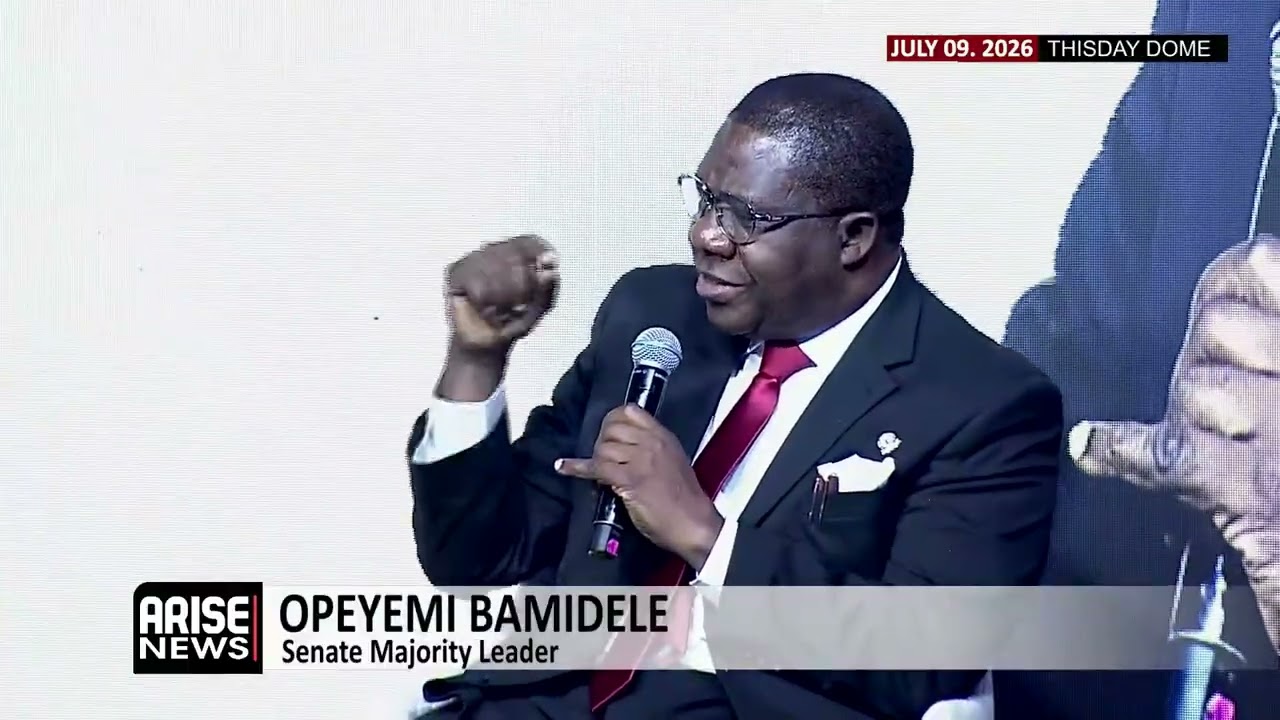
According to Bamidele, accountability must be built into the legal framework while citizens and civil society also remain vigilant over how the new policing system operates. “When it comes to issues of accountability, it’s something that will have to be addressed, both at the level of legislative intervention, through the law, as well as vigilance on the part of the Nigerian people.”
He argued that the danger of abuse extended beyond elected officials, warning that inadequate funding could allow wealthy individuals, organisations or criminal groups to exert influence over state police. “It’s not only state actors or politicians that can abuse this. Let me tell you, business class some other organizations, even criminals can abuse it, because it’s a person of he who pays the piper, dictating the tune.”
To prevent that outcome, he proposed constitutional and legal safeguards that would guarantee an independent source of funding for state police rather than leaving financing solely at the discretion of governors. “We must have a situation where there will be some first line item provisions in our law, the police chief and the police service commission, must have a guaranteed source of income in a way that it will not be subject to the whims and caprices of a sitting governor.”
Bamidele suggested that legislation could require a fixed percentage of every state’s annual budget to be reserved for policing, with clear rules governing access to the funds. “It might mean that part of the legal provision will be that a certain percentage of the state budget will have to be reserved for the police. And the mode of accessing this funding should also be clearly spelt out.”
He also cautioned that constitutional amendment alone would not resolve the complexities surrounding state policing, saying additional legislation would be required to define operational structures, responsibilities and oversight mechanisms. “We must see beyond constitutional amendment, because once the constitution has been amended, what is next?”
“The next step will be an amendment of the Police Act and come up with additional Acts of Parliament that will be able to address all these concerns.”
He added that lawmakers would also need to determine how state police would interact with existing security agencies and paramilitary organisations. “Also, we must address what becomes of the other organisations. Especially including paramilitary organisations that were created for the purpose of helping to maintain law and property.”
Bamidele said the ultimate objective of the reforms was to strengthen community policing, arguing that meaningful decentralisation would also require stronger and more autonomous local governments. “The whole essence of trying to emphasise on the move for state policing is because we want community policing.”
“If we do not address the issue of local government autonomy we will not have achieved much, even with the creation of state police.”
He said the National Assembly had drawn on global best practices while working with the executive to develop a minimum national standard that would ensure state policing operates effectively across the country. “We have been able to consider global best practice standard, but also be able to work out what we could consider to be a national minimum standard.”
Bamidele emphasised that while Nigeria had reached the stage where state policing should become a reality, lawmakers remained committed to ensuring the reforms were supported by a comprehensive legal framework capable of preventing abuse and guaranteeing accountability. “We are at a stage now where we must bring this to reality.”
Erizia Rubyjeana
Follow us on:


