


The convener of the Alternative Movement, and former spokesperson for the Atiku Abubakar presidential campaign, Segun Sowunmi, has said Nigeria’s worsening security challenges require a united national response, stressing that meaningful progress can only be achieved when citizens collectively reject violence and demand lasting solutions.
Speaking during an interview with ARISE NEWS on Monday, Sowunmi also weighed in on the country’s economic situation, acknowledging the hardship faced by many Nigerians while urging the government to ensure that ongoing reforms translate into tangible relief for the people.
He said, “Nigerians must understand one thing: until everybody has outrage—not selective outrage, not tribal outrage, not ‘Oh, my brother is lost, your brother is safe’ outrage—the whole of us must just say we’ve had enough before we can start to get the kind of cooperation from the citizens so that they can then be the ones that are giving you the first level of intel.
“When you look at 240 million people, and you take a long-term view as to where Nigerians are coming from—where poor Nigerians are coming from—you will understand why Nigerians are really agitating and gnashing their teeth. Things are really tough, and the impact is like they’ve been carrying a very heavy load for a long time. So, I would say that it’s comme ci, comme ça. There is a need for the government to quickly recognize that policy on its own—however beautiful—cannot substitute for the relief that people should feel. While they tell Nigerians that they need time, they must also understand that every day, people grow older, and therefore they will get a little bit more agitated. But all the same, I cannot see a different set of policies that could have been implemented at this material time.”
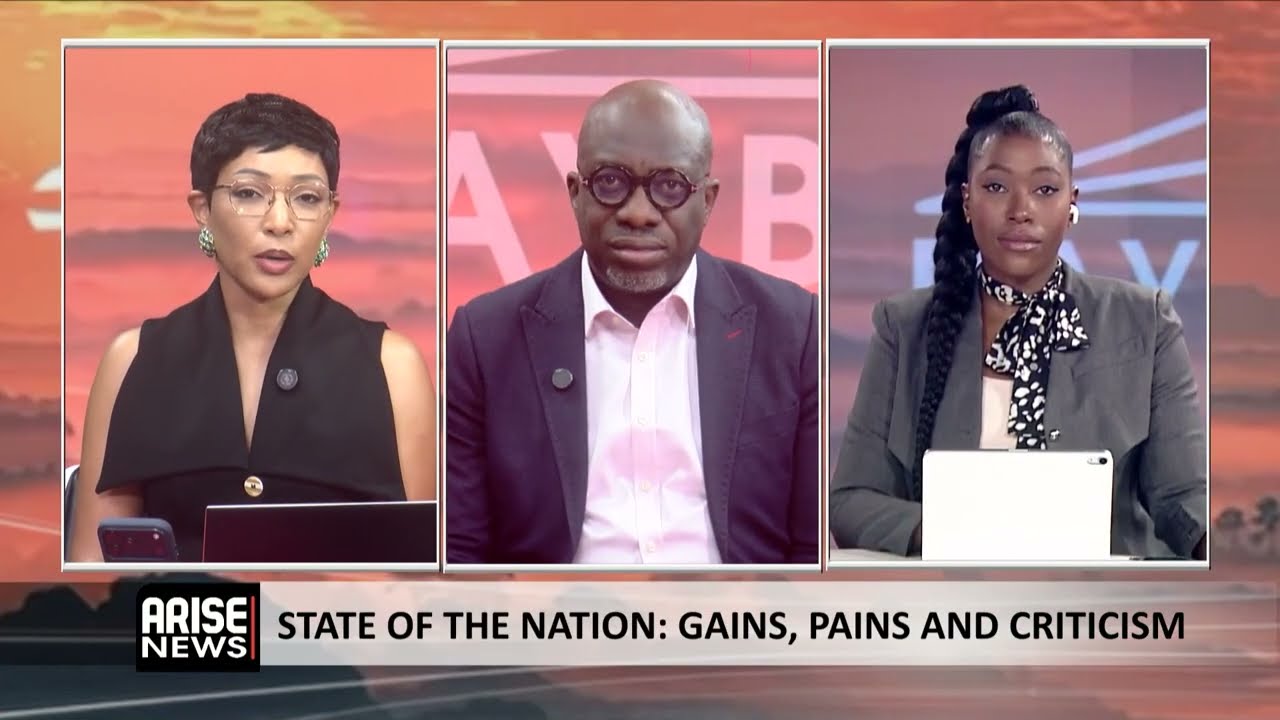
The former presidential campaign spokesperson argued that while international partnerships can play a role in combating terrorism, Nigeria must strengthen its own intelligence and investigative capabilities.
“I do not accept that the international community does not have the intel infrastructure to know precisely who is doing what, where, and when. Then also, the Nigerian nation has itself to blame, truly. Because you can’t tell me we have the structure of the DSS, NIA, DIA, and the entire intelligence infrastructure of our country, and up until now, we on our own have not found one high-ranking person that we can say, ‘Hey, come explain your role here,'” he lamented.
Rejecting suggestions that President Bola Tinubu is solely responsible for the security crisis, Sowunmi argued that the challenge predates the current administration and cannot be solved through political point-scoring. He called on political leaders to offer practical solutions while urging the government to show greater urgency and commitment in tackling insecurity.
“No, I don’t agree that Tinubu is incompetent and clueless regarding insecurity. A problem of this nature doesn’t go away easily. We’ve had Buhari there; it didn’t go away. It’s not about favoring one side or the other; it’s about saying that we can’t continue like this. What I expect politicians, including Atiku, to do is—I expect them to be coming up with alternative ideas that can be implemented. You don’t have to be president before you help your people, your country, and everybody to stop this kind of madness that is going on,” he urged.
On the IMF’s reported recommendation for additional taxes, Sowunmi expressed strong opposition, arguing that Nigeria should chart its own economic course rather than depend on advice from international financial institutions. He said policymakers must focus on easing the burden on citizens and pursue homegrown solutions that reflect the country’s unique economic realities.
“I think it’s time to tell the IMF to shut it. We’ve had enough suggestions from them. They’ve been advising us since the late ’70s, and our economy and the livelihood of our people have not even improved. So, the IMF cannot be a priority. Their own economies are not even doing well; why don’t you go and advise Europe and leave us the hell alone? Allow us to be able to take our own country and run with it.
“The Nigerian economy and the Nigerian nation must be designed in such a way that we must say to the world: ‘We are a very populous nation. We are significant in the international play. We play a great role in Africa. Now we will determine the direction of our own economy.’
“As far as I’m concerned, all that IMF business—we’ve had enough. If we don’t have to go to any of these international organizations for some time, we can lock ourselves in and solve our own problems. Africa and Nigeria now must determine the business that is going to develop their own country, and it’s not down to any person sitting in the IMF,” he insisted.
While insisting that ultimate responsibility for security rests with the President as Commander-in-Chief, Sowunmi argued that political leaders must move beyond blame and focus on practical solutions.
“The buck stops on the table of the man that is the President, especially when he doubles as the Commander-in-Chief. There is no excusing it from his table. The only thing I’m saying is that, while you have a problem of this nature that has been going on for 20 years, it is no longer sexy for you to have political players—who probably would like to say they have solutions to the problem—to stay on the blame side. You are trying to make sure that your people survive. That’s your duty: to figure out how your own people are feeling and recognize that the only focus of government is to make life more meaningful for the people,” he argued.
He also criticised the government’s handling of insecurity, poverty and foreign relations, calling for stronger leadership, greater national self-reliance, and a more urgent response to threats facing the country.
“They’re not scoring well on insecurity. They’re not scoring well on international relations. They’re not scoring well on poverty alleviation in the country, and you expect that a Nigerian patriot of my standing will not be upset with them? So, the buck stops on the President’s table. All this joke around having people as Minister of Defence, and then they turn themselves into politicians, it’s a really huge joke. This is not the time for that kind of smiling. We need to put an end to this thing, and we need to end it fast,” he urged.
Speaking on the introduction of state policing, Sowunmi described Nigeria’s centralized police structure as outdated and unsuitable for the country’s size and growing security challenges. He said governors must be empowered with direct security control to respond more effectively, insisting that decentralised policing is long overdue.
“Everybody that knows anything about what they call a federal system of government will understand that that we are even having a unitary police system for this long is irresponsible. It is because we have not been able to understand that you can’t have a nation that is as big as ours—with the wide landmass, dense in some areas, forest here, forest there, with people that are growing and population increasing every day—and you are deceiving yourself that what is not working cannot be changed.
“Our governors don’t have the instrument by which they are going to protect, defend, and scale up the energies of kinetic that can be more than what the criminals are having. So, we have gotten to a point where multimodal policing must have to come and come quick. And let us see which governor will sit in his state and not invest in manpower, and not invest in intelligence, and not invest in custodial facilities called state prison to take care of his people. So, on state policing, absolutely long overdue. Totally in support,” he declared.
Dismissing concerns about funding limitations for state policing, Sowunmi argued that states already support multiple enforcement and administrative structures, showing that resources exist when priorities are clear. He maintained that security should remain the top government priority and that political will, rather than finance, is the key factor in implementation.
“If they have the capacity to have tax collectors; they have enough intervention to have some other structures to clean the streets. They have enough money to do people that will help them to pass traffic like the Hisbah police. They have enough infrastructure to do all of these other things. I can guarantee you that they will have enough money to do this. The idea must first of all be on the table, and the resources will be found. But if there are no ideas, if there’s no institutional framework, if there’s no legal capacity, what you have done is that you just tied the hands of everybody.
“People must determine what exactly is the first-line priority for them. And as far as I’m concerned, the first-line priority for any government is security. Because what are you even going to do with the vision of greatness that you are building if, at the end of the day, everybody in the society is dead?
“I don’t think money will be a problem. They can go and borrow money. If they want to go to IMF and borrow money to set up state police, let them do that. And they can remove it from all of the money they waste on things like going to Mecca on holiday, all the silly things that should get off of our funding table. If they remove that one and fund state police, everybody is better for it,” he insisted.
Favour Odima
Follow us on:


