


Arise News Analyst, Sam Amadi, has said the Bola Tinubu administration prioritises the business class and affluent entrepreneurs over ordinary Nigerians in its economic policymaking.
Speaking during an interview on ARISE News on Wednesday, Amadi said government policies reflect the social class that the administration chooses to prioritise.
“The policy of a government reflects the government’s objective. It reflects the social class that the government prioritises. This government prioritises the business class, the affluent entrepreneurs, and not the people.”
Amadi said subsidy itself was not inherently problematic, arguing that its usefulness depended on the objective of the government and the people whose welfare it was designed to protect.
“Subsidy itself is nothing. All over the world, subsidy is used. It depends on what you want to achieve with subsidy, whose welfare is it targeted to.”
He agreed with the argument that the government’s policies currently target benefits towards a small segment of society, while noting that concerns over the petroleum subsidy system predated the present administration.
“So you’re right. The government targets benefit for the 1% you mentioned. Again, it’s historic. Look, the crisis of subsidy started before now, and the notion was that it was corrupt, it was benefiting the middlemen, the marketers, and not the people.”
However, Amadi said the focus of the present administration’s policies was not sufficiently directed towards lifting poor Nigerians.
“But you’re right that the focus of this government policy today is not on lifting the poor.”
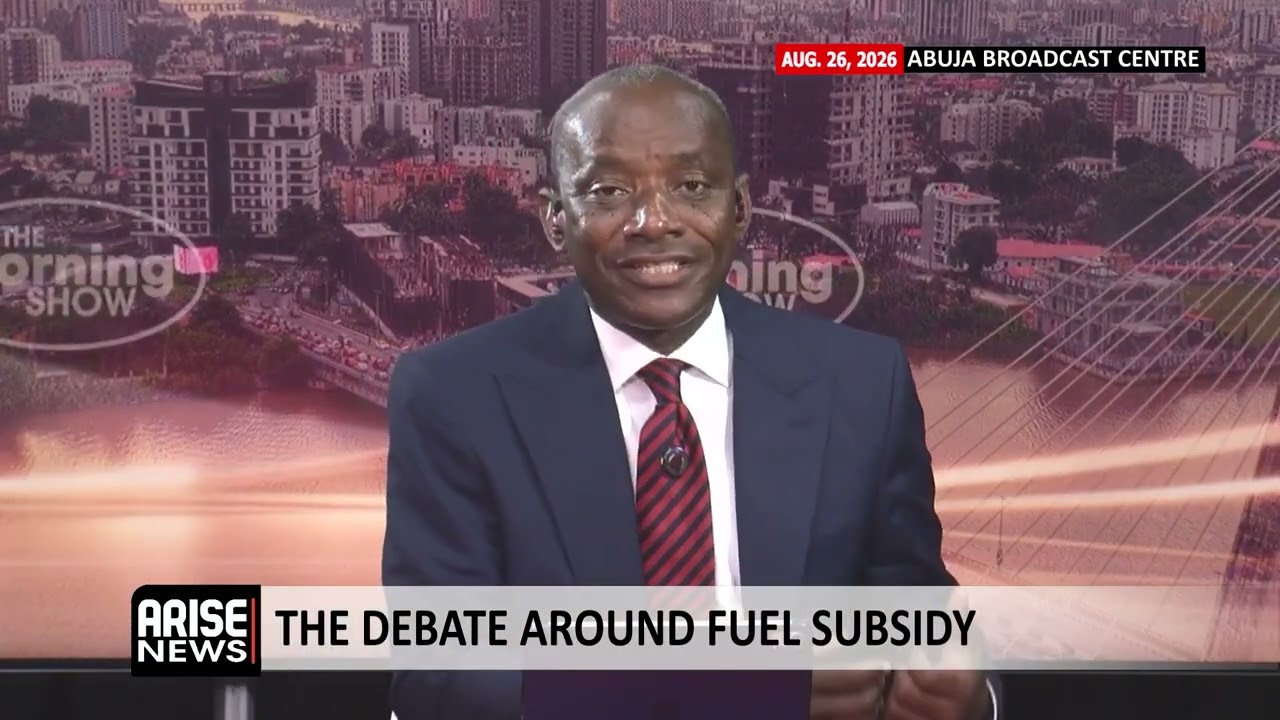
He further argued that the administration’s economic orientation was reflected in its attention to the business community, while basic sectors affecting poorer Nigerians were not receiving adequate attention.
“In my own sense, it’s a continuous lens of economics. It’s a balance sheet of government. It’s also around what happens to the business class.”
Amadi said the situation was also evident in the performance of Lagos State, citing revenue generation and its relationship with the corporate sector alongside concerns about education and healthcare.
“It shows in Lagos State’s own indicators. Very good with revenue, very good with the corporate world, but education, health care, the basic things that affect the poor is not very good. The same with the policy.”
He said economic policymaking should be assessed by examining the evidence of how policies affect different segments of society, particularly poorer Nigerians.
“We assume that economic policymaking is academic. It is managerial. It’s about what evidence are you building on? Are you building the evidence of the poor, people who are getting poorer and poorer, or the evidence of the people who are getting richer and richer?”
Amadi maintained that subsidy should be viewed as an economic tool whose usefulness depends on the interests government seeks to protect.
“So for me, subsidy is always a tool. It responds to government policy, the interests you want to protect, and the evidence you are building.”
Faridah Abdulkadiri
Follow us on:


