


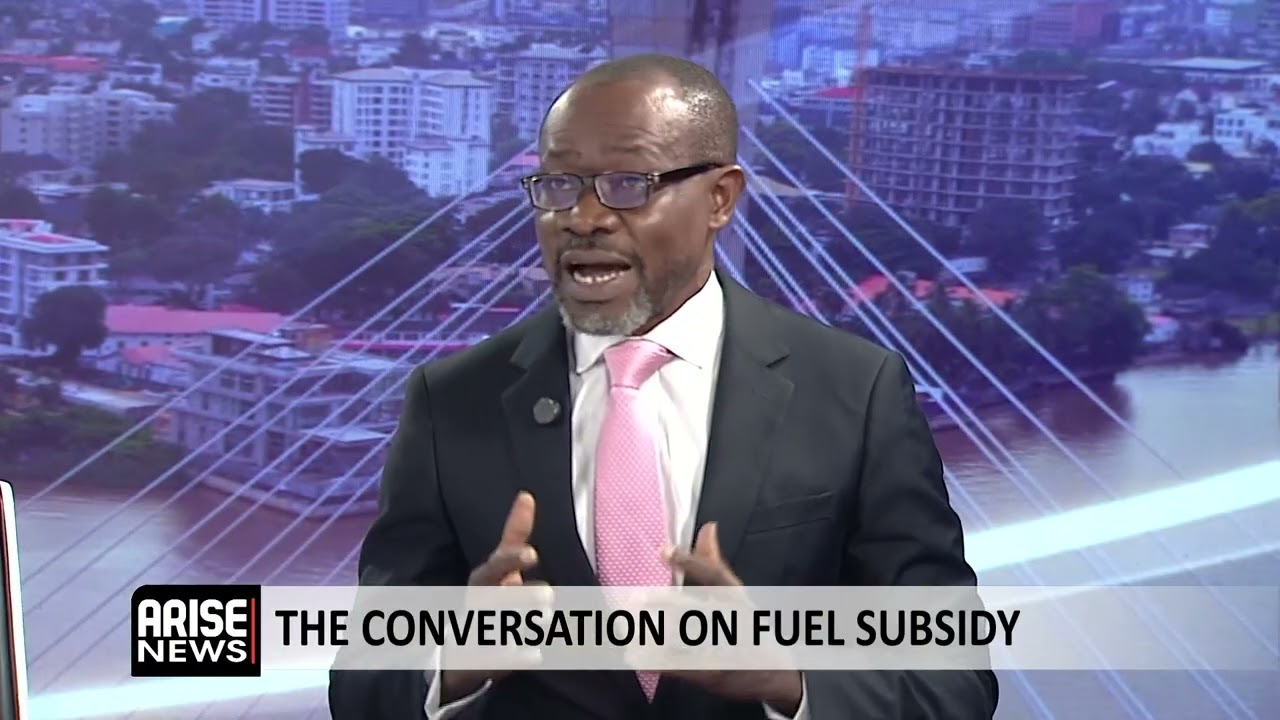
Professor of Economics at Lagos Business School, Bongo Adi has asserted that Nigeria’s economic policies should be reassessed despite recent gains in macroeconomic stability, as rising poverty, inequality and declining living standards continue to weigh heavily on citizens.
Speaking in an interview with ARISE NEWS on Monday, Adi said the policies that helped restore macroeconomic stability were appropriate when introduced, but argued that the government must now examine their impact on Nigerians and determine whether the same policy direction remains suitable.
“I think it’s time for us to reassess the policy direction, at the cost of what? So, we achieve macroeconomic stability at the cost of declining living standards situation, rising poverty at multidimensional levels, and also rising inequality.”
Speaking on the politics of subsidies, Adi said the debate should move beyond whether fuel subsidies should be removed or retained and focus instead on broader economic challenges. “The experience we’ve had from other countries, and from recent economic, you know, theory, is that countries that are orientated towards developmentalism tend to use what is called a problem-driven iterative adaptation to policy formulation.”
“It means that the countries, the management of different developmental states will have that strength of will to change course when there is sufficient evidence to do so.”
According to him, policy should not be treated as permanent once introduced, but should be regularly evaluated against its outcomes and adjusted where necessary. “there is always reason to reevaluate what I’ve done, you know, in the background of substantive and compelling evidence, okay, and then craft what is best at that material point in time for the economy.”
Adi said the ultimate consideration should be whether government policies are producing the greatest benefit for the largest number of Nigerians. “If we’re looking at it from that perspective, then it serves the interest of the nation if at each point in time you reevaluate, you reassess what you’ve been doing to know whether it is working, what is not working, and then how you can best, because it’s all about the largest good for the largest number of people.”
Turning to Nigeria’s current economic challenges, he identified poverty as one of the most pressing issues facing the country.
“I think what everybody’s preoccupied right now is with the high rate of poverty, whether you’re looking at it from the income perspective or from the multidimensional perspective.”
“Nigeria has reappeared as the poverty capital of the world. So, when you have 165 million living below the poverty line, that’s really a cause for concern.”
He also highlighted inequality and the concentration of wealth among a relatively small number of people, warning that such disparities could undermine economic growth and poverty reduction. “And then the other one which is also allied to poverty is the high level of inequality. We’ve not seen the level of wealth concentration that we have seen in Nigeria currently.”
“And what does that imply for growth, and what does it imply for poverty alleviation?”
Adi argued that extreme inequality could also result in the underutilisation of assets, citing vacant properties as an example of resources being held without productive economic use.
“Now, when you have very high level of inequality, theory predicts that you have underutilisation of assets and we’re already observing that. So, when you look at vacancy rates, people are building houses not because they want anybody to habit them.”
He said such developments represented an economic waste and noted that efforts to channel unused funds and unclaimed dividends into productive investment were moving in the right direction. “We find that that is something that is taking the right direction.”
Adi also acknowledged that the government’s economic policies had delivered some macroeconomic gains, including improved stability and increased foreign reserves.
“I think we’ve gotten, the policies have worked to really restore macroeconomic stability, We have that. And then our central reserve is also very high, $52 billion at the last check. And from all indications, it may add this year up to $55 billion.”
He questioned whether the policies responsible for those gains should continue unchanged, given their impact on households and businesses. “These same policies, your estimation, and looking at historical context, is this the right direction to pursue three years later?”
He said the removal of subsidy and the introduction of price discovery in the foreign exchange market were appropriate measures at the time, noting that they had helped achieve macroeconomic stabilisation. “So, everybody knew, everybody actually argued for the removal of subsidy, for introduction of price discovery in our exchange rate management system.”
“Those were done, they were carefully implemented, and they have yielded the anticipated results, which is macroeconomic stabilisation.”
Adi emphasised that the government must now consider the cost of those gains, particularly the effect on living standards, poverty, inequality and industrial activity. “Now that we have got there, so we now begin to look at it. So, at the cost of what? So we achieve macroeconomic stability at the cost of declining living standards situation, rising poverty at multidimensional levels, and also rising inequality.”
“And beyond that also, we’ve seen rising de-industrialisation.”
He questioned the pace of Nigeria’s economic growth, arguing that even a 4 per cent growth rate would not quickly translate into significant improvements in citizens incomes. “Now, if this economy were to grow at 4%, as it is, it will take 15 good years, if you use the rule of 70, for incomes to double.”
“If we take that capital income currently is somewhere around $1,000. Okay, it means that we wait for another 15 years for our incomes to go to $2,000.”
Adi argued that economic policy should remain responsive to evidence and changing conditions rather than being maintained solely because it produced results at an earlier stage. “So, there is always reason to reevaluate what I’ve done, you know, in the background of substantive and compelling evidence, okay, and then craft what is best at that material point in time for the economy.”
Erizia Rubyjeana
Follow us on:


