


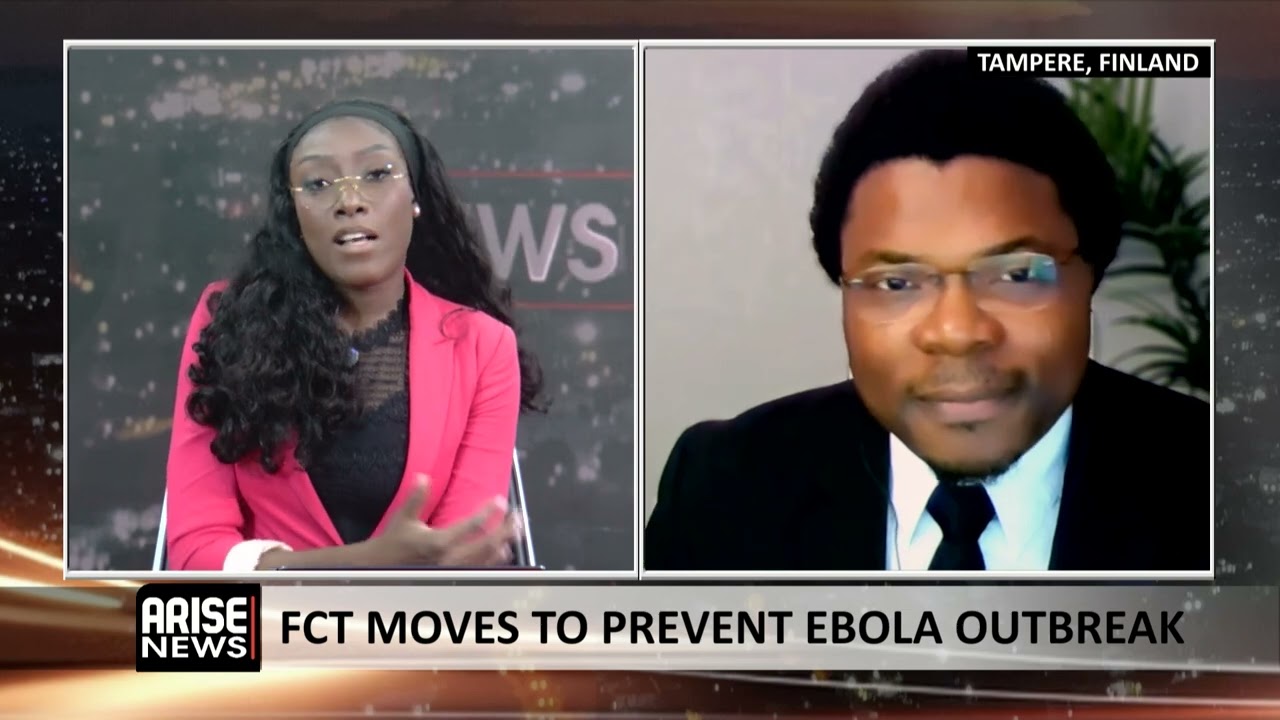
A statistical epidemiologist, Dr Greg Oko-Oboh, has said there is no active Ebola transmission in Nigeria, describing the confirmed case as imported and urging authorities to prioritise containment, isolation and the monitoring of exposed individuals to prevent further spread.
He said the World Health Organisation (WHO) and the Africa Centres for Disease Control and Prevention (Africa CDC) were investigating the source of the infection, adding that the inability to establish how the index case contracted the Bundibugyo strain was concerning but not unexpected, given its relative rarity.
“As an epidemiologist, it is very concerning, but it is not unexpected, considering that the Bundibugyo virus of this current strain we are dealing with—is not as common as Zaire virus, as well as the Sudan virus. So, but active investigation is underway by the World Health Organization, as well as the African CDC, to establish the source of this virus.
“It’s important to stress at this stage that the WHO, despite classifying this as a public health event of international concern, this is not actually a pandemic yet. And secondly, Nigeria is a major destination for travel. So, it’s expected that the case we have, which is an imported case, it’s expected, given that Nigeria is one of the hubs in Africa.
“But it’s also important to also stress, as maintained by the Ministry of Health and the WHO, that there is no active transmission taking place in Nigeria. So, this is an imported case, it’s an isolated case. So, the focus now is containment, to make sure that other people who are exposed to this index case don’t get spread or transmit this in the population.”
Oko-Oboh called on the Federal Government to integrate private hospitals into Nigeria’s Ebola response, warning that many facilities lack adequate staffing, essential medical equipment and access to public health awareness campaigns, potentially exposing the country to greater risks of disease transmission.
“The private hospital has been largely exempted from public health responses. And at this time, it is important to call on the federal government to involve the private hospitals.
“And as we know it today, given the medical preparedness of the country, private hospitals are not well-staffed, they are not supplied with the necessary equipment, and most of them are not even reachable in terms of this awareness campaigns.
“So, the private hospitals need to be incorporated firmly into the responses. And I’ll also stressed that it’s not just in Abuja, but Lagos, Port Harcourt should also be part of this coordinated response, as well as private hospitals in these places.
“So, generally, I think all state’s emergency response should be invoked at this time, and not just public hospitals, but also private hospitals, and it will become more useful in their well-staffed, well-supplied with the necessary equipment they need to function.”
Favour Odima
Follow us on:


