


Minister of Works, David Umahi, has clarified that the East-West Road will be connected to the Lagos-Calabar Coastal Highway through a spur, insisting that the original alignment of the 750-kilometre project remains unchanged.
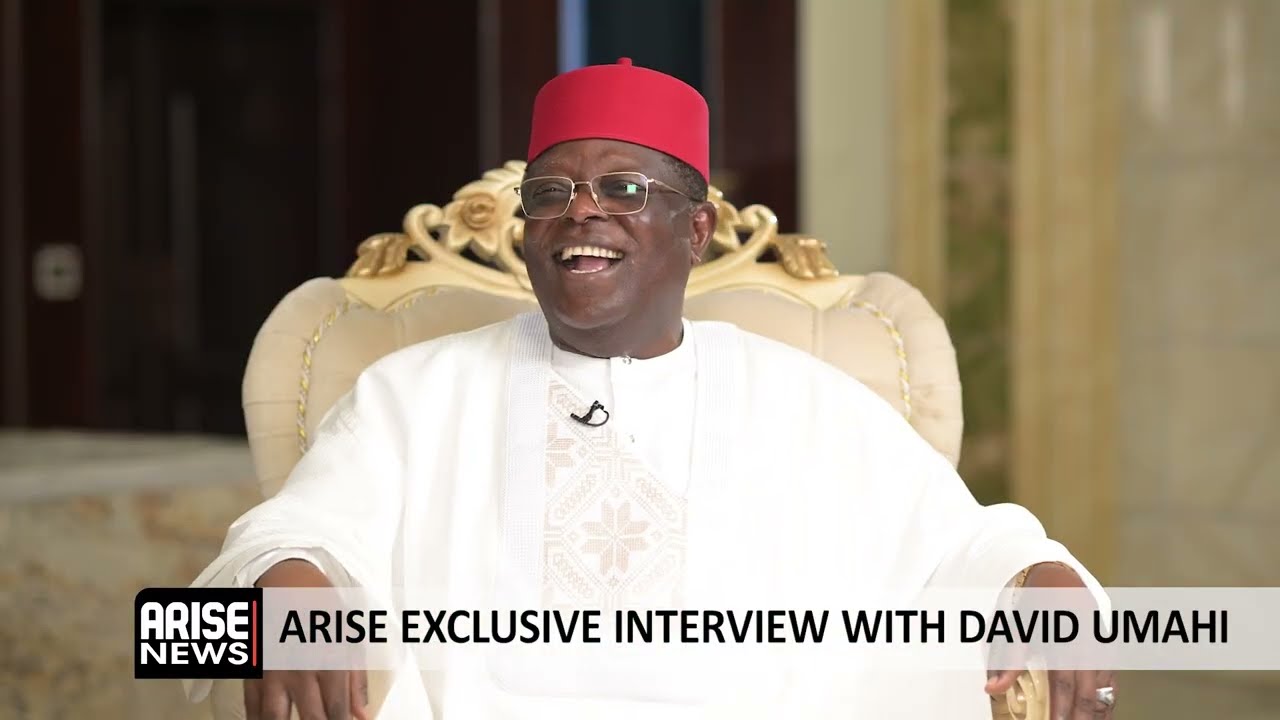
Speaking during an Exclusive interview with ARISE NEWS on Friday, Umahi made the clarification after being confronted with two statements he made on October 12 and the following day concerning President Bola Tinubu’s directive on the coastal highway.
In his earlier remarks, the minister had said the President personally directed him to divert the coastal highway to follow the existing East-West Road from Ondo into Edo State. He subsequently said there was no realignment and that Tinubu had instead added 400 kilometres to the project.
Asked to explain the apparent contradiction, Umahi said his earlier use of the word divert was a slip of the tongue. “The word divert, you know, if I use that, then it’s a slip of the tongue. It’s to also put a spur. That’s the correct, you know, language. To put a spur.”
He explained that the East-West Road would be connected to the coastal highway rather than replace any section of its existing route. “We are talking about connection of the Lagos-Kalabagh Coast Highway. We are connecting it also to have a spur on East-West Road.”
The minister maintained that the original alignment of the coastal highway, which covers nine states, had not been altered.
He identified the states as Lagos, Ogun, Ondo, Edo, Delta, Bayelsa, Rivers, Akwa Ibom and Cross River.
Umahi dismissed suggestions that Edo State should be bypassed because it was considered outside the coastal route, saying its inclusion formed part of the original concept gazetted in 2006. “Some people believe that going through Edo is going off the coast. So they want me to just go through Ondo and then route to Delta. But that is not the concept, you know, the gazetted concept in 2006.”
“The alignment is intact. But anybody saying that we should remove Edo State, we are not removing Edo State.”
He added that the design work for the relevant sections was still ongoing On the East-West Road, Umahi explained that the reconstruction project was separate from the original 750-kilometre coastal highway.
He said the road had previously received funding intervention through the Nigerian National Petroleum Company Limited under Executive Order 007, with the Ministry of Works supervising the project.
Following the suspension of that arrangement, the ministry had to redesign the implementation process and seek presidential approval for a new funding approach. “And don’t forget that it becomes an alternative route, okay. If you don’t want to follow this one to pay your toll, you will follow this one.”
The minister also explained that the East-West Road required reconstruction because sections of it had fallen below flood level, making them increasingly vulnerable to flooding.
He referred to a recent incident in which flooding cut a section of the road into two, prompting an intervention by the Delta State Government.
Umahi said the Federal Government planned to reconstruct the affected sections using reinforced concrete pavement in line with the President’s directive.
Erizia Rubyjeana
Follow us on:


