


The vice presidential candidate of the Allied Peoples Movement, (APM), who was also the former director-general of the Department of State Services, (DSS), Mamman Daura, has expressed optimism that the G-100 opposition coalition can still succeed in forging a formidable political alliance capable of challenging the ruling All Progressives Congress (APC) in the 2027 general elections, despite the limited time available and unresolved legal hurdles surrounding the proposed coalition.
“I hardily believe that the G-100, or whatever name we may go with it, an attempt at forming a coalition, is still something that is feasible. And there’s something that is also doable, and I think within the timeframe, despite the short period we have, it is also achievable.”
However, Daura noted that the proposed coalition still faced legal challenges that must be resolved, particularly provisions of the 2022 Electoral Act concerning the conduct of primaries and the possibility of parties retaining their identities while collectively producing a single candidate.
He said the situation differed from 2014, when opposition parties were able to merge more easily, stressing that although a merger was almost impossible under the current circumstances, ongoing high-level discussions could lead to a workable solution.
“However, like I said on the day of the summit, there are some issues that need to be threshed out. There are legal issues which have been entrenched in the 2022 Electoral Act, such as maybe a person not being able to run primaries in two parties. Two, there is also the issue of not being given the chance, I think by that same Electoral Act, of candidates either collapsing into or producing a candidate, while the other parties probably may continue to retain their identity.
“All these are legal issues that need to be threshed out. I am not sure which way it is going to go. But before the G-100, there is a top-level discussion going on in an attempt to see whether such a coalition is possible. I could recall maybe in 2014, when the country was faced with a similar situation, it was easier for the parties then to merge. But in our case, merger is almost an impossible thing to do. But again, if we look at the way things are going, probably we need to go to the table and look at the law again and be able to come up with a solution.”
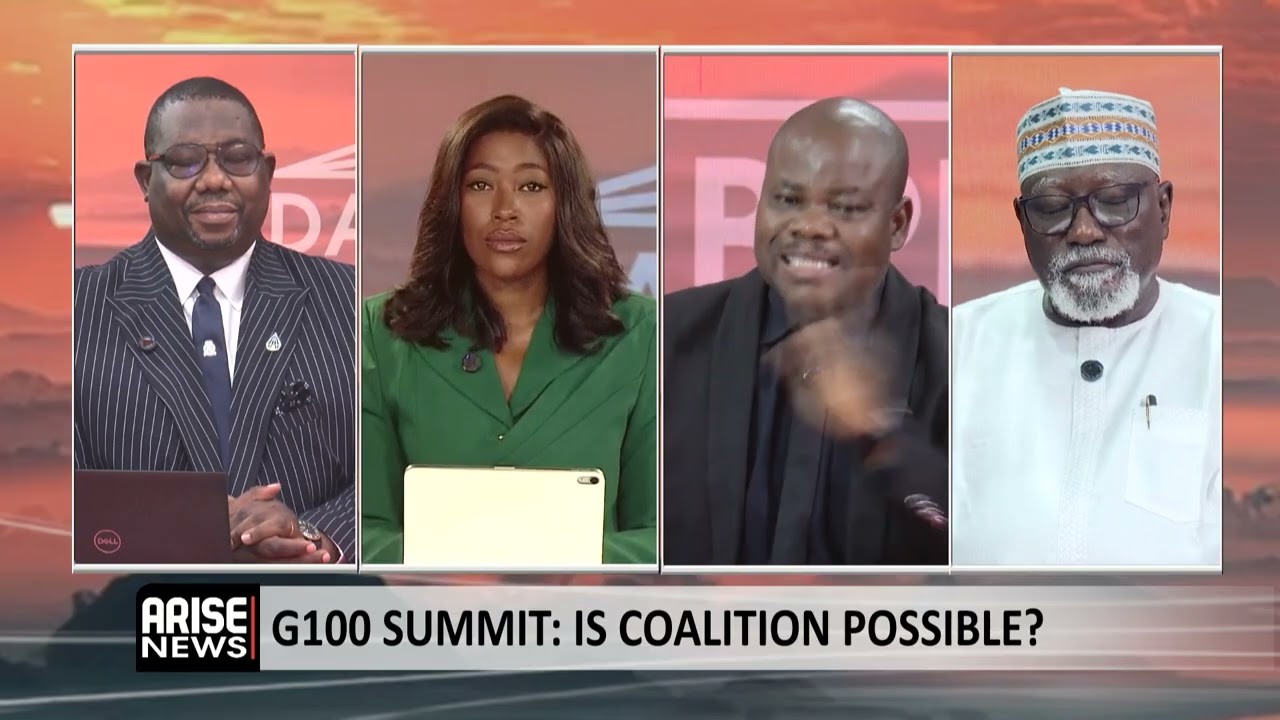
Addressing concerns over the absence of his principal, Oyo State Governor, Seyi Makinde, from the G-100 summit and other opposition gatherings, Daura dismissed suggestions that Makinde was not committed to the coalition or was merely positioning himself to eventually align with another political structure.
He explained that Makinde was out of the country when the events took place and had asked him to represent him, describing the decision as evidence of his principal’s concern and seriousness about the issues under discussion.
“I don’t seem to really agree with that postulation because it happened the NBA conference in Port Harcourt and also the summit of the coalition of the G-100 happened at a time when my principal was not in the country. And then, looking at the importance, or considering the importance of the two events, he asked me to really represent him, and I think that is a show of concern and seriousness. But as for the others, they might have their own reasons.”
He also disclosed that a decision had been reached for all principal officers to attend the next G-100 meeting. He said presidential candidates, their running mates and national chairmen of the participating parties would be expected to be present to advance discussions on the proposed coalition.
“The conclusion at least that we came to at the end of last Monday’s summit was that next meeting, all principal officers of the parties, that is the presidential candidates, their running mates, and chairmen of these parties, must be there.”
Daura expressed confidence that Makinde and the APM ticket could win the 2027 presidential election, stressing that the party’s prospects should not be judged solely by the prominence of a few opposition figures. He argued that the focus should instead be on the quality and capacity of the candidates seeking the presidency, noting that all contenders deserved serious consideration rather than allowing political narratives to be dominated by a handful of names.
“Absolutely, we have that confidence. I would also like to say I don’t really know how we drifted into mentioning just a few names in terms of opposition parties or leaders or candidates. I believe it was a kind of subtle propaganda, political propaganda, where people are either being intimidated or stampeded. It is a matter of quality, quality in terms of the personalities that have put themselves forward to be considered for election in 2027. And I think that there is nothing that is really short of all being equal, all stakeholders aspiring to the highest office in the country, in the land. And therefore, it is not just two people that you should keep on mentioning.”
He also shifted attention to the issues that should shape the 2027 election, particularly the economic hardship facing Nigerians. According to Daura, debates over fuel subsidy alone would not address the country’s economic challenges, arguing that the more fundamental problem was how subsidies had been administered and the corruption entrenched in the system.
“The ideas that they are even talking about, they are not talking about issues. Because the issue of fuel subsidy, for example, whether there is subsidy or no subsidy, the situation in the country or the economic situation or hardship that is being suffered by people is not really going to change much. Because the real issue is not the subsidy itself, rather the way subsidy is implemented, largely because of the corruption that is entrenched in the system.”
Daura also dismissed the projections on zoning and voting patterns as mere postulation, urging political analysts to return to the field and update their data, saying the dynamics of Nigerian politics had changed rapidly.
He said Nigerians were increasingly demanding change and were looking beyond political parties to assess the records, performance and credibility of individual candidates seeking public office.
“I would like to say the statement made by Mr. Aigbe is mere postulation; it’s not really correct, because I think as quickly as possible he needs to go back to the field and update his data and then let him analyze it and see the outcome. Things have changed so quickly, so rapidly.
“In fact, the dynamics of politics in Nigeria today has never been the way it is, because all the people of Nigeria, unanimously, without coming together to adopt a position, are crying for a change.
“And not only that, they are not really looking at political parties per se, but they are literally looking at the merit or demerit of the individuals that have put themselves forward for that election or to contest the election. And I can tell you, the ordinary man is looking for who is going to offer salvation. And of course, they go by records.”
Sharing his opinion on who should emerge as the coalition’s presidential candidate, Daura backed a Southern candidate, saying this would give the South the opportunity to complete the term.
“I think looking at what played out in 2023, effort being made to wrest power from the incumbent president automatically means giving the South the chance to complete the term. That is why maybe I support a Southern candidate in 2027.”
Favour Odima
Follow us on:


