


The Publicity Secretary of the Arewa Consultative Forum, ACF, Professor Tukur Mohammed Baba, has said the controversy surrounding President Bola Tinubu’s educational qualifications should focus less on certificates and more on the consistency of his educational history.
Speaking during an interview on ARISE News on Tuesday, Mohammed Baba said the issue was not necessarily about the presentation of certificates, but whether the account given by a candidate about his educational background was clear and consistent.
“The certificate is not as important as the story itself. It has to be consistent. If it is not, there is a problem.”
The ACF publicity secretary said Nigerians were entitled to scrutinise the backgrounds of individuals seeking to lead the country, particularly those aspiring to the highest political office.
“Now, why are we scrutinising? Because we are entitled to that. Whoever should lead us should have a clear history, devoid of ambiguities, devoid of doubts, and so on.”
According to him, the debate over educational qualifications should also extend beyond whether a candidate possesses a particular certificate to questions about how the candidate attained the level of education being claimed.
“Are the certificate stories exaggerated? Yeah. But what of the schooling? What have you done to get to that level? And I think Nigerians are entitled to ask questions about that.”
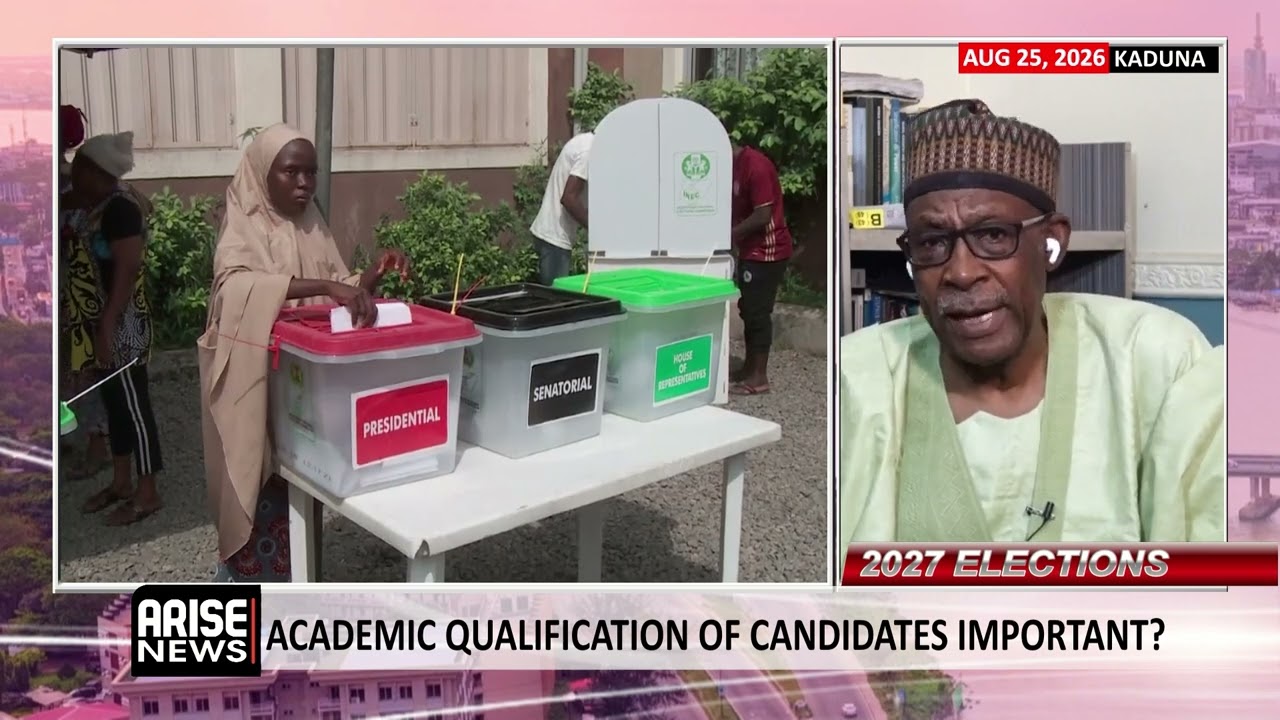
Baba argued that candidates for the presidency should expect their backgrounds to be subjected to public scrutiny because of the office they seek.
“So, those who ask questions are entitled to ask, and they have a point. That if you are presenting yourself for election to the highest office in Nigeria, holding lies together, being the commander-in-chief, and I think it is in that regard, it is legitimate to ask questions.”
He also maintained that questions surrounding a candidate’s educational history were not necessarily separate from broader concerns about integrity and accountability.
“And of course, we should ask, if the primary and secondary schools are not there, let’s know why, and let’s not have stories that keep changing with the weather like the English weather.”
Baba’s comments come amid calls for opposition parties to shift their focus from Tinubu’s academic credentials and concentrate instead on policies and alternatives that can appeal to voters ahead of the 2027 elections.
On what matters most to the Nigerian electorate, Baba said the majority of voters were more concerned about the effect of governance on their daily lives than the academic qualifications of political leaders.
“The average person in the street is probably mesmerised about all this. What matters to them is the effect of good governance. At the end of the day, is the person on top able to deliver good governance that satisfies welfare, health, education, housing, transportation, and so on? I think the vast majority of our population are more concerned about the impact of governance on their everyday life than the actual qualification of the person in power.”
He added that Nigerians ultimately wanted to see how government policies affected their families and livelihoods.
“So, at the end of the day, what goes into my pocket? At the end of the day, how is my family protected? At the end of the day, would my wife go to the hospital and expect service? At the end of the day, would my children stay home or go to school? Will they receive quality education?”
Baba, however, said the demand for clarity and accountability remained legitimate, stressing that Nigeria’s political system lacked sufficiently rigorous leadership-selection standards.
“There are no standards, and there are no standards because we do not demand standards. So anybody can come and present things.”
He said Nigeria’s political system was responsible for making it possible for inconsistencies surrounding candidates’ backgrounds to persist.
“Why is it difficult? Because that is the politics we play. That is the nature of the leadership process. I’m not saying it’s right. It’s totally wrong, and we’re not getting it right.”
Faridah Abdulkadiri
Follow us on:


