


The Director of Disease Control and Immunization at the National Primary Health Care Development Agency, Dr Rufai Garba, has attributed the recent surge in diphtheria cases across Nigeria to an immunity gap built up over years of inadequate vaccination, stressing that the disease is preventable through routine immunisation.
Following reports of 424 diphtheria cases in Katsina, 39 in Zamfara and 29 deaths in Plateau State, where schools have been shut over the outbreak, Garba said above 80 per cent vaccination coverage is needed to achieve herd immunity.
“What we are seeing now is the result of what we call an immunity gap over the years. This is not something that started today or yesterday because children were not vaccinated yesterday. It is an immunity gap.
“It means there is a deficit in immunity in a community. First of all, we need to achieve herd immunity, where a majority—above 80%—of individuals or susceptible individuals within that community are vaccinated. That gives us a level of coverage that helps to reduce or minimize what we are seeing today.”
According to Garba, vaccines are available in health facilities across the country, with more than 20,000 primary healthcare centres providing routine immunisation services, but access remains a major challenge.
He also said geographical and financial barriers prevent some children from reaching health facilities, stressing the need for more outreach and mobile vaccination services, which he said require greater investment from state governments.
“I would not say it is the state of our primary health care centers. Most primary health care centers in Nigeria—out of the 33,000—not all of them are fully functional, we know that, but over 20,000 actually provide routine immunization services. These are facilities where you can keep vaccines. Even if it is a health post with just one staff member treating simple illnesses, the government has always tried to ensure that we have vaccines in this country. Yes, the vaccines are there in the health facilities.
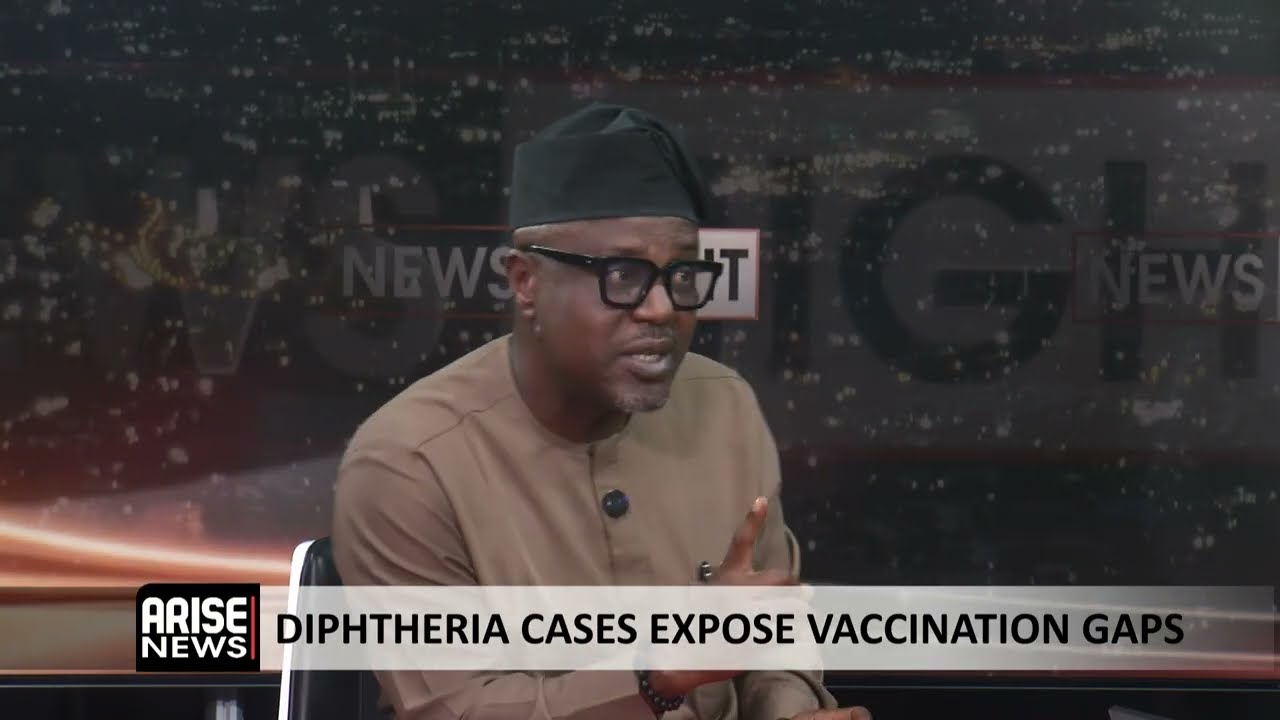
“The issue is: are the children getting the vaccines? Is the health system reaching those children? That is the question. Vaccination does not only happen in health facilities. Most health facilities have served communities that we call catchment areas. Each health facility in Nigeria today has a circumscribed catchment area—a couple of settlements that they serve—and the people there know this is the facility nearest to them.
“In some places, we have access issues. Geographical access could mean it is too far or they cannot afford transport to get there. What is required is for the health facilities to arrange an outreach or a mobile service to get there. That is happening, but we do not have enough of that. The investment in outreach needs to come from all levels. Immunization is actually the responsibility of state governments. NPHCDA provides oversight. We design policies, guide implementation, build capacity, supervise, and mobilize resources at the higher level.”
Identifying insecurity, population movement, limited access to healthcare and misinformation as key factors, Dr Garba said these challenges have contributed to low vaccination coverage and the spread of diphtheria, particularly in Kano, Katsina and Zamfara.
“Why have we not been able to reach these children? Access, insecurity, and migration. Misinformation is a new one—a whole lot of people now listen to non-experts who have zero knowledge, and they have become sources of information in Nigeria, which is really worrisome. We have been trying to communicate to Nigerians, telling them not to listen to this. Access issues and insecurity exist.”
Highlighting ways through which the NPHCDA has improved vaccination coverage, Garba said the agency conducted house-to-house enumeration in 14 states, identifying about 23.7 million children under five for follow-up and vaccination.
“What we do mostly is ensure that we reach the children. In 14 states right now—mostly where we have this problem—we have gone house to house to line-list these children through an Identify and Enumerate (IE) process. We were able to enumerate about 23.7 million children under five years old.
“We need to go to areas that are far, and state governments need to invest in outreaches to do that. From the national level, we fill that gap in the states by performing analyses to identify poor-performing states that have not reached their targets. We’re working with state authorities, we have a mirror structure in the states—the State Primary Health Care Development Agency or Board—which has all these structures. That is our major partner in the states. They hold these vaccines at their state stores, distribute them to each local government, and then move them to the health facilities for diphtheria, polio, and other childhood diseases.”
On the prospect of reducing diphtheria cases, Garba said behavioural change and increased vaccine uptake would take time, noting that the agency’s primary routine immunisation target is children under two.
“In Nigeria, behavioral change and getting people to take vaccines takes time. Our primary cohort for routine immunization is children under two years old. In the diphtheria cases we are seeing, we hardly see cases under two. Children affected are four, five, up to 14 or 19 years old. The oldest person recorded with diphtheria was about 38 years old, meaning that person must have been around infected children.
“These children have grown out of the routine immunization cohort. That is why we are seeing these cases from gaps during their early childhood when they were not vaccinated.”
He further urged parents not to assume it is too late to vaccinate children who missed their routine doses, stressing that they should return to health facilities to get vaccinated.
“One thing parents need to know: it is not late. If a child misses a vaccine, you need to go back and get the child vaccinated.”
Favour Odima
Follow us on:


