


Co-chair of the G7 Investment Initiative on Global Health, Dr Ayoade Olatubosun-Alakija, has warned that Nigeria is already behind in its response to the reported Ebola case, describing the next two weeks as critical to determining whether the virus has spread beyond the identified patient.
Speaking during an interview with ARISE News on Friday, Olatubosun-Alakija raised concerns about delayed diagnosis, possible exposure among healthcare workers and other contacts, and the country’s preparedness to contain further transmission.
She also warned that the strain involved in the current outbreak had a mortality rate of 48 per cent and claimed that no vaccine or treatment was available for it.
“So we are already a little bit behind the curveball, which is why I’m saying that healthcare facilities and the country need to be on the lookout,” she said.
“There is no vaccine and there is no treatment. That is a critical point that the people must know. We are dealing with a virus strain that has a mortality rate of 48% for which no treatment and no vaccine currently exists, whether African-made or otherwise.”
The health expert urged the Federal Government to intensify disease surveillance, strengthen public awareness and ensure that suspected cases were reported promptly by healthcare providers.
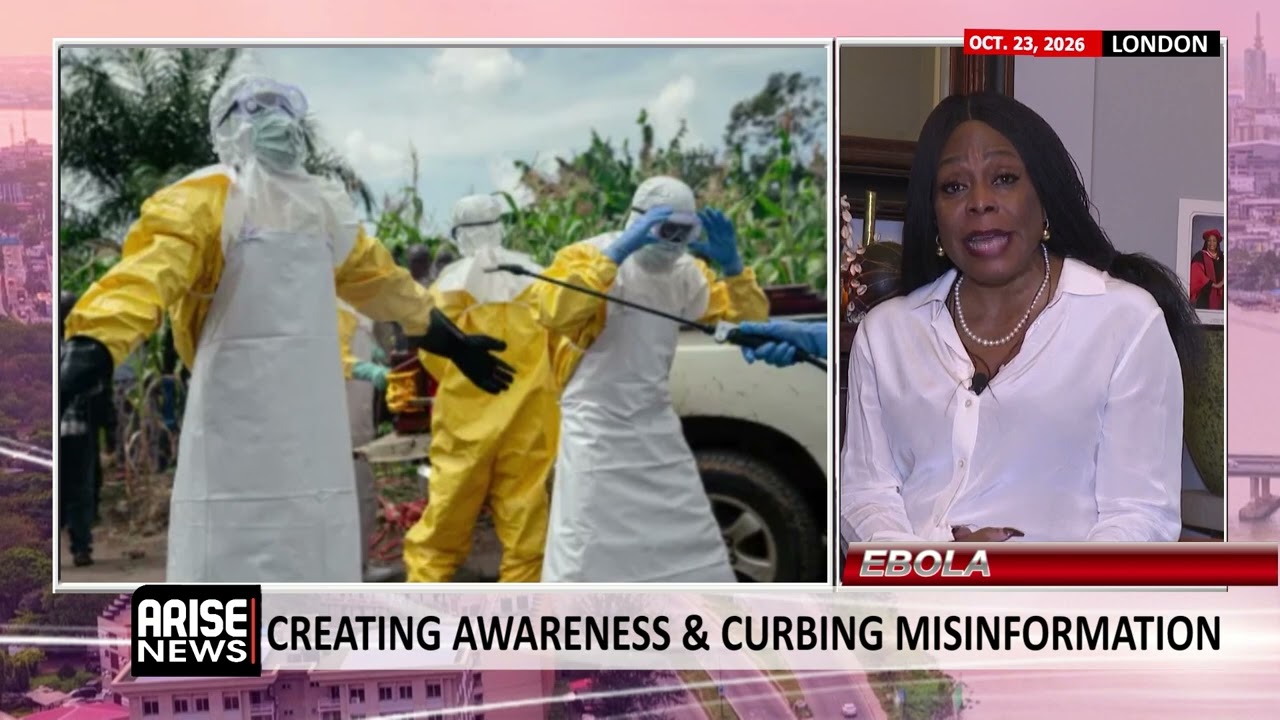
She said Nigerians should take preventive measures seriously without waiting for fatalities to occur.
“Well, we need mass education campaigns and we don’t need to wait till we see people dying for us to take it seriously,” she stated.
Olatubosun-Alakija cited the Democratic Republic of the Congo as an example of how an Ebola outbreak could escalate if transmission was not contained early.
“They also started with one case, don’t worry. They started with one case and today they have almost 10,000 cases. Today they have 4,500, almost 4,600 people dead. So it is extremely serious,” she said.
She stressed that the government and citizens must cooperate to prevent wider transmission.
“It always begins with one and that is why it is critical that the government and the people of Nigeria work hand in hand with the government at all levels to ensure that we do not have wider spread. Yes, don’t panic, but also don’t be complacent.”
Addressing the circumstances surrounding the reported index case in Nigeria, Olatubosun-Alakija said approximately two weeks elapsed between the patient’s arrival in the country and diagnosis.
“I think we need to understand that, you know, between this case arriving in Nigeria and diagnosis was about two weeks,” she said.
“Ours was not diagnosed because the authorities were not notified immediately and that goes back to what you’re saying as to are we mentally ready.”
She argued that the delay highlighted the need for greater vigilance among private hospitals, clinics and other healthcare facilities, particularly when patients presented with symptoms that could be mistaken for malaria.
“Private hospitals, clinics, all healthcare providers need to begin to understand that if somebody presents with symptoms of a fever, vomiting, what might look like malaria, that they have to immediately notify authorities and say that this is a potential case of Ebola,” she said.
The health expert also questioned whether healthcare facilities had sufficient personal protective equipment to safeguard medical workers handling suspected infections.
“Now, do our healthcare facilities have the necessary PPE? We need to begin to prepare at that sort of level,” she added.
Olatubosun-Alakija expressed concern that people who had interacted with the patient before diagnosis could have moved through different communities, potentially creating additional opportunities for exposure.
“If you think that every nurse, every doctor, every cleaner, everybody in those hospitals in those two weeks before she was diagnosed, have all gone home to their children. They’ve gone home to their wives, to their husbands,” she said.
“They’ve all gone to church. They’ve gone to the market. They’ve perhaps gone to the mosque. They’ve perhaps gone to the village.”
She maintained that contact tracing needed to extend beyond those who had directly interacted with the patient to identify possible chains of transmission.
“So if you begin to cast the net wide, you know, you begin to see that there are very many different points where this could have touched people before we luckily were notified, the government was notified on the 19th and very quickly were able to make a diagnosis by the 20th,” she said.
According to her, the results of testing and monitoring people who had been in contact with the patient would be crucial in determining the extent of any possible spread.
“The next two weeks are going to be critical. Once those who are close to the index case, patient zero, once they’re tested and we know who is positive and who is not, and therefore we begin to multiply out. It is a game right now of chess,” she said.
The health expert also urged caution over large gatherings, particularly as Nigeria approached a political season involving rallies and other public events.
Asked about the government’s position on gatherings, she declined to directly challenge the Coordinating Minister of Health and Social Welfare, acknowledging that he might have access to more information.
“It is not for me to agree or to disagree with the Coordinating Minister’s stance. He obviously has more information to hand. I would urge caution. That would be my approach,” she said.
Beyond the immediate public health response, Olatubosun-Alakija called for increased African investment in vaccine research, diagnostic development and pharmaceutical manufacturing.
She argued that inadequate investment in diseases historically concentrated in poorer regions had contributed to gaps in available medical countermeasures.
“A large reason why they don’t exist is because Ebola has typically in the past only affected people in poor parts of Africa, poor parts of the world. So there hasn’t been the desire or the motivation to invest in the research and development needed,” she said.
“Now, this is a huge wake-up call for us in Africa to invest in our own manufacturing, to invest in our own vaccine development, to invest in our own diagnostics development.”
She said diagnostic tests were being developed in Dakar, Senegal, but maintained that tests specifically needed for the strain under discussion were not yet available.
Olatubosun-Alakija concluded by urging Nigerians to avoid politicising the public health response and to comply with guidance issued by medical authorities.
“Don’t politicise it. When the government says we have a case or we have cases, we follow the guidance and we follow the advice,” she said.
Her warnings about the reported index case, the strain’s mortality rate and the availability of vaccines, treatments and diagnostic tests reflect her statements during the interview; the supplied account does not include independent laboratory findings or official confirmation of those details.
Erizia Rubyjeana
Follow us on:


