


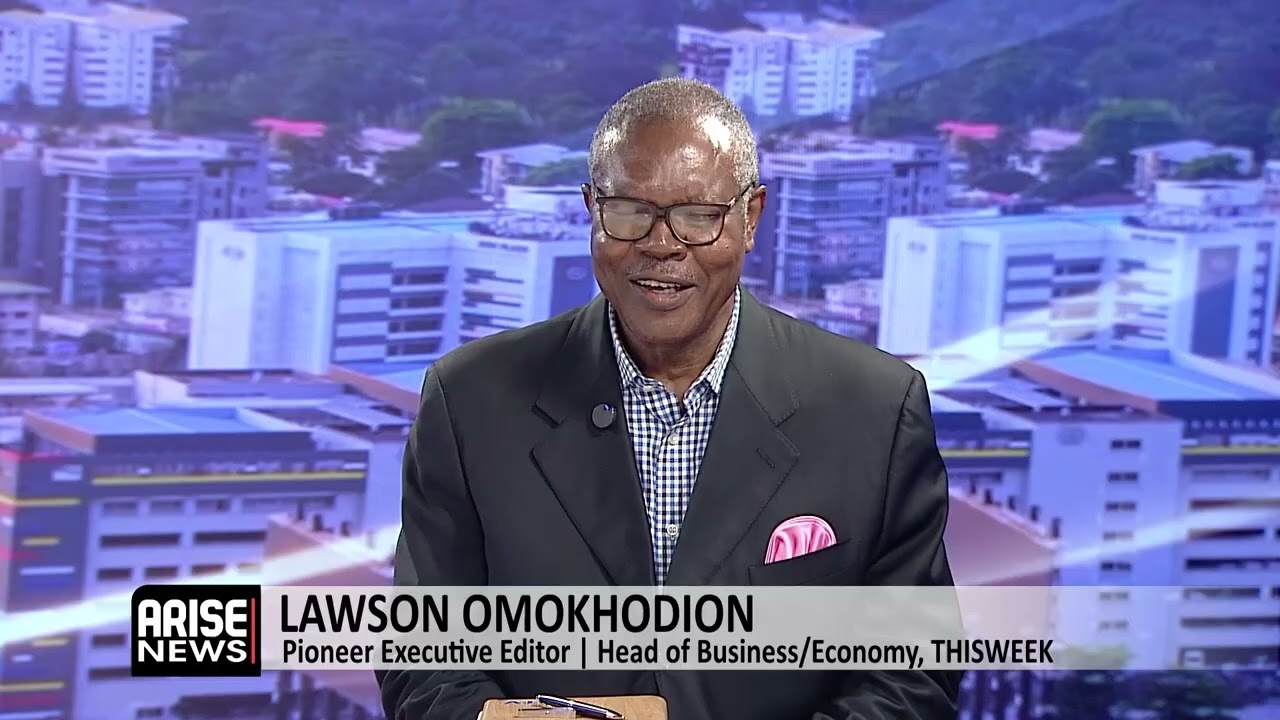
Veteran journalist and pioneer Executive Editor/Head of Business and Economy at ThisWeek, Lawson Omokhodion, has described the iconic news magazine as a revolutionary publication that reshaped Nigerian journalism by fearlessly challenging military rule and publishing some of the country’s most explosive investigative stories.
Speaking In an interview with ARISE NEWS on Wednesday, Omokhodion recounted his journey into journalism and reflected on the legacy of ThisWeek, saying the publication emerged at a time when many believed no media organisation could rival Newswatch.
According to him, his journalism career began at Newswatch, where he served as Business Editor after joining the publication following his critique of its preview edition.
“My story in journalism started at Newswatch. I had gone to the Centre for Management Development as a management trainee, where I saw the preview of Newswatch. I critiqued it and sent a note to the four founders, telling them, ‘What is this? We have to do better.’ That was how I joined Newswatch,” he said.
Omokhodion said moving from Newswatch to ThisWeek marked a turning point in his career.
“Newswatch was quite engaging, but ThisWeek was revolutionary. Its beginning was dramatic because Newswatch had already occupied the space and nobody thought there could be another publication that would give it serious competition.”
He credited the publisher, Nduka Obaigbena with assembling one of the strongest editorial teams in Nigerian journalism despite not being widely known in the profession at the time.
“Nobody knew how Nduka was going to do it. He went into different media houses, got the best journalists and assembled a remarkable team.”
Omokhodion recalled how Obaigbena personally recruited him after several meetings.
“He came to see me several times. At first, we simply chatted. Later, he asked whether I could write a story for a Newsweek supplement and said he would pay me in dollars. Eventually, he gave me a letter of appointment.”
Reflecting on the risks journalists faced under military rule, Omokhodion said ThisWeek deliberately confronted abuses of power despite the dangers involved.
“The military controlled the executive, the legislature and, through military tribunals, even the judiciary. They had enormous powers. They had little respect for human rights, were reckless in expenditure and dangerous in their day-to-day engagements. The military needed to be challenged.”
He identified the controversy surrounding Nigeria’s membership of the Organisation of Islamic Cooperation (OIC)under the Ibrahim Babangida administration as one of the publication’s most dangerous investigations.
“The story that was so dangerous was the crisis between Admiral Augustus Aikhomu… sorry, between Admiral Ebitu Ukiwe and Babangida over the OIC. It became very contentious. It even led to religious riots in Kaduna.”
Omokhodion said he and a colleague travelled to Kaduna immediately after the violence despite the dangers on the ground.
“There were still dead bodies on the streets and the military was patrolling everywhere. But you have to be bold as a journalist.”
He said the team interviewed both Christian and Muslim leaders, including the Bishop of Kaduna and the late Sheikh Abubakar Gumi.
“We went to Sheikh Gumi’s house. There were between 2,000 and 3,000 followers there. We asked him how the crisis could end.”
According to Omokhodion, Gumi urged them to embrace Islam.
“He told us, ‘You should come to a religion where you can fight your way out and be saved. We don’t believe in a God who was hung on a cross.'”
Omokhodion said they declined to engage in a religious debate.
“We told him, ‘What we came for this time was news gathering. We will come back another time to discuss religion.’ We asked our questions, manoeuvred our way out of that very tense environment, returned to Lagos and wrote our story.”
He described the public response to the report as overwhelming.
“The reaction to that story, I can’t tell you. It was unbelievable.”
Omokhodion also recalled ThisWeek’s influential reporting on the International Monetary Fund (IMF) debate, noting that many of the issues raised decades ago remain relevant.
“There has been too much pain in Nigeria, but some of the pain is not necessary. If only we could sit down and analyse these issues.”
He added that journalists often had to go into hiding after publishing sensitive investigations.
“Nduka could not hide, but the rest of us would hide. He would arrange for us to be hidden after some of those stories.”
Paying tribute to Obaigbena, Omokhodion described him as a courageous and visionary leader whose humanity distinguished him.
“He is focused, committed, bold and humane. It is that humanity and his ability to create that set him apart.”
Concluding the interview, Omokhodion offered a personal prayer for his former publisher.
“He is the kind of man you pray for: may your life continue to prosper, may the wind blow behind you, may the sun shine upon your face, may the rain fall softly at your feet, and may the road rise to meet you.”
Boluwatife Enome
Follow us on:


