


Former National Coordinator of the National Poverty Eradication Programme (NAPEP), Professor Magnus Kpakol, has warned that cash transfers alone cannot take Nigerians out of poverty, saying the focus of government interventions must shift towards building productive capacity and creating sustainable incomes.
Soeaking during an interview with ARISE NEWS on Friday, Kpakol emphasised that poverty reduction programmes should be judged by whether beneficiaries eventually become economically independent rather than by the amount of money transferred to them.
“At the end of the day, it’s not about cash transfers. It’s not about all of that. It’s not about money given to somebody. It’s about us being more able to produce the goods and services that the people of the world want, “I’ve said it before, that sometimes the federal government comes out too arrogant. Not just this federal government, but most federal governments.”
He commended the Federal Government’s new poverty reduction programme, describing it as a good initiative but expressing concern over the way it was being communicated to Nigerians.
“Let me say right away that I commend the programme. I think it’s a good programme. The problem is with the communication. I’m not so sure that it’s being communicated well,”
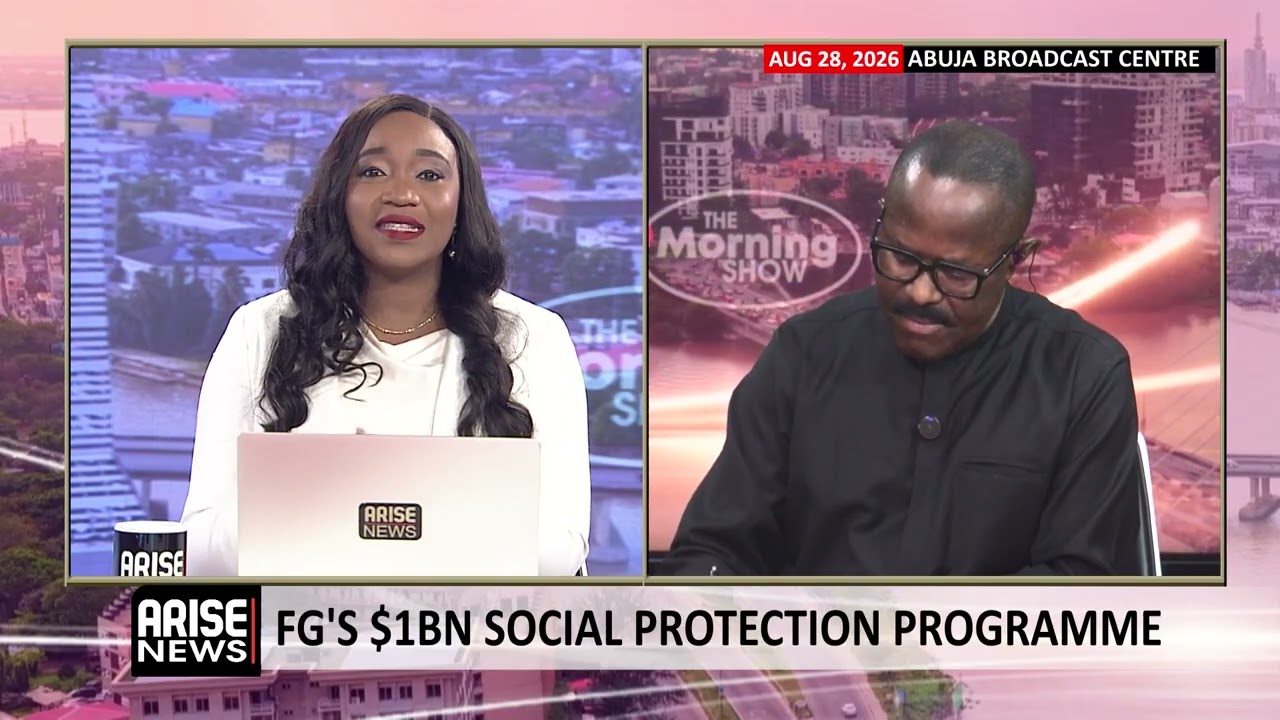
Kpakol said the programme appeared to be moving in the right direction but stressed that cash transfers could not by themselves deliver sustainable poverty reduction. “But if you look at the meat of the programme, I think that they have talked through it well. I think that they’re trying to go in the right direction.”
He said the real test should be whether beneficiaries could eventually generate incomes, leave poverty behind and become capable of supporting others. “What we want to see is if they can create incomes. And if we want to see if down the road, those people that were in poverty are no longer in poverty. And they are also now in a position where they can take care of other people. So that’s what the test is.”
Kpakol questioned the clarity surrounding the financing of the programme, particularly the World Bank-supported component. “For example, people don’t even know exactly how much it is. Is it just the $1 billion from the World Bank? And people should tell us, you know, how are we going to pay for it?
He explained that although the World Bank financing was an International Development Association loan with a long repayment period and low interest rate. “I know it’s an IDA loan. So it would take maybe 20, 30 years to pay off. I’ve subtracted very little more interest rates, well below 2%. So that’s not bad.”
Kpakol said cash transfers could serve as a basic safety net to prevent vulnerable people from falling deeper into poverty. “The cash transfer to me is like a basic floor that you put in the programme so people don’t fall into the mire of poverty more and more, N40,000 is really not enough. It’s not going to do much. But it’s something.”
Drawing from his experience at NAPEP, he said poverty reduction programmes needed what he described as a ladder. “But more importantly, you need a ladder. You need something very catalytic. When I introduced this programme, as I mentioned last time, I actually introduced the condition of cash transfer into Nigeria under President Obasanjo.”
Kpakol recalled establishing a basic income guarantee alongside a Poverty Reduction Accelerator Investment programme. “So I knew that I needed to invest in people. But one of the things that I emphasised was training. I wanted to train the people, maybe like financial literacy, even capital development, so that these guys understand what they need to do, you know, as they fight their way out of poverty.”
He welcomed the current administration’s stated intention to graduate beneficiaries out of welfare, saying the objective was more important than simply maintaining people on government support. “And I heard that from this programme, and I commend that, the fact that they realise you don’t want to keep people in welfare. You want to be able to graduate them.”
Kpakol also criticised what he described as the tendency of federal governments to pursue major interventions without sufficiently involving state governments. “I also think that we should have done it in collaboration with the states. I’ve said it before, that sometimes the federal government comes out too arrogant. Not just this federal government, but most federal governments.”
He argued that states had substantial resources that could be combined with federal funding to make poverty reduction interventions more effective. “I think that if you look at the budget, what’s the size of the Nigerian budget? Maybe about $50 billion a year. They, of course, this last one, $50 billion, which is probably the largest budget we’ve ever had in the history of Nigeria. But the states together have about $30 billion.”
Kpakol said collaboration among the federal, state and local governments could strengthen the programme while also improving capacity at the grassroots. “I believe that there’s room there where the state could have, or states could have collaborated with the federal government to make the programme even stronger.”
He identified excessive political involvement as one of the major risks that could undermine poverty reduction programmes. “implementation process. Now, first on the bottlenecks, the primary bottleneck that I often see is too many people being involved. You have too many cooks in the kitchen.”
Kpakol warned that politicians could crowd out the original objectives of such programmes and create unintended consequences. “So when you put this programme out, a programme like this, we put it out, then you would see that politicians jump in from all over the place, and they crowd the kitchen, and they create a lot of commotion in the kitchen.”
“They make it not happen the way you intended it to happen. So you tend to have a lot of unintended consequences and bad representation that come out of a programme like this.”
On the National Social Register, he said transparency was essential to ensuring that beneficiaries were genuinely poor and not political associates or cronies. “So the register, to me, people, they need to tell us more about it. They need to tell us how people were chosen on that register. So they’re not just party members or cronies, but is representative of the people of Nigeria and of the communities that you intend to serve.”
He recalled how beneficiaries were identified during his time at NAPEP through community-level selection processes designed to allow residents to identify those considered genuinely poor. “I did a village to village. I actually did this, in fact, on a couple of occasions, they would choose themselves, would choose poor people from their neighbourhood, and if they chose somebody that people didn’t think was poor, they’d say, oh, no, we don’t want this person. We’ll drop that person. They’d choose another person until we get the number of people that we want.”
Kpakol acknowledged that such systems were not without flaws but maintained that transparency remained critical to building public confidence in poverty interventions. “We need a lot of transparency about this, now, often, problems like this are politicised. That’s just a fact. And then this is difficult to stop it. And that’s why sometimes they’re introduced around election season, all over the world.”
He said government should place greater emphasis on building economic and financial literacy among beneficiaries rather than concentrating solely on cash payments.
“What is important, what’s really critical, is not just the cash. We give it to people. But it’s financial literacy, clearly.”
Kpakol said what was ultimately required was broader economic literacy that would help beneficiaries develop competence, capacity and productivity. “But really, it’s about how to build competence, how to build capacity, how to cause people to behave well, how to love thy neighbour as thyself, how to be more productive. It’s about being more productive. That’s really what it’s all about.”
He maintained that sustainable poverty reduction depended on increasing Nigerians’ ability to produce goods and services rather than relying indefinitely on government transfers. “It’s about us being more able to produce the goods and services that the people of the world want.”
Kpakol further argued that industrialisation remained a critical route out of poverty, particularly because it creates productive opportunities beyond welfare interventions.
“True industrialisation does bring people out of poverty, Wwe need to promote that more here in Nigeria. We need to get governors to try to get there.”
He said local governments needed greater capacity to contribute to the economic development of their communities. “We need capacity at that level, This is a laudable programme. It is a good programme. I support it myself. But I think we need to explain what the programme does better to the people.”
Erizia Rubyjeana
Follow us on:


