


The Aliko Dangote Foundation has explained its N40 billion share scheme designed to encourage Nigerian tertiary students and vulnerable women to participate in the Dangote Petroleum Refinery and Petrochemicals initial public offering.
Speaking during an interview on ARISE News on Wednesday, Managing Director and Chief Executive Officer of the Aliko Dangote Foundation, Zouera Youssoufou, said the initiative was developed to bring groups that have traditionally had limited access to the capital market into the IPO.
“Remember when Aliko announced the IPO, he described it as the IPO of the people and he wanted to have as many people as possible participate. So, we realised that the student population and women in general, disenfranchised women that we used to deal with in terms of micro grants were two groups that weren’t really normally active in the capital markets.”
“So, what could we do to incentivise their participation? So, that’s how we came up with this idea.”
Youssoufou said eligible participants would receive a matching allocation after purchasing the minimum number of shares required under the scheme.
“What if you said, okay, we’ll buy 10, which is the minimum, and then we’ll match you the 10 and you have to hold it… we encourage you to hold it for the year, and then you can do whatever you want after. So, you get 20 shares, you apply for 10, and then we match the 10.”
She said the student component would cover up to five million students, with the Foundation allocating about N25 billion for the matching shares.
“So, the first 5 million students who buy those 5,250 naira shares, we have 10 shares of the 525, so 5,250 Naira. The first 5 million, we guarantee a match from ADF. So, we already have a budget.”
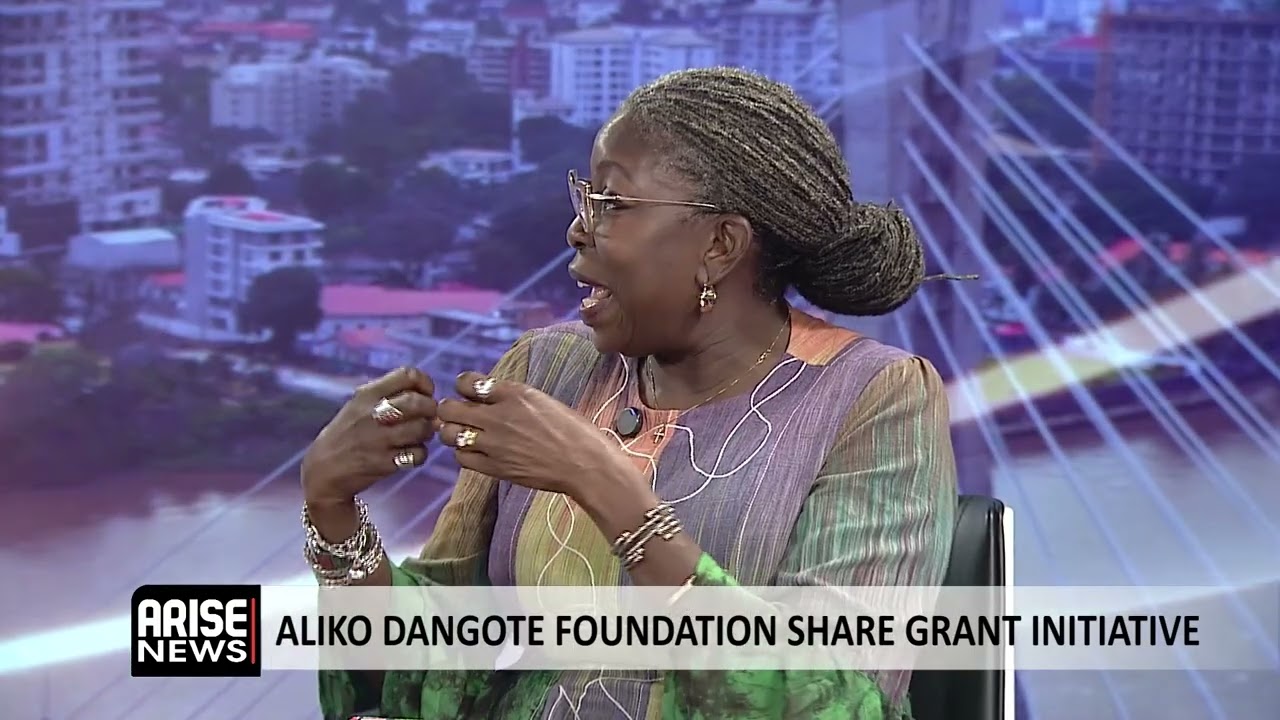
“I mean, the 5 million students will be about 25 billion Naira, which we’re ready to, which Aliko has already set aside for this.”
Youssoufou said the eligibility requirements for students were based on enrolment and age rather than academic performance or grade.
“The only criteria is that you’re enrolled in a tertiary institution in Nigeria that we can verify that through the portals that exist, JAMB, NELFUND, et cetera. So, we’re doing this in partnership also with the Ministry of Education.”
“You have to be registered in a tertiary institution in Nigeria. That’s one criteria. You have to be at least 18.
You have to be 18 and you have to be in tertiary education, polytechnics, universities. That’s where the 5 million cap comes from.”
For vulnerable women, the Foundation plans to support up to two million beneficiaries. Youssoufou said the category would include women facing severe economic and social hardship.
“For the women, we thought about the, we call them vulnerable women… these are widows and women living in extreme poverty and people living with disabilities and, you know, women who have just had a really rough time of things. Those are the ones that we’re targeting with this.”
She said the Foundation was working with government and other institutions to identify women who qualify for the programme.
“We are working with the armed forces, with the Ministry of Women’s Affairs, where they have these registers of vulnerable people.”
Youssoufou said the Foundation’s wider objective was to give people who would normally be excluded from investment an opportunity to become shareholders.
“Those are the people that, you know, in Aliko’s mind, when we say democratise access to capital markets, these are the people who would never have been able to do it, except, you know, here’s an opportunity for them to also be part of what we’re doing.”
She said the initiative was not intended to generate revenue for the Foundation, with the matching allocation capped at 10 shares even where a participant purchases more.
“If a student wants to buy 100 shares, we’re only still going to match the 10… so that’s why we don’t have a revenue target because I don’t have any expectations of who’s going to buy 10, who’s going to want to buy 20, who’s going to want to buy 50.”
“We don’t have a target.”
Youssoufou said the Foundation would disclose the number of beneficiaries who participate in the scheme.
“That will be open information because you’ll be able to know, I mean, we will talk about what we do. Let you know how many people signed up, how many students, how many women, you know, how many people have we, you know, increased this pool of shareholders with, and then how many bought.”
She said the scheme would ultimately leave the additional shares in the hands of the beneficiaries.
“But at the end of the day, these shares are going to end up belonging to people who would not have otherwise been able to do so.”
Youssoufou said the Foundation was still finalising some aspects of the programme, particularly the treatment of different categories of vulnerable women.
“We have a few days left to finalise all of this, but the goal is to extend this opportunity through us because this is what we do. Our work is charity and helping people and giving.”
Faridah Abdulkadiri
Follow us on:


