


A professor of Political Economy and Development in the University of Abuja, Ernest Ereke, has said the Osun State governorship election will serve as a crucial test of the Independent National Electoral Commission’s (INEC) preparedness to implement the revised electoral guidelines ahead of the 2027 general elections.
“Why has this election become so contentious in Osun State? First, this is the last major off-cycle election we will be having in the country before the general elections. So, whatever we are seeing gives us insight into what politicians would likely be doing in the run-up to the general elections.
“Secondly, the Osun governorship election is very important because this will be the real test for INEC to implement and enforce the revised electoral guidelines. It presents us an opportunity to assess the preparedness of INEC to implement those guidelines, as well as give us a broader opportunity to see how the new Electoral Act will help us administer elections,” he said.
Following reports that 29 lives had been lost in 73 incidents of violence across Osun State, Professor Ereke said 15 fatalities were recorded in 27 electoral violence incidents in Osogbo alone, making the state capital the epicentre of political and electoral violence.
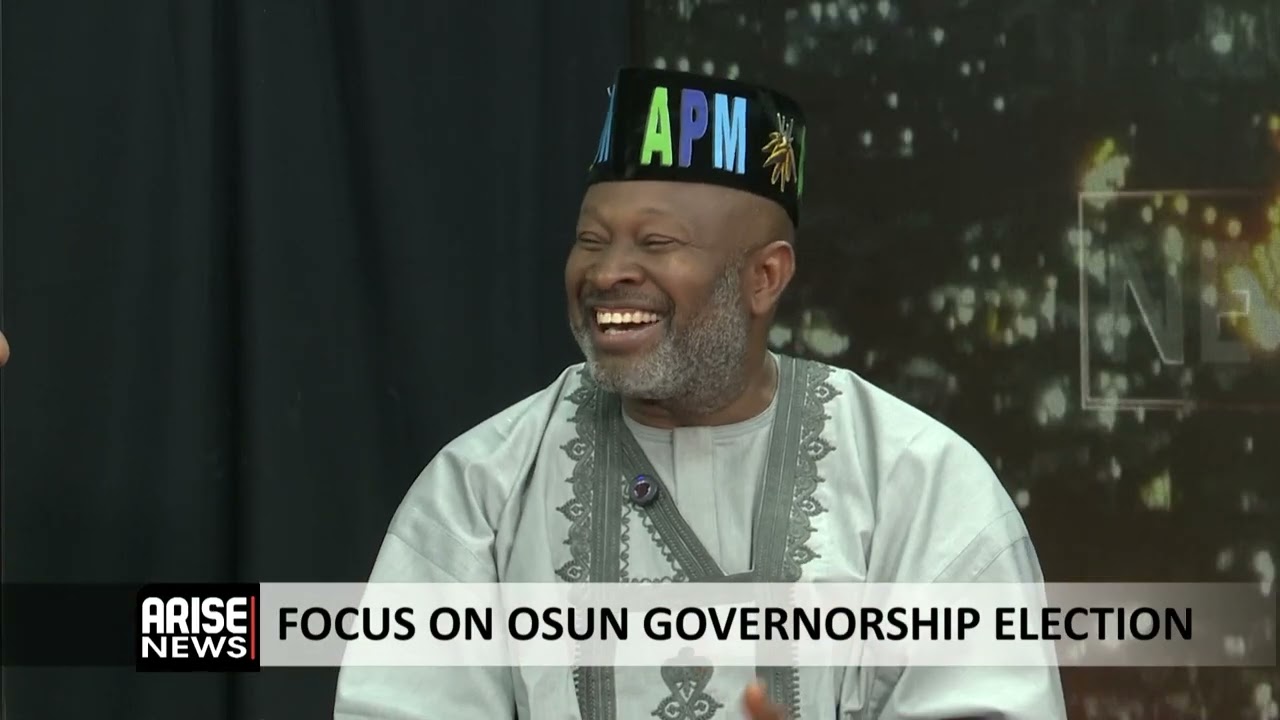
“Those 29 fatalities are actually across the entire state. But in Osogbo, it is interesting to note that out of about 27 electoral violence incidents recorded, 15 of them resulted in 15 fatalities, making Osogbo the epicenter of this electoral and political violence in the state. Beyond the fact that Osogbo is the epicenter of this electoral violence, there are other areas across the state. The report breaks the state into three categories of pressure centers: 12 out of 30 local governments are critical (high-level pressure areas), 9 are medium, and 8 are low-pressure points,” he underscored.
Citing the Kimpact report, Ereke also identified political issues, criminality, cultism, perceived partisanship among state institutions, particularly security agencies, and lapses in election administration, including the distribution and collection of Permanent Voter Cards, as key factors fuelling the violence.
“That report also mentions a lot of factors enabling this violence: political issues, criminality, cultism, the seeming partisanship of state institutions (especially security agencies), and lapses in election administration issues—for instance, the distribution and collection of PVCs.”
According to the professor, the election has become increasingly contentious because politicians see it as an opportunity to gain electoral advantage ahead of the 2027 general elections, with some exploiting poverty and other vulnerabilities to secure and retain political power.
“It has become contentious on the part of politicians because they feel that we are just a short distance away from the general elections. Whoever prevails at this time, it gives them some electoral advantage across the country to begin to say, ‘Nigerians trust us.’ We cannot rule out the fact that politicians do not believe in the whole game.
“They believe that they must muscle their way, buy their way, or weaponize the vulnerabilities of the ordinary Nigerian. Poverty, for instance, has become weaponized, and politicians latch onto all of this to ensure that they continue to perpetuate themselves in power—especially because we are talking about elections in a third-world economy where poverty and illiteracy are very high, and government seems to be the most driving factor,” he said.
On the role of security agencies in safeguarding the electoral process in the Osun state gubernatorial election, Professor Ereke said they must restore public confidence by demonstrating that they are apolitical and committed to protecting all citizens, regardless of their political affiliation, before, during and after the election.
“One of the first things we need to do, particularly the security agencies, is to reignite this confidence in the people—that they will be able to protect them and safeguard the process all through, both on election day and in the aftermath of the elections. Security agencies need to assure the people, and this assurance has to come from these security agencies being apolitical, showing that they are for everybody whether you are in the opposition party or in the ruling party,” he said.
Condemning all forms of vote buying and inducement in the electoral process of the Osun state election, Ereke said voters should be allowed to freely choose candidates based on their policies, programmes and competence.
“I think we should condemn any form of inducement in the electoral process. Ordinarily, elections provide an opportunity for the people to, out of their own volition, decide who they want to vote for, depending on the policies, programs, as well as the competence of the candidates. So in whatever form—whether you call it palliatives, whether you call it allowances or whatever—we all know, just as we condemned the EFCC’s action based on the timing. The timing of these allowances is indicative of what it was meant to do, so we should condemn that,” he maintained.
Favour Odima
Follow us on:


