


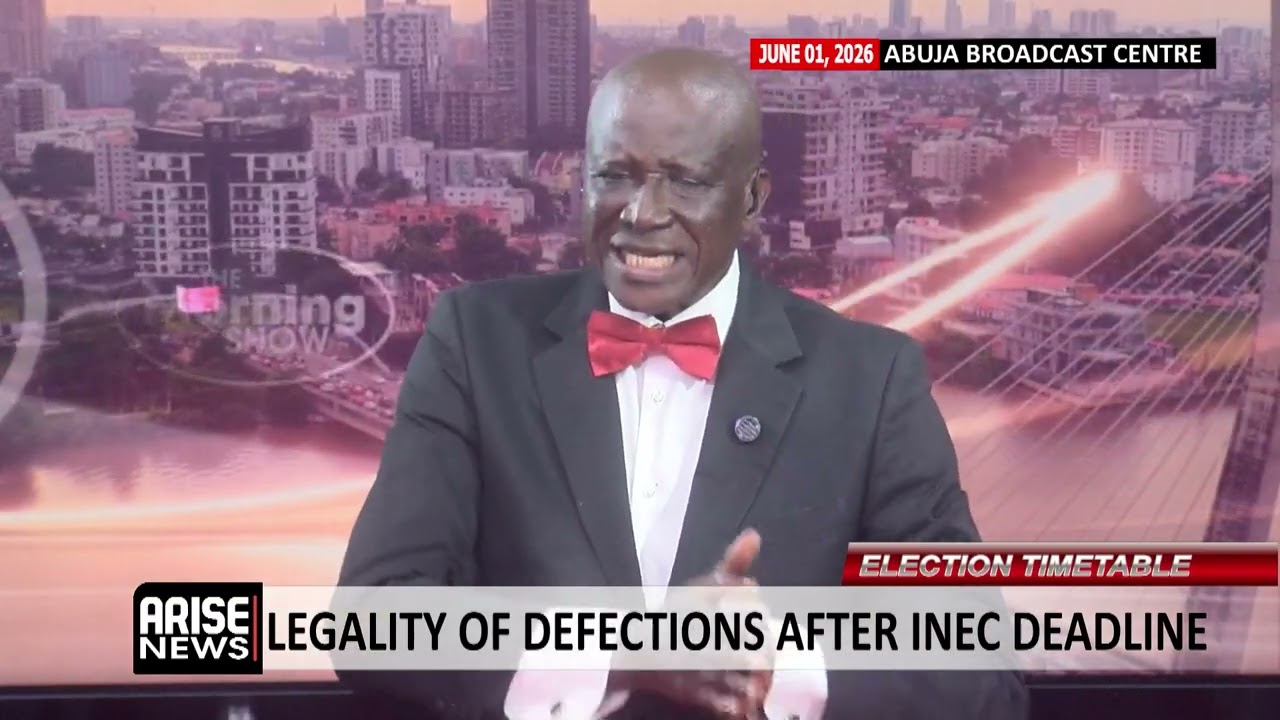
Senior Advocate of Nigeria, Oba Maduabuchi, has argued that the Independent National Electoral Commission (INEC) guidelines should rank above the Electoral Act in matters relating to the organisation of elections because they derive directly from powers granted by the Constitution.
Speaking in an interview on ARISE News on Monday while discussing the legal implications of a Federal High Court ruling on INEC’s timetable for the 2027 general election, Maduabuchi said the Constitution gives INEC exclusive authority to organise, undertake and supervise elections.
According to him, those constitutional powers place the electoral body in a position to issue binding guidelines for the conduct of elections.
He said, “Let us start from the Constitution. Section 153 created INEC. It wasn’t the Electoral Act that created INEC. It was Section 153 of the Nigerian Constitution created INEC.”
Maduabuchi added that the Constitution also spells out the powers of the electoral commission.
“The provision is very clear. It says INEC shall organize, undertake and supervise elections.”
He argued that the three powers granted to INEC are broad and exclusive.
“If you aggregate these three powers given to INEC, you see that Justice Omotosho is right.”
“It is only INEC that has the power to organise elections by saying submit your candidates by such and such a time. Do your primaries like this. Do this as it respects elections. That is organisation.”
He further explained, “Undertaking elections, we say we are conducting this election blah, blah, blah. This is how we do it. Transmitted real time and all that. That is undertaking.”
“Then ensuring that primaries are done according to law, supervising the primaries, supervising their meetings and supervising the elections.”
Maduabuchi maintained that any law that limits those constitutional powers would be invalid.
“Any law, including the electoral act, that tends to derogate from these powers is unconstitutional.”
“There is no way you can detract from powers given to INEC by the constitution. Organise, undertake, supervise.”
When asked about the legal status of INEC guidelines and whether they should be enforceable in court, the senior advocate said the commission’s regulations should carry greater weight than provisions of the Electoral Act where election administration is concerned.
“What I am arguing now, nobody argued it. I am basing my arguments on the constitution. Three words. Organise, undertake, and supervise. Can any subsidiary law take away any of these powers from INEC?”
He said the Electoral Act should only establish the structure of INEC, while the commission itself should determine how elections are conducted through its guidelines.
“What it means is that the electoral act can only create the structure of INEC. While INEC, in undertaking and organising elections, will give us guidelines.”
“They assume the position of subsidiary legislation because they are made pursuant to the powers given by the constitution.”
Asked directly whether INEC guidelines are justiciable and whether previous judicial decisions that downplayed them were mistaken, Maduabuchi responded: “Yes, that’s what I’m saying.”
He added, “With respect to organising elections, INEC guidelines should be higher than the electoral act. Because they are made pursuant to powers given by the constitution.”
Faridah Abdulkadiri
Follow us on:


