


ARISE Business Analyst, Chika Mbonu, has raised concerns over the shortage of Compressed Natural Gas (CNG) refuelling stations across Nigeria, warning that inadequate infrastructure is limiting the benefits of the government’s alternative fuel initiative.
Speaking during an interview with ARISE News on Monday, Mbonu said Nigeria had only 105 CNG refuelling stations across 24 states and the Federal Capital Territory, while 12 states had no facilities.
“There are 105 refuelling stations in Nigeria, in 24 states, plus the FCT. They tell you that 12 states don’t have any refuelling station. So, just picture that. This is just like a drop in the ocean”.
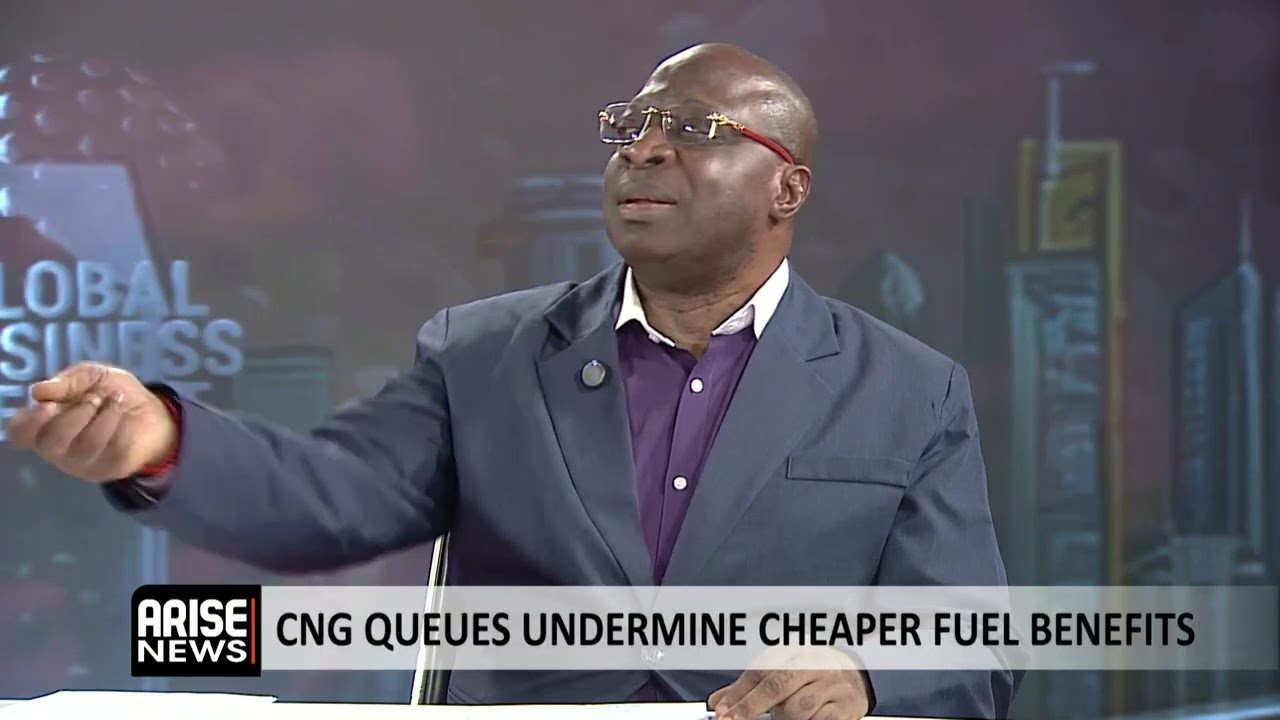
He attributed the shortage to poor planning and weak implementation of government policies, noting that infrastructure development had not kept pace with the expansion of the CNG programme.
“What is happening is symptomatic of most Nigerian good initiatives, which is a lack of consistent planning or lack of rigour. When we try to do things in Nigeria, a very good initiative is very good, but the implementation becomes a problem”.
He explained that the CNG initiative was introduced in 2020 under former President Muhammadu Buhari, before the current administration expanded the programme following the removal of petrol subsidies in August 2023.
Mbonu said CNG could reduce operating costs for commercial transport operators by about 70 per cent compared with petrol, but inadequate refuelling infrastructure was preventing many motorists from benefiting from the savings.
“CNG offers commercial transport operators the opportunity to reduce their operating costs by about 70 per cent compared with petrol.”
He added that motorists often travelled long distances and spent several hours waiting to access Compressed Natural Gas (CNG), due to the limited number of available refuelling stations.
“Motorists often travel long distances and spend several hours waiting to access CNG because of the limited number of available stations.”
Using Lagos as an example, Mbonu said the state had only 16 CNG refuelling points, a number he considered insufficient given its population and transportation demands.
“In Lagos, for example, if you count Lagos and the early parts of the state, there are only 16 refuelling points. You can imagine the whole Lagos, which is the centre of Nigeria,”
He said converting petrol-powered vehicles to CNG remained another challenge, with the process costing between ₦1 million and ₦1.7 million
“Converting petrol-powered vehicles to CNG is another challenge, as the process could cost between ₦1 million and ₦1.7 million.”
He said the conversion cost, coupled with the difficulty of accessing refuelling facilities, could make the transition financially burdensome for motorists.
“If you have to travel from here to wherever to go and get the CNG refuelling and then sleep overnight, as some have been doing, you can imagine the potential cost. At the end of the day, it becomes very expensive,”
Mbonu stressed that the availability of natural gas alone would not guarantee its accessibility to motorists without the necessary distribution and refuelling infrastructure.
“The fact that we have natural gas there does not mean you have your gas on your table. There are processes required to move that gas there to the vehicles, and that’s where the problem lies,”
According to him, the infrastructure required to support the CNG programme should have been developed alongside the removal of petrol subsidies, particularly as the initiative was expected to reduce transportation costs.
“ The infrastructure needed to support the CNG programme should have been put in place alongside petrol subsidy removal, especially as the initiative was expected to lower transportation costs.”
Mbonu called on relevant stakeholders to expand CNG refuelling infrastructure, saying wider access could lower transport operators’ costs and ease commuting expenses.
“Expanding CNG refuelling stations could improve accessibility, reduce operators’ expenses and ease transportation costs for commuters.”
Goodness Anunobi
Follow us on:


