


A member of the Movement for Credible Elections, scholar, activist and former presidential candidate, Professor Pat Utomi, has argued that opposition parties can defeat the incumbent through cooperation and coordinated efforts rather than forcing presidential aspirants to step down for a single candidate.
In an interview on Arise News on Tuesday, Utomi maintained that the insistence on a single presidential candidate creates a false narrative, stressing that opposition parties can cooperate on areas such as election monitoring and vote protection while their candidates continue to compete.
“I think, in many ways, the fact that everybody must rally around one person for things to go forward is a false narrative. It tries to create the impression that unless that happens, the opposition cannot win. That is not correct. Any of the opposition can beat the incumbent in a context in which several participate.
“But if the opposition were to cooperate and collaborate in certain things, they would be more effective in achieving that goal.
“It’s more realistic for all presidential aspirants to agree to pool their resources, coordinate their election monitoring efforts and build a stronger structure for protecting the vite while still competing against each other.”
Utomi, however, described himself as being more realistic than pessimistic about the current effort, noting that both civil society and political parties are pursuing similar initiatives to strengthen opposition cooperation.
“I’m more realistic. Let me be straight about this current effort. There’s a civil society initiative. But within political parties, actually, the same thing is going on differently.”
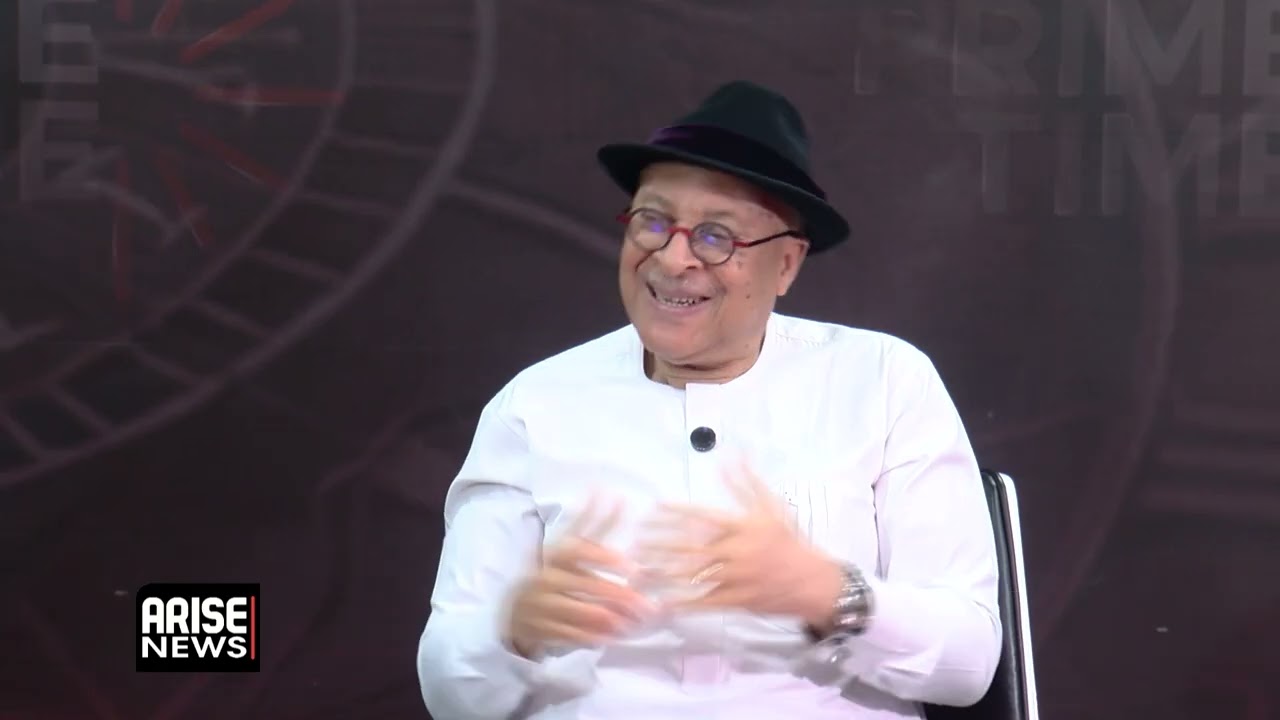
Urging opposition parties to embrace “co-opetition”—competing against one another electorally while cooperating to protect votes and advance shared national goals—Utomi advocated shared election-monitoring resources, technology and a common policy framework despite retaining separate presidential candidates.
“In enterprise, business management, we have a phenomenon that we call ‘co-opetition’—competing and cooperating at the same time. You can have co-opetition in politics. What we can do also, beyond ensuring that votes are cast and counted, is also a policy framework that goes forward.”
On vote protection in the coming elections in 2027, Prof Utomi argued that opposition parties could pool resources to monitor polling units, deploy technology such as body cameras and livestream voting processes, and make it harder for electoral results to be manipulated.
“There’s a way that opposition can, will, and is currently collaborating that will ensure that people are made aware that their votes can count. If people become aware that their votes can count, and they come out and vote, there’s no 300,000 Nigerian police force that can prevent the people’s will from taking place.
So, getting people to know that they can get scoundrels out of the way, and sharing resources—Body cams, live streaming from every polling booth in the country.”
Distinguishing his vision of a government of national unity from the inclusion of opposition figures in government, Utomi argued that genuine unity must be built around the common good and long-term nation-building rather than proximity to power.
He stressed that genuine nation-building requires Nigerians to move beyond the pursuit of power and self-aggrandisement, arguing that strong institutions and human agency can help change the country’s trajectory.
“Government of national unity does not mean that you advertise yourself as coming from a political party other than the one that, quote-unquote, ‘is supposed to be in power.’ Government of national unity, by the way, can take place outside of a democratic process.
“Again, I come back to this obsession with power in Nigeria because the first thing that people think about when they think of power is capture, self-aggrandizement. If people were to think of common good… A great perspective of the fact that nation-building is so important, it should not be toyed with.”
Acknowledging the challenges facing his generation, Utomi argued that each generation has a duty to define and fulfil its mission, saying his generation had failed Nigerians.
“Every generation has that duty to come out of its relative obscurity and define its mission, either betray it or fulfill it.
“Our generation has betrayed its mission to the Nigerian people, and the generation after us should kick us out! If they want to kill us, let them kill us! But we have been a disgrace as a generation.”
Addressing the challenge of persuading presidential aspirants to put collective interests ahead of personal ambition, Utomi argued that their shared concern for Nigeria’s future should encourage cooperation. He maintained that many of the politicians already know and do business with one another, suggesting they can overcome political differences when the country’s future is at stake.
“And from my experience knowing many of them, almost all of them actually, personally, I’ve seen them do business together. So, if they really, truly believe in the future of their children, they must be able to say, ‘Enough. It’s time for the future.'”
Describing peaceful competition, resource-sharing and joint protection of the vote as a successful coalition, the former presidential candidate said such cooperation is owed to Nigerians and would ultimately be judged by history. He also stressed that character must remain a key consideration when assessing political leadership.
“Yes. I think they owe it to the Nigerian people anyway. And you know what? History is going to hold all of us to account.”
Utomi further urged opposition candidates to exercise restraint, saying they understand the electoral numbers and should avoid undermining one another while considering Nigeria’s future.
“It’s also orientation of numbers and psychology. All of them are polling. They know what the score is. They know what the count is. They know what is realistic. They can make believe to galvanize their base, but they know what the count is. And I think in their sober moments, they must think about their children. They must think that there’s a country to save.”
Reflecting on his political affiliations with the ADC and NDC, Utomi said his priority remains Nigeria’s progress, stressing that his support for any candidate would not compromise his commitment to the country’s future.
“While I was founding presidential candidate of the ADC back in 2007, I wanted everybody to work together. It turned out it didn’t go that way. They’re all friends of mine. I have clear reasons why I support one person over another at any point in time.
“No, I will not rig the process in behalf of the one I support. I think they have enough of my history to know that that’s not my area.
“I want to say that foremost in my consideration, as the consideration of most true patriots, is Nigeria being able to move forward. Nigeria has been stuck in the mud for too long,” he said.
He also expressed disappointment that Nigeria’s economic progress had fallen far short of the expectations he held when he left graduate school.
“When I left grad school at 26, my certain belief was that by the time I turn 60, GDP per capita in Nigeria would be $30,000. I turned 70, and it was about $1,000-something. I consider my life a failure.”
Responding to the APC’s argument on economic stability, Utomi challenged its claim of moving Nigeria in the right direction, saying he could defend his position against the ruling party anywhere.
“I can stand any of them on any podium anywhere in the world and tell them that they are not. Don’t forget that I was one of those who built the so-called ruling parties.”
Favour Odima
Follow us on:


