


The National Legal Officer of the African Democratic Congress, (ADC), Professor Oserheimen Osunbor, has criticised the Court of Appeal’s judgment affirming the Federal High Court’s decision restraining the Independent National Electoral Commission (INEC) from recognising the party’s state congresses organised by committees appointed by the David Mark-led caretaker leadership, describing the ruling as one that “defies logic.”
This comes after the Court of Appeal in Abuja, in a split 2–1 judgment, upheld a Federal High Court order restraining the Independent National Electoral Commission, (INEC), from recognising ADC state congresses conducted by committees appointed by the David Mark-led leadership.
Reacting to the ruling, Professor Oserheimen Osunbor described the appellate court’s decision as illogical, arguing that political party congresses are constitutionally conducted by the party’s national leadership and not by state executives.
“My reaction is, of course, one of disappointment because I thought the issues were very straightforward. But here we are, faced with a Court of Appeal judgment that, in my opinion, defies logic,” he stated.
“What the Federal High Court decided—by Honorable Justice Abdu-Malik on the 14th of April—was to nullify the congresses on the ground that they were conducted by a committee set up by the National Working Committee of the ADC, ruling that this was wrong and that the State Executives should have conducted their own elections. It doesn’t make sense.”
“That was a decision based on the premise that the plaintiffs—the chairmen of the political parties—were the rightful persons under the Constitution of the ADC to have conducted their state congresses.
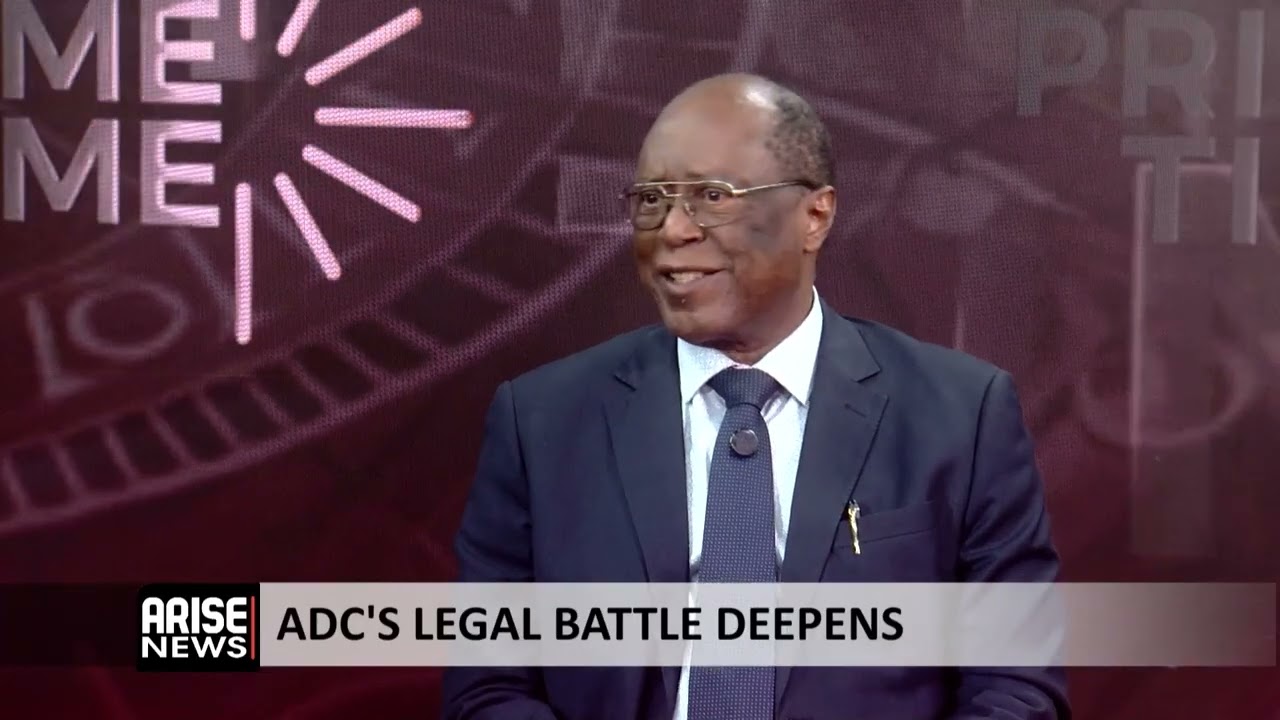
“But that defies what we all know as Nigerians. It is the leadership of every political party that conducts congresses. Otherwise, it would be an absurdity to say that a state chairman and members of the state Executive Committee (Exco) should be the ones conducting their own elections,” he explained.
Professor Osunbor argued that the Federal High Court lacked jurisdiction to entertain what he described as the ADC’s internal affairs, insisting that the conduct of party congresses falls within the party’s administrative powers.
“There are several errors. The main error—the first error, as you probably would have heard or known by now—is that the Federal High Court lacks jurisdiction to entertain the internal affairs of any political party. That includes administration. How you conduct elections and how you conduct business are internal administrative responsibilities of the political party,” he emphasised.
He, however, expressed confidence that the Supreme Court would overturn the ruling, maintaining that the appellate court misinterpreted the ADC constitution by relying on a single provision instead of reading it as a whole.
“Likewise, I am confident—and thank God we have the opportunity to appeal to the Supreme Court—that this wrong judgment will be set right,”
Arguing that the appellate court misinterpreted the constitution of the ADC, Professor Osunbor said the judges relied on a single provision instead of reading the document as a whole. He maintained that Article 19(12) empowers the National Working Committee to dissolve a state executive and appoint a committee to perform its duties, making the matter an internal party affair that is not justiciable.
“In my view, it is wrong; it is not a correct reflection of the law. In fact, one of the points the minority judge made was that the court did not even read the provisions of the ADC constitution. They simply picked on the clause stating the National Working Committee should prepare an agenda, and based their decision solely on that.
“Not only that. When you interpret—and the minority judgment stated this—the duty of a court in interpreting a constitution or any statute is to read it in its entirety, not to just pick one section and shut your eyes to the rest.
“If the court had looked at Article 19, Subsection 12, it expressly confers power on the National Working Committee to dissolve a state Exco and appoint any committee of their liking to perform any duty. Those are internal management matters of political parties, and they are not justiciable,” he explained.
Also contending that the appellate court erred on the issue of a subsisting court order, Osunbor said the ADC’s National Convention and state congresses had already taken place before the Federal High Court delivered its ruling. He argued that a court cannot restrain an act that has already been completed, noting that the plaintiffs’ counsel acknowledged this during the proceedings.
“The minority judgment noted that the court order was delivered on the 14th of April, when the National Convention was already underway. The judgment delivered that day did not come to our notice until after the National Convention.
“You issue an injunction to prevent something from happening; you do not grant an injunction in respect of a matter that has already taken place. These state congresses had already occurred, and the National Convention was already underway. In fact, the lead counsel for the plaintiffs told the court that the state congresses had been concluded. He informed the court that while they were there, the ADC was holding its National Convention.
“What other proof do you need if the counsel to the plaintiffs admitted before the court that these matters had been concluded? It was, therefore, not within the province of the court to grant an injunction to restrain something that had already happened,” he insisted.
Maintaining that the party acted within the law, Professor Osunbor said the ADC anticipated legal challenges and structured its candidate selection process to comply with the Electoral Act.
“We anticipated where the plaintiffs were going. This plethora of cases has been targeted at preventing the ADC from fielding candidates, but we were smarter than them. The court’s ruling sought to prevent us from holding congresses and conventions. However, we never held any congress or convention in violation of any court order; we were very careful. Luckily, the Electoral Act, despite its imperfections, came to our relief by providing for direct primaries and abolishing indirect primaries,” he said.
He also commended those who negotiated Senator David Mark’s emergence as the party’s caretaker leader, saying they exercised due diligence by amending provisions of the ADC constitution to eliminate potential legal loopholes that could be exploited to challenge the party’s leadership.
“I must say that I feel very proud. I was not one of those who negotiated it, but they absolutely performed due diligence. They anticipated that problems of this nature would arise, so they were highly methodical, ensuring that wherever the ADC constitution needed to be amended, those changes were made,” Professor Osunbor said.
He further alleged that those challenging the ADC’s leadership were motivated by a fear of a strong opposition and free, fair elections.
“That is just one example of the due diligence performed, anticipating that opponents would try to exploit any loophole to throw us into chaos. Those who are afraid of democracy, those who are afraid of the opposition, and those who do not want to face Nigerians in a free and fair election. Nigerians know who they are,” he concluded.
Favour Odima
Follow us on:


