


Nigeria’s Defence Minister and former Chief of Defence Staff, General Christopher Musa (rtd) has said that the country is gradually winning the fight against insecurity, assuring Nigerians that the nation is making steady progress.
While speaking with ARISE NEWS in an interview on Tuesday, Gen. Musa urged Nigerians to support the armed forces and the government in the fight against insecurity.
“We’re winning, definitely we’re winning. We’ve had a number of casualties; it is war that is ongoing. And that’s why it’s important for us to remain alert, continue to support the armed forces, continue to support the government so that we can win,” he urged.
Speaking on the recent attack in Jilli, Borno State, Gen. Musa insisted that the location had long been identified as a restricted area used by insurgents and their collaborators for logistical support.
“That area had been banned for a very long time because the den where they use to meet normally with people that supply them with fertilizer for IEDs—they give them food, fuel, and all these issues—and normally they operate at a very short time and disappear. Unfortunately for them, then that day we were able to see them and were able to take a strike. And you know, it’s really disturbing when you hear how people want to change the narrative to make it look as if they were just innocent people. Nobody in that area was innocent, none of them. And I can attest to you that if any of them is innocent, they would have said it,” he revealed.
Stressing that the military had repeatedly warned civilians to stay away from the location because of its links to insurgent activities, the Defence Minister noted that the high profits from trading in the area continued to attract people despite the security risks.
“They knew why they were there. They were making “big business,” I tell you. If you take a bag of rice in that area, you sell it for about 150,000. The money is much, so the attraction is so much. People buy fuel, take a full tank, go there, empty it, and sell to them, and they make so much money. So the attraction is for them to make business, and that’s what keeps them going. That’s what we’ve warned, and these are areas we’ve told them: there’s nobody there. What are you doing there? What kind of business? Who are you doing business with? Those are the answers they should tell,” Gen. Musa insisted.
Responding to the question about the overall security situation in Nigeria, Gen. Musa said Nigeria had reached a turning point rather than a tipping point, insisting that security forces are making progress against insurgent groups.
“It’s a turning point. We’re winning the war. I mean, no matter what impression people want to have, we’re winning the war. We will continue to win.”
Addressing the deaths of senior military officers in recent attacks, the General said the incidents highlight the complex and dangerous nature of the conflict Nigeria is facing. He explained that security forces are confronting a determined enemy supported by informants and logistical networks, which makes military operations more difficult.
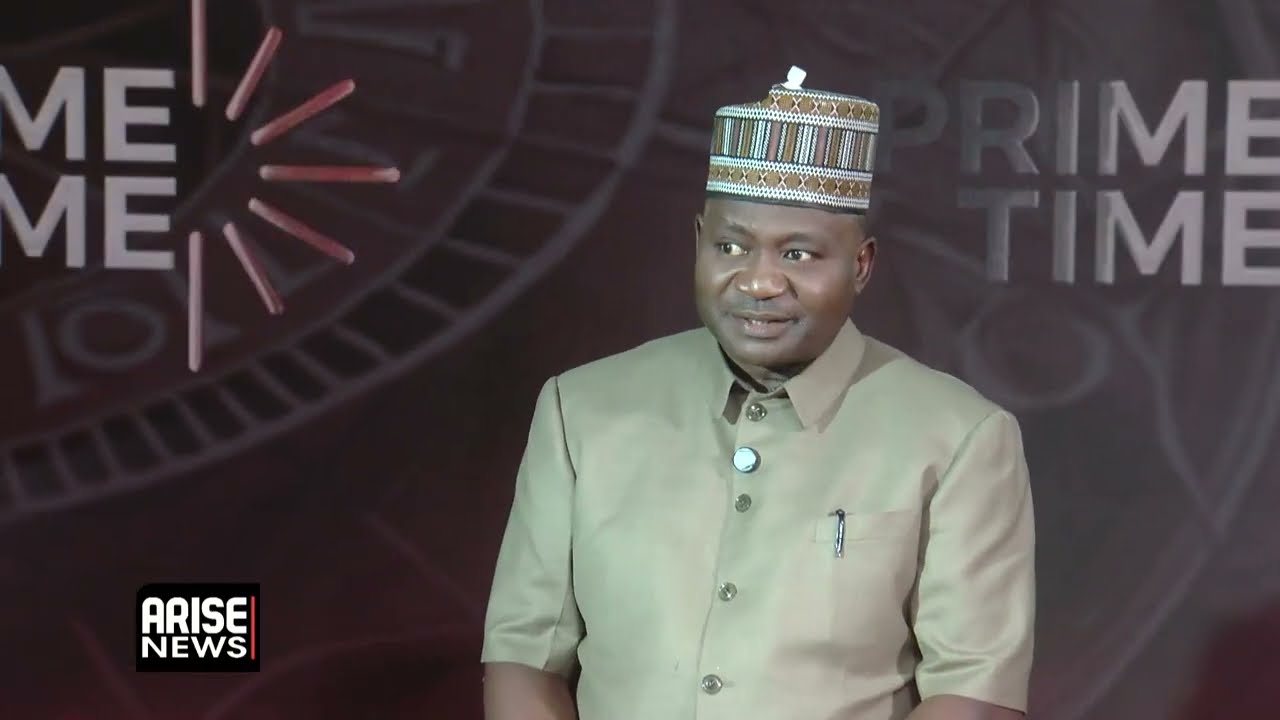
“That’s why I said that we’re fighting a war and we’re fighting a determined enemy who is getting the support from outside and who has nothing to lose. The worst enemy you can fight is somebody who is from within, somebody who has nothing to lose. And to them, because it was ideological, they feel if they die, they’re going to heaven; if they kill somebody, they’re going to get blessed. So they take any risk. And again, very unfortunate that we lost very wonderful officers, because these were deliberate attacks.”
According to him, insurgents often receive intelligence from local collaborators who reveal troop numbers or movements, allowing attackers to overwhelm smaller military units with larger forces.
“And what they do is these same individuals that people say are civilians are the ones telling them that ‘this unit you have only 20 soldiers,’ so what they do, they come over 200. So what they try is they try to run through because of the information they’re getting from those informants or logisticians that help them. So that’s why I’m saying asymmetric warfare is a very difficult operation, because once they have this support, it makes it a lot easier for them,” he explained.
Adding, Gen. Musa highlighted improvised explosive devices (IEDs) as a major cause of casualties among soldiers. He said many of the explosives are produced using urea fertiliser, which insurgents extract and convert into bomb-making materials.
“And why we take a lot of casualties again is because of IEDs. IEDs are implanted on the ground. Like the issue of the commanding officer that died in Monguno, it was an IED,” he revealed.
Responding to concerns about corruption or poor maintenance within the armed forces, the Minister said the location of the attack was under the responsibility of the brigade commander who was killed, describing him as a capable officer. He suggested the troops were likely overwhelmed by the large number of attackers, rather than the incident being due to negligence.
“So you know, when you look at it and you say “due to poor maintenance,” that location was the location that was his—the commanding officer, the brigade commander that died—that was his own location. He’s the one taking care of the maintenance; he’s the one taking care of the men on the ground there. So, not to play a blame game, I don’t think he’s that kind of person. He’s somebody I know quite very well; like a godson. It’s very painful that we lost somebody like that who has so much capacity. But again, like I said, it is war. The number that came out was really overwhelming, and I think probably that’s what added to it.”
Also, Gen. Musa said soldiers are not sent into battle with compromised equipment, stressing that weapons like rifles are properly maintained and remain reliable.
“Normally what they say is, you know what we call our rifles, ‘our wives.’ That is your most reliable weapon, and it is the way you take care of it; it gives you the best. So that’s why normally when you go there, you have to clean your rifle consistently.”
The Defence Minister also said military forces are making significant gains, including the killing of dozens of insurgents and commanders, but argued that such successes often receive little public attention compared to attacks.
“And I can tell you one thing I realized is, sometimes we make gains—I give you an example, just about three or four weeks ago, we killed over 80 terrorists with their high commander. We took over four or five of their main commanders, and that’s why they planned this one, because they wanted to take one of our commanders because we’ve killed about five of their own top commanders. So you see, those are the things that they planned for. And with the killing of over 80, you didn’t hear so much noise about it. How many people talked about it? Nobody. So it seems as if when we win, it’s just normal,” Gen. Musa noted.
The Defence Minister urged Nigerians to acknowledge and support the sacrifices of military troops, adding that security personnel often receive less recognition for major successes compared to the attention given to losses.
“And it seems as if when one soldier, one officer is killed, the escalation is so high. When we kill a hundred, it’s muted. I think people should understand that these guys are sacrificing their lives for this country, and for whatever it is, let us give them accolades when they deserve it. Let’s sympathize with them, let’s empathize with them, let’s support them in whatever it is we’re doing,” he urged.
The Defence Minister further explained that military effectiveness is limited by funding constraints and dependence on imported equipment, with ongoing efforts to improve local production and capabilities taking time to fully develop.
“Everything costs money. Everything we’re buying has to do with foreign exchange. The country… not everything goes into defense. So what we’re saying is that because we don’t even produce these equipments that we need—though now we’ve started producing gradually, but it will take a long while.”
Speaking on Nigeria’s partnership with the US, Gen. Musa said military cooperation is ongoing, adding that strengthening intelligence and operational capacity will take time but is gradually progressing.
“That’s going on, the training now. So a lot of training is ongoing to be able to build up. Capacity building takes a lot of time. That aspect is ongoing, and I think it will take time, but very soon, I’m sure those things are going to come up,” he assured.
Commenting on the Jilli military air operation, Gen. Musa said it was based on correct intelligence and that anyone aiding insurgents is part of the same network sustaining terrorism.
“It was correct intelligence. We moved in, we got them at the right time, and we hit them. And like I said, and I will always mention that: he who supports any terrorist, any bandits, is one of them. Because his action makes them survive, gives them the impetus for them to carry on. And the civilians we are talking about… it’s only when they carry a weapon? No. They do that together. This man provides the ammunition for them, buys the weapons and gives them, gives them feeding, gives them fuel. Who is he? He’s a bandit, he’s a terrorist,” he maintained.
Gen. Musa added that people supporting insurgents do so willingly for profit and are treated as part of the conflict network, with security forces regularly arresting and targeting such collaborators.
“Greed is dangerous, and this is what happens. They were just greedy individuals that think they’re making money by supporting terrorists. And we have made it very clear, even in the entire Northeast: these are areas that are no-go areas. Don’t have anything to do with them. Never. They were not forced, they were not coerced; it was on their own volition that they went there to do business with who they know are terrorists, supporting them. These terrorists give them money to come and buy stuff. On a daily basis, we have arrested them. I’m sure when you keep on hearing us talking about logisticians, these are the guys that keep them going. Period. Without those guys, they will never move forward. So that makes them… and it’s part of war. If you make yourself open to terrorism, you become a legitimate target,” he insisted.
Addressing concerns about civilian safety in counterinsurgency operations, Gen. Musa said the military operates based on intelligence and cannot be present everywhere, adding that strikes are sometimes aborted to avoid civilian harm and that civilians are not deliberately targeted.
“Nigeria is about 923,000 square kilometers. We don’t have military men that will cover every area. Absolutely. So what the enemies do is they look for areas where there’s nobody, and then they want to attack. We cannot be everywhere. So we try as much as possible, we get information and we react as quickly as we can. But we don’t take out innocent civilians. I tell you, we have called off strikes because we followed terrorists and they went into communities,” he shared.
On why insecurity continues in Nigeria, Christopher Musa said it is sustained by individuals who voluntarily support insurgents.
“Nobody is happy with these individuals, what they are doing. They are the ones prolonging this strife. I can tell you for free, it is because of the support they are giving them that this thing is ongoing,” he revealed.
The Defence Minister noted that in the case of operational mistakes, investigations are carried out, affected communities are engaged, and compensation is provided to victims.
“Of course there are consequences when you make such mistakes. But again, like I said, we are humans and this is war. If it’s a mistake, we go there, we have committees that will always go back to those communities, meet them, get a record of all those who are killed, sit down with the communities, pay compensations. We do that always.”.
Dismissing claims that the military could be undermined internally, Christopher Musa said the armed forces remain capable and face mainly asymmetric warfare challenges.
“We can read out how many places we’ve been to to be able to assist and restore peace. We have those capacities. Like I said, now, it’s because of asymmetric warfare.”
Emphasising that corruption and procurement issues are not responsible for battlefield losses, Gen. Musa said the military operates within major budget and procurement constraints because equipment is largely imported and purchased in foreign currency.
“Issues of corruption? No way. And I tell you, you know, if you look at the budget of the military, convert it to dollars and imagine what you can buy with it. For every ammunition we buy, we buy in dollars. For every equipment we’re buying, we’re buying in dollars. So we don’t produce. We do not have all we need, but we’re making the best of what we have,” he said.
Commenting on the recent US travel advisory warning citizens against visiting certain parts of Nigeria, Gen. Musa said he was surprised by the development, insisting that Nigeria is not as unsafe as portrayed and suggesting that the advisory may have been influenced by inaccurate information.
“I was shocked when we had the news. And I can tell you, Nigeria is not that bad. The news we had was that they got some false information. And that’s why it’s dangerous the way people go to social media and spill out falsehood,” he stated.
Acknowledging insecurity challenges in Nigeria, the Defence Minister said Nigeria remains safer than some conflict-affected countries and pointed to everyday life and foreign visitors as evidence of normalcy.
“Life is ongoing in Nigeria. I mean, can you compare here with places like Somalia or Afghanistan? No country is immune to criminality in the world, because it’s a human thing. Now, the acts of banditry that we have and kidnappings is a social thing. We’re doing our best, yes, definitely,” he insisted.
Favour Odima
Follow us on:


