


A former special adviser to the former Abia State Governor, Chinenye Nwaogu, has said Nigeria must prioritise nation-building and a shared national identity, arguing that elections alone cannot resolve the country’s longstanding challenges.
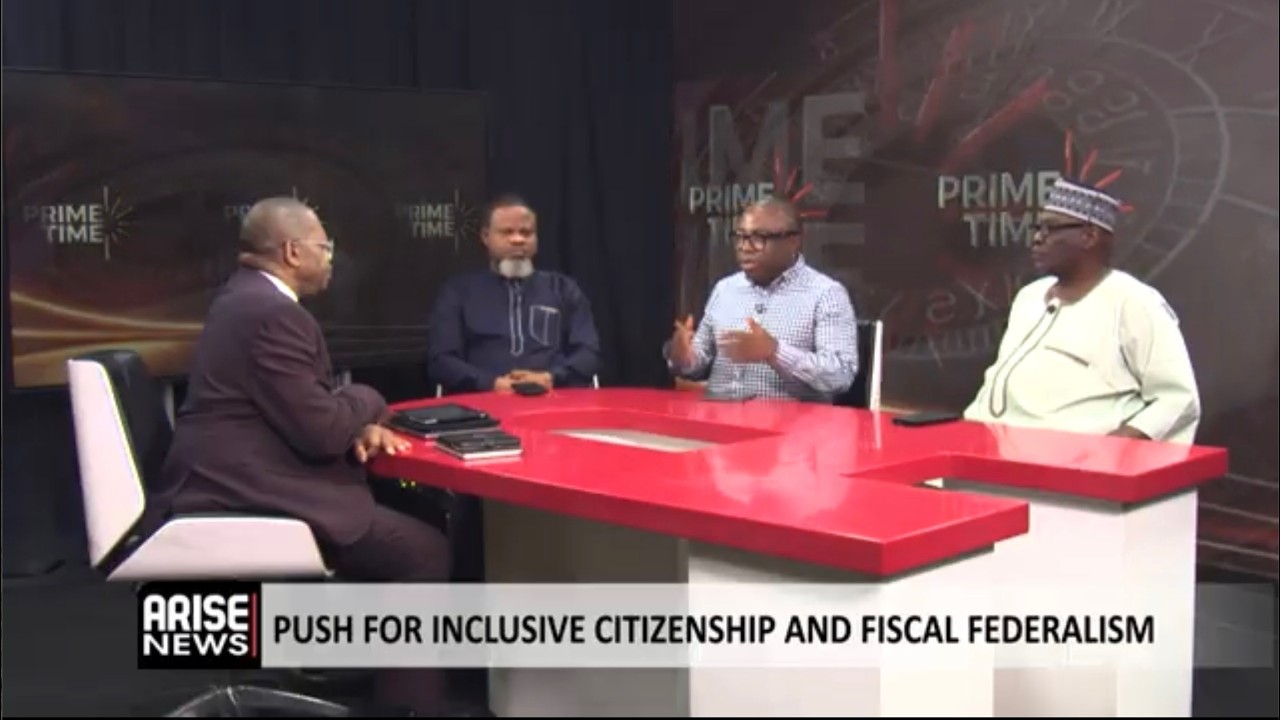
Nwaogu, who served under former Abia State Governor, Victor Okezie Ikpeazu, said Nigeria did not truly have a nation at independence, but rather a country, noting that successive governments have failed to address the deeper question of nationhood. He made the remarks while analysing recent events across Nigeria in an interview with ARISE NEWS on Friday.
“Elections alone won’t cut it for us because, over the years, we have experimented with elections, and it really hasn’t solved the problem. We need to build a nation. It’s when you now build a nation that you now get to developing the nation.
“The fact is that at that time when we took independence away from the British colonials, we didn’t really have a nation. We had a country. The fact is that it’s difficult today for every Nigerian to connect to the ‘I am a Nigerian.’ Even the current government in power is struggling with all kinds of narratives, but they have not been able to resolve the issue of nationhood—the identity crisis. That is, for me, the big conversation that needs to happen so that everybody will be on the same page.”
Linking the country’s insecurity to the broader question of nationhood, Nwaogu said Nigeria has lost significant territorial capacity to protect its citizens, while many Nigerians no longer feel a strong sense of belonging to the nation. He said institutions must operate with a national and patriotic purpose rather than sectional interests, stressing that greater cohesion and a shared national aspiration are necessary to strengthen governance and protect citizens.
“Everything stems from that overarching objective of nationhood, right? What you have today is that we have a country that has lost a lot of territorial integrity, territorial capacity to protect citizens. Many people do not feel that they are part of the nation. They don’t feel obligated to become Nigerian.
“If we have a nation where everybody feels included, the institutions will now see themselves not… So, if you have an Army Chief of Army Staff, for example, or an Inspector General of Police, he won’t be looking at himself as serving some sectional aspiration. He’ll be looking at himself as a national leader, right? So, everybody—governance and everybody—will be working towards the same objective.”
Speaking on President Bola Tinubu’s proposed $1 billion Social Protection Fund, Nwaogu, who previously served as Secretary of the Focal Persons Forum for the Buhari Social Investment Programme, said social transfers alone would not sustainably lift Nigerians out of poverty.
He advocated directing the funds towards productive and entrepreneurial activities, financial inclusion and programmes that enable beneficiaries to grow and repay the funds received.
“In the last administration, I was Secretary of the Focal Persons Forum for the Buhari Social Investment Program. You need to put funds in a productive engagement. If you do just social transfers to people—so you give somebody 40,000, you give a household 40,000—in a week’s time, they return back to poverty.
“Instead of giving $1 billion in social transfers, why don’t you turn that money into entrepreneurial activity, where you give people money and they return the money in a system where you see the money growing? And again, you put them in a financial inclusion program; they use the money to do business and return the money.”
Speaking on the APC’s 2027 campaign council, Nwaogu said the composition itself was not particularly significant, noting that a president should put forward what he considers his best team. However, he raised concerns over the alleged withdrawal of the council’s list, saying the reported reversals suggested a lack of strong thinkers around President Bola Tinubu. He added that this was one of the major challenges confronting the administration amid economic difficulties and growing backlash.
“What is currently happening between now and January/February really doesn’t strike me as doing something very significant. If you are a president, you put what you think is your best team forward.
“The only challenge I have with the whole campaign composition is the alleged withdrawal of the list. This is not the first time it’s happening. The President makes an announcement, and then there’s a withdrawal. So the question I keep asking: who are the people thinking in the Villa? It looks to me that there are not many smart thinkers around the President. That is one of the biggest challenges President Tinubu is encountering. With all the challenges his government is having—with all the backlash within both micro and macroeconomic indicators—it looks to me that there are not many thinkers around the President.”
Addressing Atiku Abubakar’s position on petrol subsidy, Nwaogu expressed disappointment with the opposition, saying it had failed to present Nigerians with clear alternative policies and an agenda for addressing the country’s challenges.
He said Atiku had not provided figures, details or clear benefits for his proposed subsidy reversal, adding that Peter Obi had made a stronger case by focusing on eliminating corruption rather than the subsidy itself.
“As a Nigerian, I feel very disappointed with the opposition. They’re just letting the current government lead the conversation, and that is very dangerous for them. Nigerians want to have alternative views, alternative programs, and an alternative agenda. Atiku hasn’t told us the figures, he hasn’t told us how he wants to do it, and he hasn’t told us what would be the benefits to the people.
“In fact, the only person—and I’m just saying this because right now I don’t support anybody for now—the only person who has made a solid argument about the issue of petroleum subsidy is Mr. Peter Obi. Because he put figures to what he will do, because he was the one who said, ‘I will take out the corruption, not the subsidy.'”
Nwaogu also addressed the issue of petrol subsidy, describing it as central to the lives of Nigerians because the cost of petrol and diesel affects the wider economy. He said the funds saved from subsidy removal were transferred to state governors, arguing that the governors now control significant resources meant to address poverty and could therefore be contributing to the challenges facing President Bola Tinubu.
“One of the biggest challenges President Tinubu has had is the fact that fuel subsidy is at the heart of all our national life. Because the cost of petrol, diesel, and everything affects the typical Nigerian.
“So he took the money from fuel subsidy and handed it to governors. For me, maybe if we have a bigger conversation, the biggest irony of this is that the people who are setting President Tinubu up are the governors, because they have a chunk of the money that deals with poverty issues.”
Favour Odima
Follow us on:


