


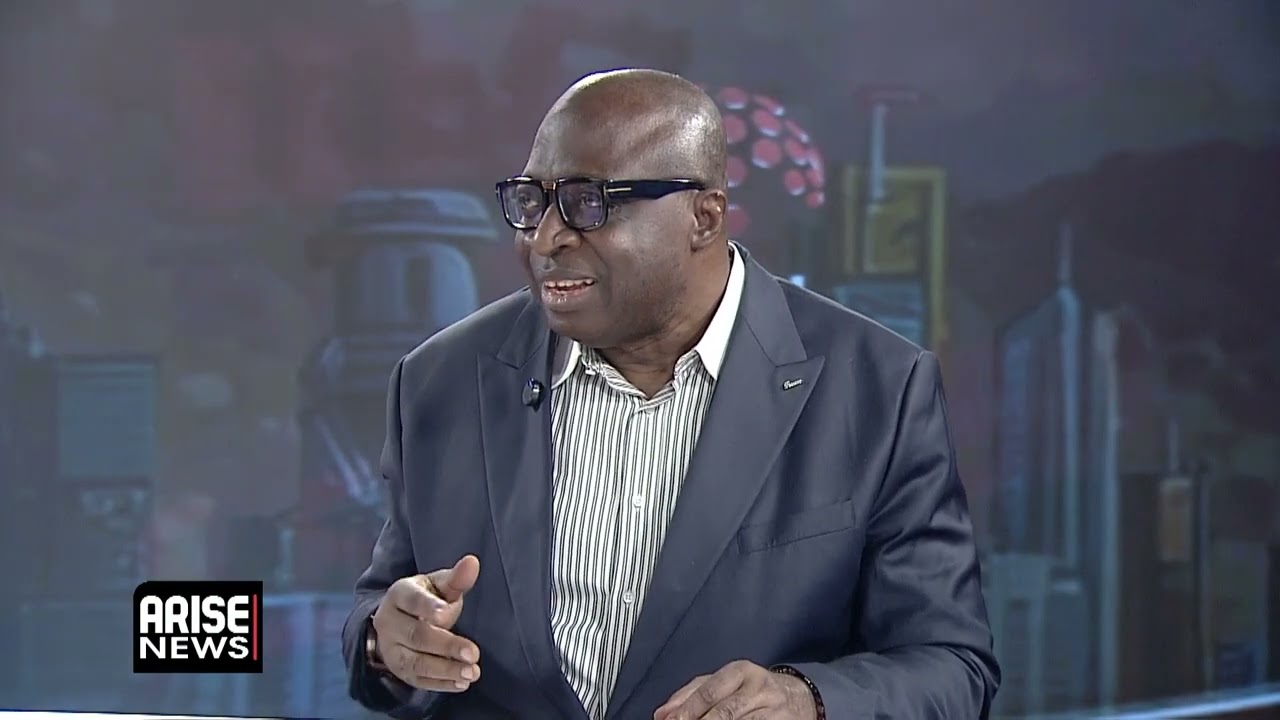
Arise Business Analyst, Chika Mbonu, has said that the excitement surrounding Chinese firms reportedly taking over Nigeria’s Port Harcourt and Warri refineries is premature, stressing that the arrangement remains only a Memorandum of Understanding (MOU), not an actual takeover.
Speaking during an interview with ARISE NEWS on Tuesday, Mbonu warned that Nigeria’s refinery sector has a long history of announcements that fail to translate into real production.
“But let’s be clear from the outset. Rutus, please. This is not yet a takeover. It’s an MOU Memorandum of Understanding,”
He added that Nigeria’s experience with refinery rehabilitation has been marked by repeated promises with limited results.
“And in Nigerian refinery history, we have seen many, MOUs. Many announcements, many billions spent, but very little petrol produced.”
Mbonu explained that the current agreement involves NNPC and two Chinese firms that may be involved in rehabilitating, financing, operating, and expanding the refineries.
“What has NNPC signed? It’s a Memorandum of Understanding with two Chinese firms to possibly rehabilitate, finance, operate and expand their refineries.”
On the scale of the assets involved, he stated their importance despite years of underperformance.
“Port Harcourt refinery is about 210,000 barrels per day, and combined capacity is about 335,000 barrels per day. This is about 52% of Dangote’s refinery. So on paper, this is very significant for the country.”
However, he questioned whether Nigeria can break its long-standing cycle of crude exports and refined fuel imports.
“The real issue is, can this actually work? Will we see the outcome? Our story in the last 50 years has been Nigeria produces crude oil, we export it, we import refined fuel, we subsidize it, and we queue for it.”
He pointed to structural decay and mismanagement as key reasons Nigeria’s refineries have failed for decades.
“Port Harcourt refinery is from the 60s, Warri was in the 70s. Over time, they became symbols of poor maintenance, poor corporate governance, political interference.”
Mbonu raised several fundamental questions about the structure of the deal and its execution.
“Who will really be in control? Are the Chinese going to just be advisors, or will they actually run the refineries?”
“Who’s bringing the money? Is it fresh investment or are we borrowing again?”
“Will the refinery operate commercially or return to subsidized pricing?”
“Will crude supply be guaranteed?”
“Who bears the risk if it fails?”
He stressed that success will depend on governance, discipline, and transparency rather than engineering or funding alone.
“The critical issues include operational control, commercial discipline, financial discipline, and transparency.”
“Let it run professionally, without political interference. The refinery must pay for itself, not depend on government bailouts. We must see progress and results and numbers.”
While acknowledging the risk of failure, he said Nigeria still has an opportunity to reform its downstream sector.
“I asked myself, can Nigeria happen to this project? A big announcement, excitement, lots of pictures, delays, silence, and eventual disappointment. Of course it can happen.”
“But there is hope. Dangote Refinery has proven that refineries can work in Nigeria. We are shifting towards a market-driven downstream sector.”
On his final assessment, Mbonu emphasised that governance will determine the outcome of the project.
“The deal will not fail because of engineering. It will succeed or fail because of governance.”
“Let this be transparent. Let the agreements be properly structured. Let Nigeria get the best deal.”
He added that private sector participation is a positive shift away from repeated government-led funding cycles.
“I am happy this is private sector-led and not just government throwing money into it again.”
On Nigeria’s refining future, he supported expansion and diversification.
“Of course. The more the merrier. It cannot depend on on, More refineries mean more supply, better availability, and better prices.”
“Nigeria can even export refined products and earn foreign currency.”
Mbonu also commented on developments in Nigeria’s banking sector, describing Zenith Bank founder Jim Ovia as a key figure in the industry’s growth.
“One of the doyens of the banking industry in Nigeria. A titan.”
“He started Zenith Bank in 1990. He led it to become one of the most profitable banks.”
He noted that leadership transition in the institution has been smooth.
“The transition is smooth, and the industry has benefited from continuity and CBN policy.”
Goodness Anunobi
Follow us on:


