


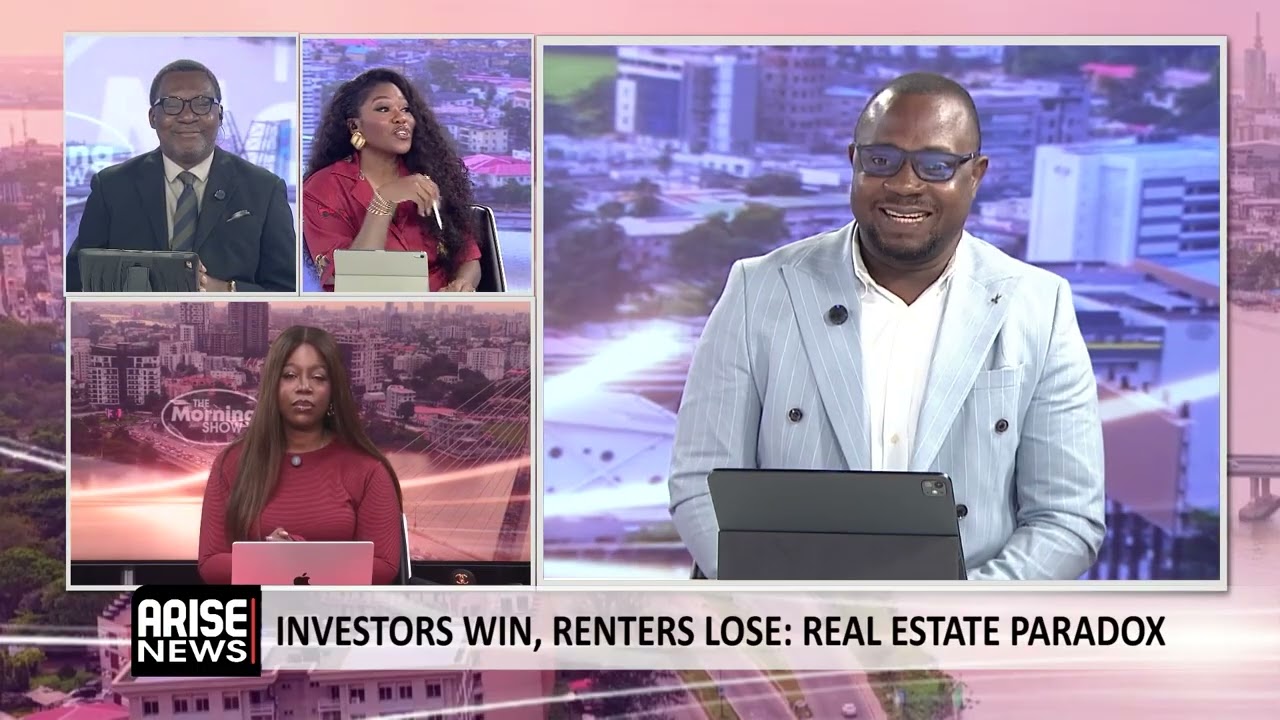
Real Estate Developer and Investment Strategist David Assogba-Lissassi has asserted that developers cannot deliver affordable homes in Nigeria when bank loans cost more than 30%, while weak regulation continues to drive up housing costs.
Speaking during an interview with ARISE NEWS on Saturday, Assogba-Lissassi said the high cost of finance, land, building materials and labour has made it increasingly difficult for developers to provide homes that ordinary Nigerians can afford.
“Not me that collects loans from the bank. And the bank is asking me to pay about 30 something percent. They are asking me to build affordable houses. So we shouldn’t deceive ourselves.”
He explained that Nigeria also lacks effective regulation capable of controlling excessive costs in the housing sector. “I know the government is trying, but they need to do well, which is the regulation. There’s no regulation.”
Assogba-Lissassi said a proper regulatory system should prevent excessive gains and unreasonable increases in housing prices. “There’s no affordable house anywhere now.”
He said the government has shown commitment to housing but needs to make the mortgage sector more accessible to Nigerians. “But we need to look at how the mortgage sector can be accessible to everybody.”
Assogba-Lissassi explanined that access to mortgages remains limited, unlike in countries where taxpayers can access mortgage financing to buy homes. “Government must partner with the developers.”
He said government can reduce the cost of housing by providing land and basic infrastructure while giving developers easier access to loans. “We should provide the infrastructure, provide the land, and give him a soft landing on how to get a loan. The developer can try and build an affordable house.”
Assogba-Lissassi pointed to Rwanda, where government provides infrastructure such as roads, electricity and water to housing estates, reducing the burden on developers. “In Rwanda, government provides roads, light, water to estates. In Nigeria developers provide infrastructure themselves. We should provide the infrastructure, provide the land, and give him a soft landing on how to get a loan. The developer can try and build an affordable house.”
He said better transportation would allow workers to live outside major employment areas without facing excessive commuting difficulties. “Transportation is key, If you have efficient transportation in New York, you can live farther away. So if we have more transportation systems, people can live away from the expensive work centres.”
The real estate strategist also said Nigeria’s housing deficit. “We have housing deficit of about 14.9 million units.”
He referenced the housing model associated with the administration of former Lagos State governor Lateef Jakande, arguing that government involvement and partnerships with developers could help increase affordable housing supply. “Government must partner with the developers. The developer can try and build an affordable house.“
Assogba-Lissassi also rejected the idea that government alone is responsible for Nigeria’s housing problems. “To be honest with you, sometimes I tell myself the truth, which is, it’s not all government failure.”
He said problems can arise from the way funds meant for development are distributed and managed. “The civil force is the problem. The civil force, Nigerians are the problem.”
He questioned whether funds would reach the intended beneficiaries and whether those responsible for disbursing them could be properly monitored. “So those people that need, that will be disbursing those money, how will they be checkmating them? Who is, are they giving the money to the right people? Or are they giving the money to party parties?”
He said Nigeria needs to confront these problems honestly rather than placing responsibility entirely on government.
“So we need to tell ourselves the truth. Sometimes it’s not the government alone, but the people riding the horse is the one that will tell the horse where to go to.”
Assogba-Lissassi said the rising cost of housing reflects a broader problem in Nigeria, where basic living standards are increasingly becoming unaffordable. “We have made the basic standard of living in luxury in Nigeria. We are the ones that have made this in luxury.”
He said addressing the housing problem will require government, regulators, financial institutions and developers to return to the table and find practical solutions.
“The way forward is we should go back to the table, We need the regulatory body to come on board.”
Erizia Rubyjeana
Follow us on:


