


The National Chairman of the ruling All Progressives Congress, Nentawe Yilwatda, has revealed that the APC now has 12.9 million verified registered members, compared to the PDP’s 2.4 million, ADC’s 1.6 million, Labour Party’s 1.3 million, and NDC 700,000, while defending the party’s controversial primary elections.
Speaking during an interview with ARISE News on Monday, Yilwatda said the APC’s membership strength dwarfs that of the opposition, insisting that the party remains Nigeria’s most organised political platform.
“We have about 12.9 million registered voters that were submitted to INEC. Let me give you data. APC submitted 12.9 million registered voters. PDP submitted 2.4 million registered voters. The ADC submitted 1.6 million registered voters. Labour Party submitted 1.3 million registered voters. NDC submitted 700,000 registered members,” he said.
“So these are the data. If you put all these political parties together, they don’t add up to APC’s registered members. All the political parties, this number I’ve counted, they’re not up to the number that APC registered.”
Yilwatda further claimed that the APC is the only political party in Nigeria whose membership register is fully verified through the National Identity Management Commission.
“But even the most important thing in our own case is that we have verified data. All our data of our members are verified by NIMC. We synchronise the data with NIMC,” he said.
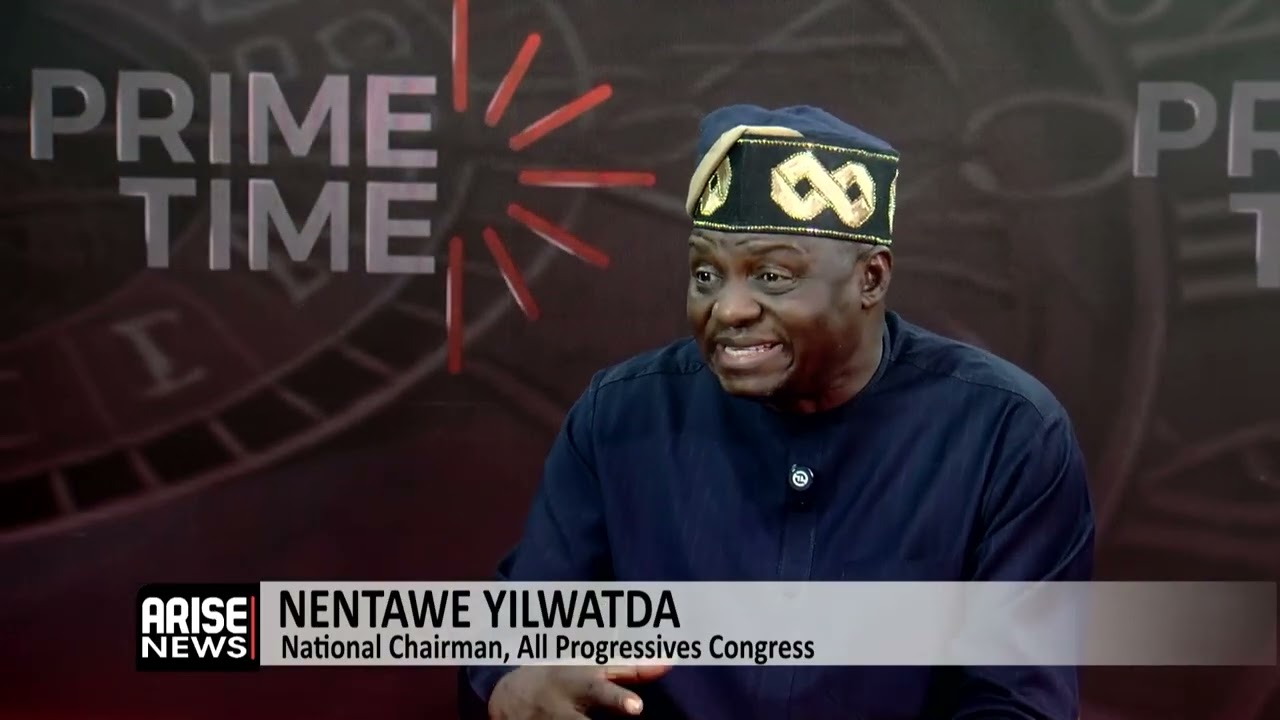
“So for you to be a member of APC, just like how you register in banks, you register for your international passport, for driver’s licence, the same thing is how you register with APC. APC is the only political party that sources data from NIMC, which means that you cannot come unverified.”
The APC chairman also defended the outcome of the party’s presidential primary, which saw President Bola Tinubu secure nearly 10.9 million votes, despite criticism over the credibility of the process and viral videos showing questionable counting procedures.
“Yes, this is what we have,” Yilwatda said while defending the figures.
“We had about 12.9 million and about 10.9 million voted, which means about 2 million people did not vote across the country for our members. A reasonable number. So we had a very reasonable turnout.”
Responding to allegations that some counting videos suggested inflated figures, the APC chairman dismissed the clips as misleading.
“Some of these videos are old videos, unverified sources,” he said.
“But the data we have is different. The total vote cast in the whole entire state is just about 20,000. So how do you get over 20-something thousand from one ward? People can mimic counting at any point. People can do their drama. But I work with data.”
Yilwatda also rejected claims that the APC was interfering in the internal crises rocking opposition parties.
“You’ve been hearing the fight between ADC and NDC, the self-implosion that happened there. People said the self-implosion would be in APC, but the self-implosion was in the opposition,” he said.
“The insults every day are not from APC.”
Asked directly whether the APC meddled in opposition parties, he replied: “We don’t.”
The APC chairman maintained that the ruling party remained stable despite protests and disputes arising from its primary elections in several states.
“We have a stable party, very stable, very calm,” he said.
“We have one of the best governing structures in Nigeria right now as a political party.”
Addressing accusations of candidate imposition and lack of internal democracy, Yilwatda argued that the APC had largely conducted direct primaries across the country.
“The entire 36 states, we had 29 governors that were either returning or new people contesting for governorship in the states. We had only three consensus candidates for governorship. All the rest went for direct primaries,” he said.
He explained that the party deliberately withheld final declarations of winners pending the review of petitions by appeal committees.
“You declare the election at the constituency level, but not declare the winner,” he said.
“A winner comes after we receive the report of the appeal committee. If there’s need for a rerun or substitution based on the report, then we make a final declaration at the national level.”
Yilwatda acknowledged that governors sometimes openly backed preferred candidates during the primaries but argued that endorsements were not illegal.
“In some states, governors have anointed some people and yet they lost,” he said.
“So it means the people that were anointed still lost. A governor is like any other individual. Anybody can endorse you.”
The APC chairman also credited President Bola Tinubu with serving as the rallying point of the party since its formation in 2013.
“In 2013, when we formed APC, President Tinubu was not contesting, but he was a rallying point of the APC,” he said.
“He galvanised the party into victory and didn’t ask for any position in government.”
He added that Tinubu later helped reconcile factions within the party ahead of the 2019 elections.
“At 2019, the party was near disintegration. Late President Buhari called him up and asked him to lead a reconciliation committee, and he reconciled all the factions of APC,” Yilwatda said.
On his legacy as APC chairman, Yilwatda said he hoped to be remembered for improving transparency, automating party processes, and strengthening internal democracy.
“We want to be remembered as a chairman that led the party through improving transparency within the party,” he said.
“The automation we’ve done and the register we have, we’ve proven that we can have data-driven decision-making within the party.”
Boluwatife Enome.
Follow us on:


