


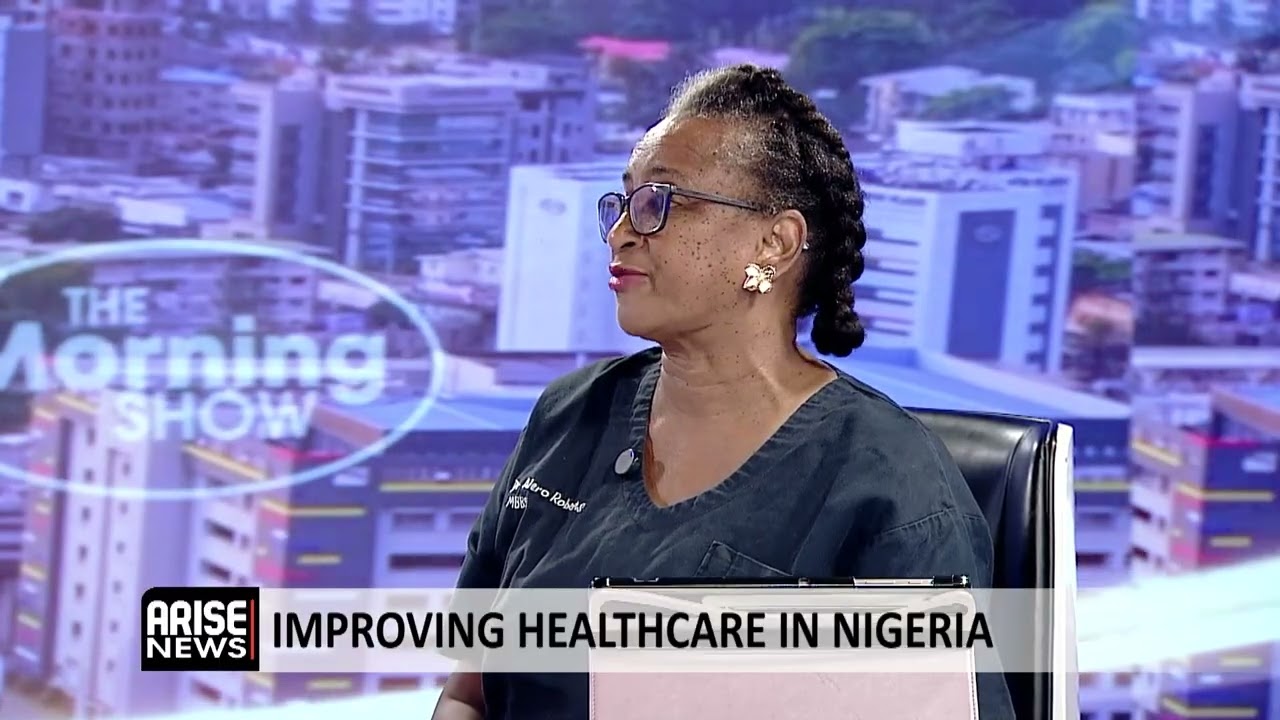
Professor Alero Roberts, a public health specialist, has weighed in on the tragic death of Chimamanda Ngozi Adichie’s son, highlighting the risks delays in recognising illness can pose for children.
Speaking in an interview with ARISE News on Tuesday, Roberts said, “Let’s look at the very first thing. Nobody wakes up in the morning to take a 21-month-old child to hospital. That was not the agenda of the day. To funfair, to grandma’s house, to ice cream parlor perhaps, to hospital.
“So, something was gravely wrong with the child. An issue that warranted a trip to one hospital who escalated to the best hospital, one of the best hospitals that West Africa has, which was why it was chosen,” she said.
The public health expert emphasised the concept of the “three delays” that can affect a child’s outcome: “The delay in the home. Did they recognise danger signs on time? The delay in the transportation. Where is the health facility? In this case, the ultimate health facility is 6,000 kilometers away from the child. Hence, the child must be medevaced. Then the delay in the health system. Those three delays have all contributed.”
Roberts further discussed the efforts made to access specialised care for the toddler:
“She was preparing, allegedly, to medevac a child to a health facility several thousand kilometers away. This is what I’m reading in the public space. Allegedly, the health facility (abroad) has asked for two key tests that tell me that, ah, this child is gravely ill. You do not ask for a lumbar puncture if you’re not expecting a grave problem. Nobody wants a lumbar puncture in a two year old. So there are so many questions, so many angles to it.”
Roberts also spoke about the vulnerability of children under two, noting how quickly common illnesses can escalate: “That 12 to 24 months of age is critical in the state with which a common cold can escalate to a viral encephalitis and become life threatening. As I’m talking, I have goose flesh and I’m holding back tears because the pain is unimaginable.”
On the regulatory environment in Nigeria, Roberts criticised the lack of accountability for medical practitioners, noting that repeated allegations often go unresolved: “Yet, as a matter of public record, there’s no record. Nigeria does not revoke any doctor or medical practitioner who has been sanctioned. You only see those who have not renewed their licenses. We don’t even know those that get struck off from the register as is done, for example, in the UK where they will say their licenses have been revoked. I know I’m just comparing. There are so many instances of practitioners who should have been struck off years ago but went on to kill 17 people.”
She warned against making assumptions about negligence before investigations conclude: “I think we’re making assumptions here. I think we’re definitely making assumptions here. Nothing has been proven to be fact. Now, truthfully, I could be defending my professional knowledge, but in this case I am not. But the point still remains, has it been proven to be fact?”
Roberts drew comparisons between high-risk medical professions and aviation: “How many of them, how many anesthetists are in this case? Is he the only one? How long has it been? Because we’re comparing him and the surgeon to the pilots of an aircraft. These are very risky professions. You are taking a patient to the edge of death and bringing them back every single time.”
She also clarified the process of investigation into tw malpractice: “Were those mistakes, were they malpractice, were they negligence, or were they just unfortunate? That is going to be the outcome in this particular instance. That is what the investigation is going to set out to prove. No, it is not difficult. And it’s going to be, he or she is going to be tried by a panel of inquiry of his or her peers, to be honest. And the other anesthetists will be called in to weigh, they’ll look at everything and decide that there’s nothing that could have been done or done best up here. Do you understand? But they will look at everything and it’s going to be anesthetists investigating and this anesthetist.”
Addressing the wider systemic issues in Nigerian healthcare, Roberts said: “The systemic failures that we are faced with are too many and too grievous. And this is the outcome. The fact that it has happened to someone so beloved around the world, particularly in Nigeria, is what makes it even more painful. But is this the lightning rod that will spark change? Is this the one that cannot be swept under the carpet?”
She highlighted the need for public education on medical ethics and health literacy: “Medical education of the public, health education of the public is critical. MDC and the Medical and Dental Council of Nigeria can only take up a case that the family, the patient, brings to them. I cannot report my colleagues to MDC as a professional colleague. I cannot report my colleague. If something happens and the patient dies and the family do not report to MDC, hands are tied… So public education, public health education is critical. Health education is critical. Health literacy is critical.”
Roberts further warned of the dangers when healthcare is financially, geographically, or socially inaccessible: “Because in a child under two, those danger signs switch in an hour. A child can go from having a common cold to a viral encephalitis that is life-threatening. If the parents, if the caregivers don’t recognize those danger signs and I have a wait-and-see attitude, because the health facility is financially inaccessible, geographically inaccessible, socially or culturally inaccessible, that child is in danger.”
On systemic reforms, she added: “Let us do these audits. Let’s do this mystery shop that’s auditing… It seems to be an impression that their medical standards are poor in Nigeria, specifically because many of our health professionals and our doctors of other categories have left the country to become special providers for other people in this way. It is definitely part of their problem… They pick up their suitcase and go. They’ve got to fight for their children. They’ve got to fight for their families.”
Roberts concluded by emphasising the urgency for reforms and accountability in Nigeria’s healthcare system, particularly when private hospitals are involved and families are vulnerable: “The problem is that when doctors make mistakes, they bury their mistakes. At the end of the day, the affected family is helpless. Nigerians need to receive more education about medical ethics. Doctors should not be allowed to bury their mistakes.”
Faridah Abdulkadiri
Follow us on:


