


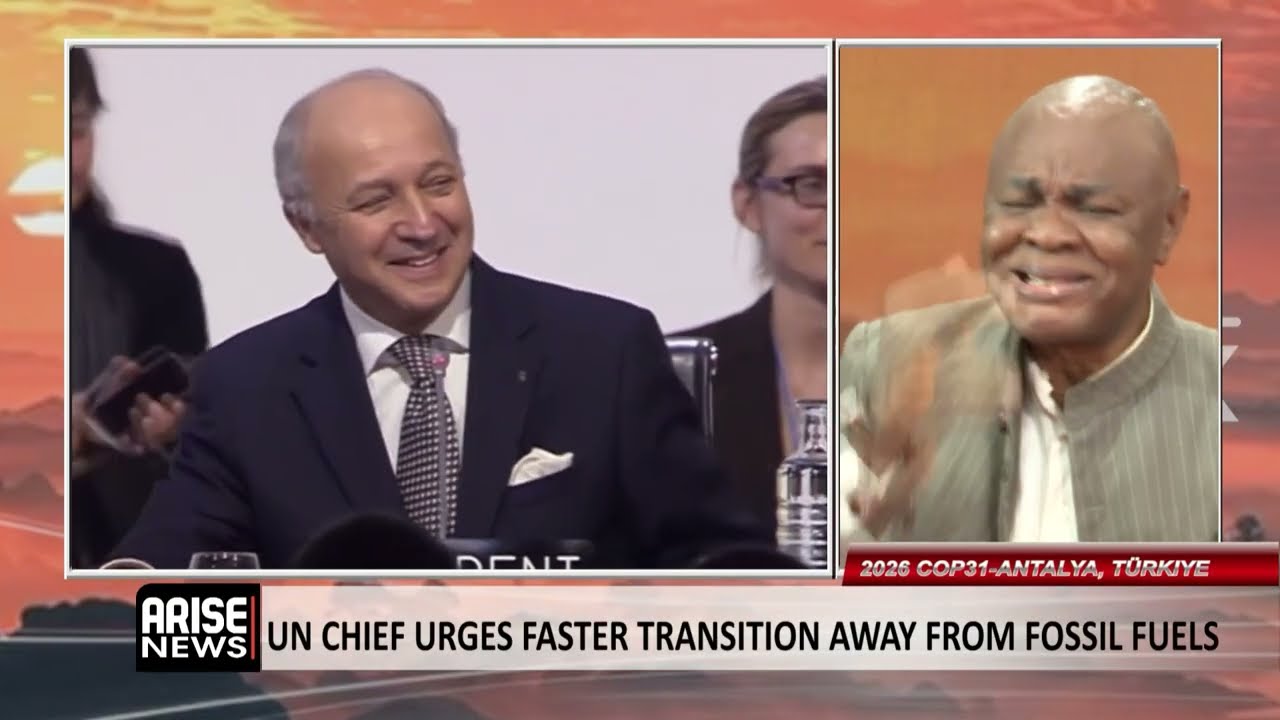
Air Vice Marshal Akugbe Iyamu (rtd), President of the Association of Environmental Protection and Climate Change Practitioners, says Nigeria’s continued reliance on compressed natural gas (CNG) does not provide the clear pathway needed for its transition to renewable energy.
Speaking during an interview with Arise News on Thursday, Iyamu said Nigeria, as an oil-producing country, could use its existing oil and gas resources as transitional assets but must develop a defined energy strategy to benefit from international climate financing.
He said Nigeria could not afford to abandon fossil fuels immediately because of its economic realities, including widespread poverty and the need to address fundamental development challenges.
Nigeria Needs A Clear Energy Transition Plan
Iyamu said Nigeria should make a case for using its estimated 39 billion barrels of oil reserves and 209 trillion cubic feet of gas resources as part of its transition strategy.
However, he criticised the country’s emphasis on CNG, arguing that it was not the kind of energy transition being targeted by international climate financing initiatives.
“CNG is not what the $1.3 trillion is targeting,” he said.
He described CNG as a technology dating back to 1914, adding that Nigeria needed to establish a clearer direction towards renewable energy to position itself for available climate financing.
“If you want to move and you want to be part of this money that they are gathering, you must create a clear path,” he said.
Iyamu also referenced the United Nations’ call for countries to accelerate the adoption of renewable energy, saying Nigeria should learn from climate-vulnerable countries already pursuing ambitious transition targets.
Nigeria’s Absence At COP31
On Nigeria’s participation at COP31 in Antalya, Turkey, Iyamu said the country had moved from what he described as an “over bloated participation to almost near little visibility.”
He warned that limited participation could weaken Nigeria’s ability to influence international climate decisions and negotiate support for its energy transition.
“At the COP, you must be visible. You must take part in the decision. You must continue to talk. You must continue to be in the room for the deal,” he said.
He argued that Nigeria should use the summit to present its economic realities and advocate for better financing arrangements for developing countries struggling with the cost of climate action.
Iyamu said developing countries faced high borrowing costs, making it difficult to finance the shift to renewable energy and increasing their dependence on fossil fuels.
He also said Nigeria should make its case for climate support in view of its poverty levels, noting that 63 per cent of the population lived in poverty, while 27 million people were at risk of falling into poverty.
El Niño Raises Food Security Concerns
The environmental expert also warned that El Niño could worsen Nigeria’s food security challenges by disrupting rainfall patterns and affecting agricultural production.
He explained that the natural climate phenomenon occurs irregularly, typically every two to seven years, and can last between nine and 18 months.
Iyamu said Nigeria should have used the international climate summit to discuss preparations for its potential effects, particularly on farmers and food supplies.
He criticised the absence of climate change concerns from political campaign discussions, despite the threat to millions of Nigerians.
“When 27 million of your population is going to hunger, and El Nino is threatening to add, if not double it. So it’s a very huge problem,” he said.
Oil Prices And Cost Of Living Crisis
On the impact of fossil fuel production on the global cost of living crisis, Iyamu said fluctuations in international oil prices had direct consequences for oil-dependent economies such as Nigeria.
He argued that the country needed domestic strategies to protect its economy and citizens from external shocks rather than relying solely on developments in the international market.
According to him, the cost of living crisis also carries implications for national security, poverty and access to healthcare.
“If it’s an international affair, does it mean if the rain is falling internationally, we won’t build our house with a roof at least to protect us from the rainfall?” he said.
Iyamu urged Nigeria to develop a clear energy transition plan while addressing the economic and environmental challenges facing the country.
Ademide Adebayo
Follow us on:


