


Nigeria has a very low number of occupational therapists, speech therapists and audiologists to meet the needs of its population, according to Victoria Amu, Chairman of the National Committee for the Advancement of Occupational Therapy, Audiology and Speech Therapy Education.
Speaking during an interview on ARISE News on Wednesday, Amu said Nigeria has barely 150 occupational therapists registered with the Medical Rehabilitation Therapists Board of Nigeria, with only about 20 currently practising in the country, as many have travelled abroad.
“In speech therapy, you have about 500 of them in the country. In audiology, you have barely 120.”
She said the figures are particularly inadequate given Nigeria’s population and the number of people requiring rehabilitation services for conditions including autism spectrum disorder, neurodevelopmental disorders and cerebrovascular accidents.
“And for a population of 200 million, you know those numbers are very, very, very low.”
Amu said the shortage prompted the Minister of Education to inaugurate a ministerial committee to advance occupational therapy, speech therapy and audiology education in Nigeria.
She explained that before the committee was inaugurated, only two universities were offering occupational therapy, while three were offering speech therapy.
“With intervention of the Minister of Education, we now have like 15 universities. We have like six universities doing speech therapy, we have five doing occupational therapy, we have three doing audiology.”
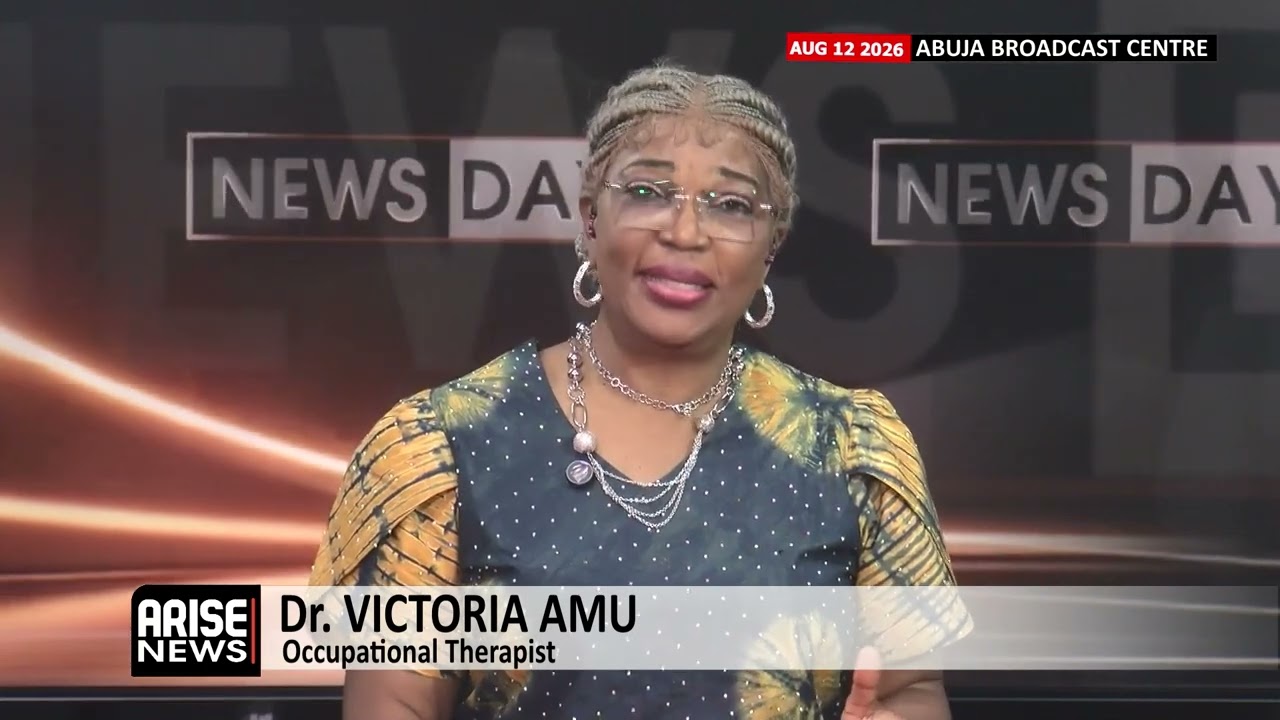
According to her, the expansion of the programmes could significantly increase the number of qualified practitioners in the country within the next four to five years.
“And this is huge because in another five years or in another four years, depending on the point of entry of the candidates, we will have enough occupational therapists in the country.”
Amu said efforts are also being made to sensitise secondary school students about the professions, noting that the programmes could provide opportunities both within Nigeria and internationally.
“We’re talking to students in secondary school, ‘Pick occupational therapy, pick speech therapy, pick audiology.’”
She added that more universities are beginning to establish the programmes, citing the University of Benin as one of the institutions that has recently started occupational therapy training.
Amu said the development is particularly significant because the University of Benin Teaching Hospital already has functioning occupational and speech therapy departments.
She also highlighted the broader importance of rehabilitation education, saying Nigeria’s healthcare system has traditionally placed too much emphasis on physiotherapy following certain medical conditions.
“In developed countries, rehabilitation is made up of physical therapy, occupational therapy, speech therapy, audiology, prosthetics, and orthotics.”
According to her, patients recovering from stroke, traumatic brain injuries, mental health conditions, fractures and automobile accidents require a range of rehabilitation services rather than relying solely on physiotherapy.
“But what do we have in Nigeria before today? We only have somebody goes into the hospital and the person has CVA. After operation, pre-operation and after operation, they only have come in contact with physical therapy, and that’s not right.”
Amu said Nigeria’s referral system also needs improvement, noting that doctors often refer patients primarily to physiotherapists instead of considering other rehabilitation professionals.
“The referral system is wrong in Nigeria because the doctors only refer to physiotherapy.”
She said the expansion of university programmes would eventually make it possible for teaching hospitals and other healthcare facilities to establish more comprehensive rehabilitation departments.
On efforts to bridge the shortage of professionals, Amu said the committee is working with universities and the National Universities Commission to facilitate the approval of new programmes.
“The Minister has already told NUC to accelerate resource verification for approvals for universities that want to offer occupational therapy, speech, and audiology.”
She expressed optimism that the expansion of training programmes would increase awareness of the professions and produce more practitioners for Nigeria’s healthcare system.
“And we’ll see the teaching hospitals who are the tertiary hospitals, and the secondary hospitals who are the state hospitals, or even the primary care hospitals, we’ll see them eagerly have a department for rehabilitation and incorporate all of these professions.”
Ojo Triumph
Follow us on:


