


Author and historian Sam Omatsere has said President Bola Tinubu adopted an “abattoir principle” to bring opposition parties together and form the All Progressives Congress (APC), ensuring that parties which joined the merger had no alternative political home.
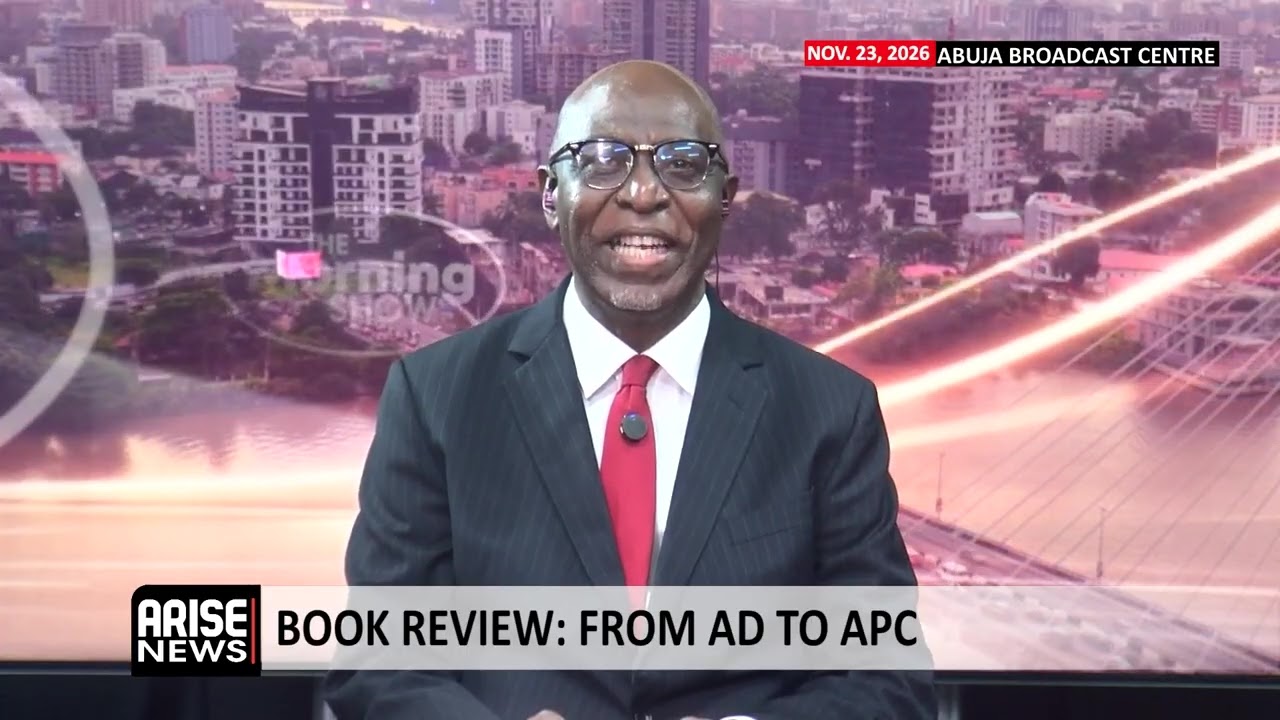
Speaking during an interview with ARISE NEWS on Monday, Omatsere explained that the strategy required all participating parties to surrender their individual identities and resolve any disagreements within the new party rather than break away stating that the principle was introduced after previous attempts to form political coalitions failed.
“So it’s supposed to be a death sentence on all political parties. You know that if you go to the abattoir, any animal that goes into the abattoir never comes out alive. It comes out as a gizzard or as a kidney or as just neck or calf or anything, but it doesn’t come out alive.”
He explained that the idea was for the parties to cease to exist in their previous forms after joining the APC. “That was the principle that all the parties had to die when they came into APC so that if there’s any crisis, we will solve it inside. We have to, because you have no other home to go to.”
Omatsere while discussing his book, From AD to APC: The Exploits of One Man, which examines Nigeria’s political history and the events and personalities that shaped its democratic development. “The book began as an attempt to document the formation of the Alliance for Democracy (AD), following a conversation with former Ogun State governor and veteran journalist Chief Olusegun Obasanjo, who told him that an important account of the party’s formation had not been written.
“I thought that it was a challenge for me to take up the task. So I started to take him up on it and it turned out that it was really a great story.”
He said further research brought up more accounts, contacts and unexpected developments. “So from trying to just write a story about a short part of Nigerian history, just between 2006 and 2008, it turned out that I had with me or before me a big canvas of Nigerian history and players.”
Omatsere also described the APC merger as a difficult process. “There were moments when they thought that it was going to come up in flames. You know, there were so many egos. You’re talking of different political parties that had big-size egos.”
He said the parties also faced pressure from the then-ruling Peoples Democratic Party (PDP), while some members threatened to withdraw from the merger. “But what happened was the dexterity of Bola Ahmed Tinubu to make sure that everything, every problem was resolved to the satisfaction of everybody took extraordinary political acumen for him to do that.”
The author cited disagreements over the choice of the party’s national chairman and vice-presidential candidate. “There were moments, even when Buhari was going to go out, even the choice of vice-president was going to turn the whole place upside down.”
He added that the dispute over the party’s leadership structure also brought the merger close to collapse. “The fight for the party chairman was also a very fraught one, that some people said, okay, if you get the party, I will get the party chairman. You give this party the party chairman, I’m going to destroy this party.”
Omatsere said Tinubu also intervened in a disagreement involving Buhari during the party’s convention, which lasted for hours before a meeting between the two men resolved the issue.
“Even Buhari, during the party convention, Buhari submitted the convention for hours because of an issue. And it took a one-on-one between Tinubu, that president Tinubu, to resolve the issue. It was going to be a deal breaker.”
On whether the political arrangement that brought the APC together would survive beyond Tinubu’s presidency in 2031, Omatsere said it was too early to predict the party’s future. “Oh, well, I’m a historian. I’m not a futurologist. When that time comes, we shall see.”
He also recalled that the PDP had once believed it would remain in power for decades but eventually lost its dominance. “Because we know that even the PDP thought it was going to be here forever. They said we were going to be a party, remember Ogbulafo, how do we encode? They said we were going to be around for 60 years. They didn’t make the next 60 years.”
Erizia Rubyjeana
Follow us on:


