


The team lead of Education Radio, Omang Dave, has described the 117-year-old King’s College as long overdue for renovation and a facelift, citing concerns over its infrastructure and the funding of education in Nigeria.
The development comes amid recent unrest at the school, where staff and parents opposed the Federal Government’s proposed 35-year concession of the institution to the Old Boys’ Association and denied its members entry into the school, despite the association’s stated plan to support its rehabilitation and development.
Omang said the King’s College Old Boys’ Association was on a rescue mission, with members seeking to raise funds to renovate and give the 117-year-old institution a facelift.
“An institution of well over 117 years is overdue and long overdue for renovation and a facelift.
“I am saying, in the case of Nigeria, for an institution that is that old to get a facelift, for the students that were there—I want to believe that when they went for a meeting, they didn’t like what they saw. That is on that note. They said, ‘Please, we came out of here; we are products of this school. We want to see how we can come back to give it a facelift in terms of infrastructure and build capacity for the lecturers as well, to impart our children and grandchildren.'”
Omang said the funding challenge extends beyond King’s College, noting that the Federal Government has more than 100 unity schools and federal universities to support, making adequate budgetary allocation and effective implementation important.
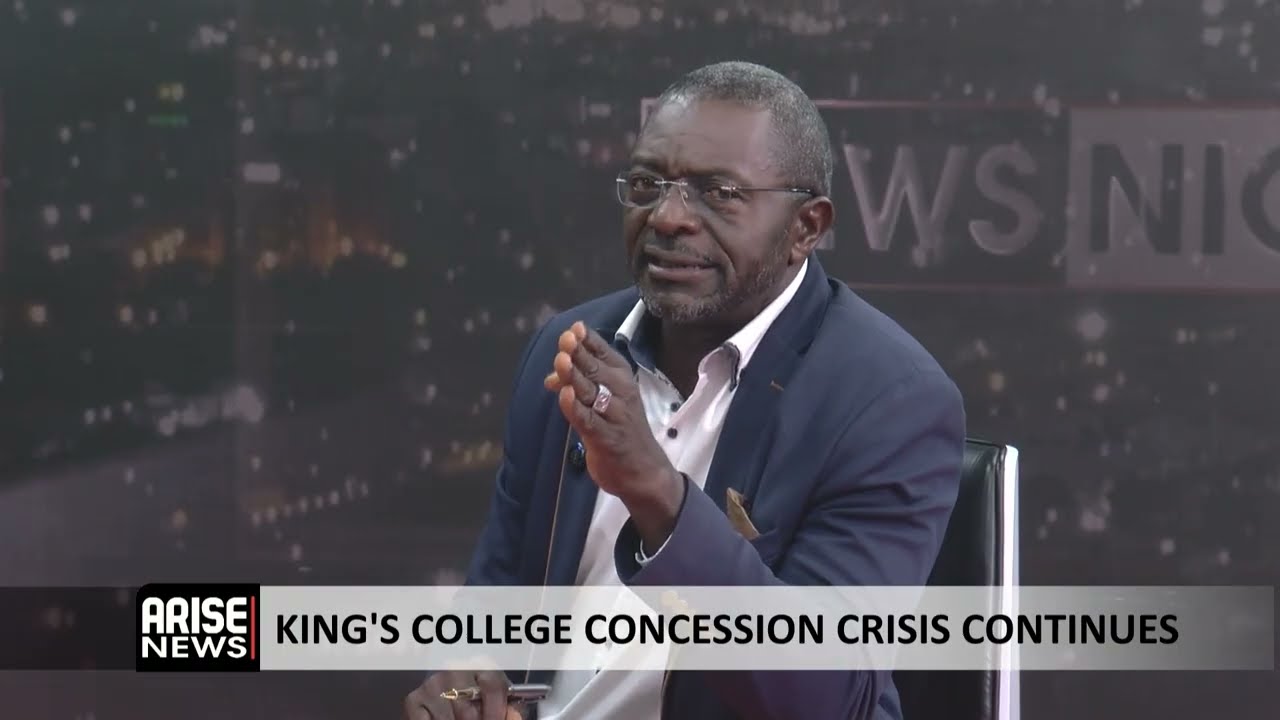
“The federal government too has been struggling on its own path to see how they could support, but with the scarcity of funds. That’s not the only school; we have over a hundred of them, and we still have federal universities they have to take care of. The question again is: what is the budgetary allocation to the Federal Ministry of Education in the first place? Because this is against the UNESCO-approved budgetary allocation to which countries in Africa are signatories. 25%. What we get in Nigeria is well between 5%, 6%, and above 7-point-something percentage.
“How do you begin to distribute this? That could be a problem: budget approval and budget implementation.”
Speaking on the proposed 35-year concession, Omang said he did not subscribe to the agreement, arguing for a shorter five- to 10-year period to allow regular assessment of performance against set key performance indicators.
“I don’t subscribe to the 35-year concession agreement.
“Where we at the civil society level have said: if you are giving something like an institution or a school, it should be between 5 and 10 years respectively. So when you give them, you come after every year and see if they are performing or underperforming. Set out some KPIs—key performance indicators—which you use to rate them to see in terms of infrastructure, capacity building, and data digitization.”
On the way forward, Omang said the Federal Government should return to the drawing board and engage stakeholders, including School-Based Management Committees, community groups, NGOs and faith-based organisations, before proceeding with the concession.
“I want to believe that they can go back to the drawing board. It’s a process of governance in democracy. People are not happy, possibly because they were not informed. If you had carried them along—the SBMCs (School Based Management Committees), the community-based management committees, the NGOs, FBOs (faith-based organizations), the community where the school is situated—and brought them together to engage for one or two months for them to see the transparency.
“But before I forget, there’s something very key: what are the components that made the legal document? Among the legal documents transmitted, was there a legal title document? Who has the legal title document? The federal government has the title document. The federal government has statutory regulatory powers. What processes did they use? According to them, it was subjected to a whole lot of rigors. But the question again is: were these people carried along?”, he quizzed.
Favour Odima
Follow us on:


