


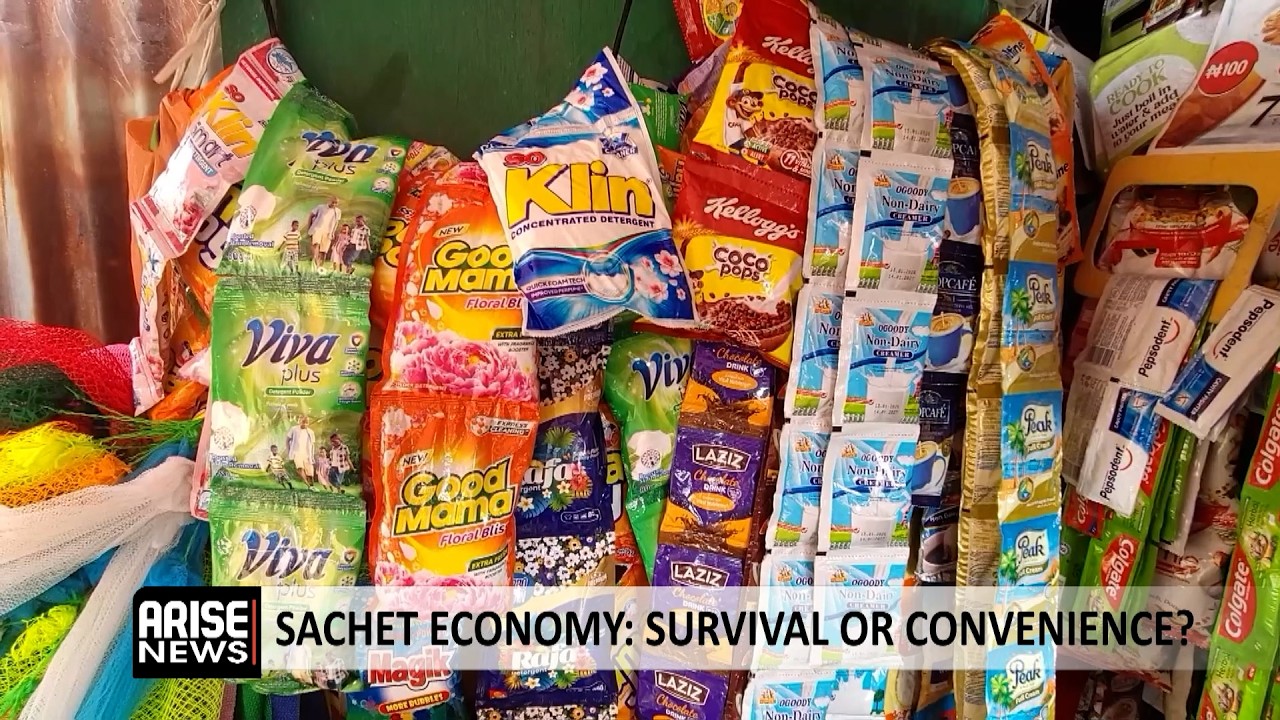
Across Nigeria over the years, a growing number of consumers have been turning to sachets — small, affordable portions of everyday products — as economic pressures continue to mount.
From water and milk to sugar and detergents, these single-use packets have become a daily staple for millions. The industry is now valued at approximately $1.3billion (₦1.8 trillion), underscoring both its scale and rising demand.
But while sachets offer convenience and affordability, they also raise a critical question: are they helping Nigerians cope — or exposing deeper financial.
In many households and small businesses, the day begins with sachets.
At a modest local restaurant, a woman prepares tea using sachet water, milk, and sugar — each opened in small quantities. For her and many others, buying in bulk is no longer an option.
“It’s cheaper, it sells faster, and it’s easier to preserve,” one restaurant owner said.
Across markets and street corners, the same pattern is evident. Shops display rows of hanging sachets, while hawkers move through traffic selling them to commuters and pedestrians.
For consumers, the appeal is simple: buy only what you can afford, when you can afford it.
Experts say the rise of sachet consumption reflects declining purchasing power.
According to Bismarck Rewane, Managing Director of Financial Derivatives Company, the trend is largely driven by low disposable income, forcing consumers to prioritize short-term affordability over long-term value.
Despite this, the sachet economy is not without its benefits.
Manufacturers argue that sachet production plays a vital role in sustaining businesses and employment.
Segun Kadiri, Director General of the Manufacturers Association of Nigeria, says the model helps companies keep products affordable, maintain sales volumes, and reach low-income consumers.
For producers, sachets are not just a response to hardship — they are a strategic adaptation to market realities.
However, the rapid growth of sachet consumption has come with significant environmental consequences.
Plastic waste from sachets is now a major contributor to pollution, particularly in urban centres like Lagos. Blocked drainage systems, littered streets, and mounting waste heaps have become increasingly common.
According to Jirinsola Olaleye, Director of Circular Economy at the Lagos Waste Management Authority (LAWMA), improper disposal of sachets is worsening flooding risks and environmental degradation.
Authorities say the situation is not beyond control. Recycling initiatives and public awareness campaigns are being promoted to encourage better waste management.
Used sachets, officials note, can be repurposed into items such as handbags or even construction materials.
Beyond environmental concerns, regulators are also tackling public health risks.
The National Agency for Food and Drug Administration and Control (NAFDAC) recently announced a ban on sachet alcohol products. However, enforcement has been weak, with widespread resistance from small-scale manufacturers.
As a result, sachet alcohol remains readily available in many parts of the country.
Lillian Jijingi-Agudah
Follow us on:


