


The Managing Director and Chief Executive Officer of the South East Development Commission, Mark Okoye, has defended the commission’s first-year activities and spending, saying the agency is laying the institutional and financial foundations needed to transform the South-East economy from about $40 billion to $200 billion within the next decade.
Speaking in an interview with ARISE News on Monday, Okoye said the commission was created to serve as a long-term development platform for the region and would focus on mobilising large-scale investment rather than relying solely on government funding.
Okoye acknowledged public scepticism about regional development commissions but insisted the SEDC was taking a different approach by building broad stakeholder ownership and creating structures that could attract global investment capital.
“For us at the SEDC, the SEDC represents an aspiration for broadly maybe 50 million Igbos around the world, and maybe 21 or 22 million Igbos who are resident in the region. And we’ve been pleading for this agency for the last 54 years,” he said.
“Under the last presidency, I believe we got to third reading but it was not done for some reason. Then Mr President came in after six presidents and five regional administrators and he was the first to do it.”
According to Okoye, the commission aims to become a platform through which governments, the diaspora and private investors can drive a long-term development agenda for the region.
“We see it as our own platform that will champion a long-term development agenda. We see it as a platform where state governments can transform the region to become the preferred investment destination in Africa,” he said.
“We want to drive the size of that economy from about $40 billion to $200 billion over the next 10 years through strong collaboration between our diaspora, our private sector and our governments across industrialisation, agriculture, the creative economy and technology.”
Responding to criticism over how the commission used the ₦5 billion it received in its first year, Okoye said the funds were primarily used to establish the institutional framework necessary for the agency to function.
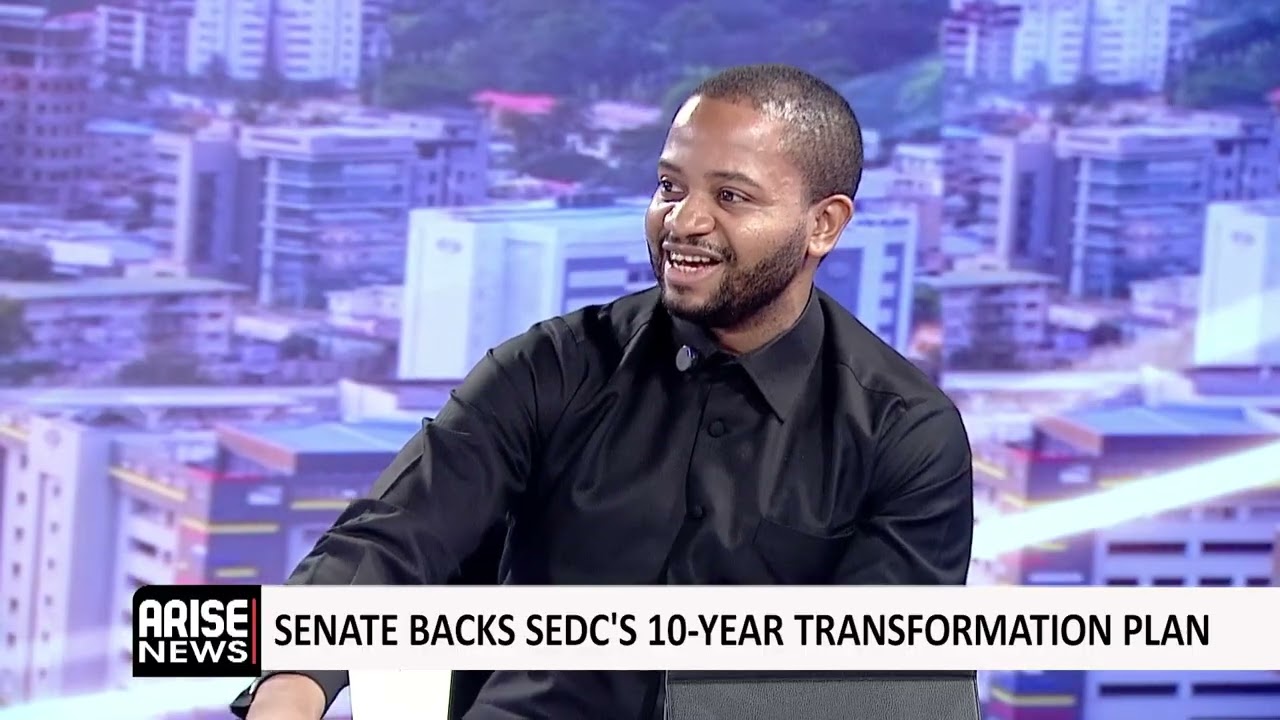
“We were inaugurated on February 10 and the first day in office was February 11. In that first session everything was done — from a 10-year strategic roadmap for the organisation to approvals by management and the board within the first two days,” he said.
“Anyone who has experience in the federal government setting up an organisation knows it can be painstaking.”
He said the commission spent much of its first year establishing procurement processes, recruiting staff, building governance structures and engaging stakeholders across the region and diaspora.
“What we did last year was everything around procurement processes, getting the required staff across different departments, designing the structure, building the right relationship between the board and management, and reaching out to critical stakeholders,” he said.
“Every single one of them was met multiple times by the commission to share and get their buy-in.”
Okoye said the commission also held consultations with private sector groups and diaspora communities.
“The entire private sector was met — manufacturers, SMEs, everybody — to get their buy-in into the agenda. The diaspora was met on multiple occasions. Through Twitter Spaces we engaged about 5,000 people for seven hours,” he said.
He revealed that donor support also helped fund early engagement activities before government funding arrived.
“The likes of the UNDP supported us with anything from about $300,000 to $400,000 cumulatively across their own events.”
The SEDC chief added that only a fraction of the ₦5 billion allocation had been spent so far.
“Between then and probably the last two or three weeks when we were preparing for the budget, we spent roughly about ₦700 million to ₦800 million,” he said.
“Till today I haven’t earned a salary, my executive directors have not earned a salary, and board members do not get allowances.”
Okoye outlined several priority programmes the commission intends to implement in the coming months.
One of the key initiatives is regional security coordination aimed at improving investor confidence.
“Our view is how do we de-risk the South-East for investment to come in,” he said.
Another focus is industrialisation through improved infrastructure around special economic zones.
“Our industrialisation programme aggregates our road infrastructure budget and says there are five special economic zone projects in our region. Let’s open up the roads so investment can come in and create jobs,” he said.
Agriculture and food security are also central to the commission’s agenda.
“Seventy per cent of our spending in agriculture today is on land clearing. Our view is to clear large hectares of land — we have a target of 50,000 hectares — and bring in mechanised agricultural investment.”
Okoye said youth empowerment would be addressed through a regional venture capital initiative.
“Seventy-five per cent of the region’s population is under 35. We have innovators and founders but they need support and financing,” he said.
“That is why we introduced the South-East Venture Capital Programme so that young people don’t have to leave the region and run to Lagos looking for $10,000 to start a business.”
Sports infrastructure development is another planned intervention.
“Sports is very critical. The region is very talented and we are investing in infrastructure to act as a catalyst while also putting the policy framework that supports that.”
Okoye acknowledged that major infrastructure such as rail lines, gas pipelines and ports would require tens of billions of dollars beyond the commission’s budget.
“The concept design we have for the South-East regional rail alone is about $5 billion. Gas pipelines are about $1.6 billion and ports are at least $800 billion,” he said.
Instead of funding such projects directly, he said the commission’s role would be to make them investment-ready.
“Our job is to ensure those projects are viable — doing business plans, feasibility studies, environmental impact assessments and return-on-investment analysis — so we can take them to infrastructure funds that will finance them.”
Okoye also revealed plans to create an investment vehicle to mobilise capital from private investors and the diaspora.
“Mr President approved the South-East Investment Company last year. The purpose is to use it as a flagship vehicle to drive the marketability and financing of these projects,” he said.
“It will receive capital from state governments, the private sector and the diaspora so we can drive these initiatives sustainably.”
He added that the commission aims to become financially independent within eight years.
“As a board we have set a target for ourselves that in eight years we want the SEDC to depend less on government revenue, and for that investment company to be bigger than the commission itself.”
Okoye said lessons from earlier development commissions informed the SEDC’s strategy.
“The key takeaway is sustainability — you must find a funding model that makes sense,” he said.
“The second is clarity of vision. We took time to understand ourselves, agree on one plan and build collective ownership.”
He emphasised that extensive stakeholder consultations were deliberate to ensure continuity even when governments change.
“Seventy-five people from the diaspora came at their own cost to help build a 25-year plan,” he said.
“The greatest tool in public policy is stakeholder engagement because it creates collective ownership. That is what ensures sustainability even when governments change.”
Boluwatife Enome
Follow us on:


