


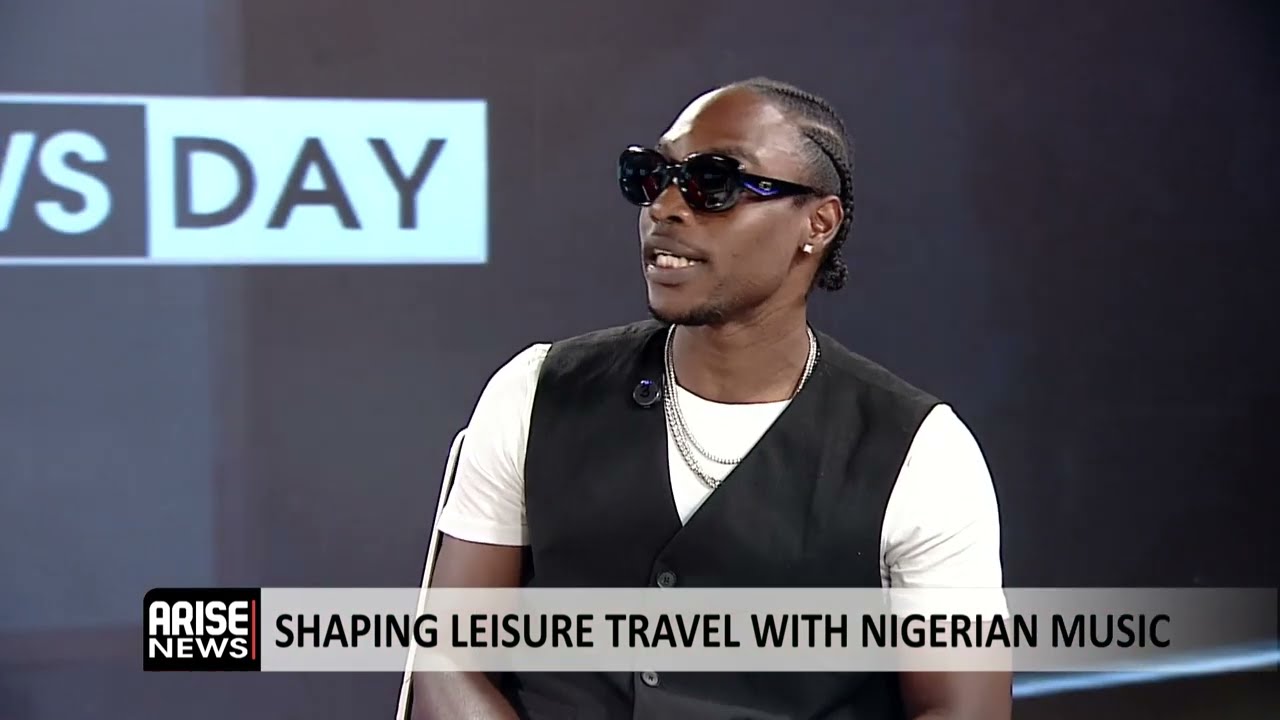
Nigerian singer and songwriter Damilola Afolabi, popularly known as LAX, has said music has become one of Nigeria’s strongest drivers of tourism, global recognition and cultural rebranding, but warned that poor infrastructure and security challenges are limiting its full potential.
Speaking in an interview with ARISE News on Sunday, LAX said Nigerian music has helped reshape global perceptions of the country, attract diaspora visitors, and position Nigeria as a major cultural destination, particularly during the December festive season.
“With tourism, I think music has been like a big party in bringing a lot of people into Nigeria,” he said. “If you look at December, everyone wants to come because of our concerts, and that has helped them see Nigeria differently from what they had in mind.”
LAX said Nigerian culture and tradition are deeply embedded in his sound, noting that his musical identity was shaped by indigenous influences from childhood.
“When I started music, I drew influence from my grandma because she was always playing Apala and Fuji music,” he said. “If you listen to my music, you will hear those influences mixed with pop. Nigeria has always been a driving force in my music.”
On Nigeria’s growing global music footprint, LAX said Nigerian artists have successfully exported culture and identity across borders, helping to boost the country’s image abroad.
“I did about 30 shows in Europe last year, and it was amazing to see people speak our language, even when they don’t understand it, and still enjoy the music,” he said. “Music has done so much for the growth of the country and for our recognition outside Nigeria.”
He added that Nigerian music has helped counter long-standing stereotypes about the country and its people.
“Some people in the West used to think Nigerians only wear native clothes, don’t mix cultures or can’t fit in,” LAX said. “But with our music, they’ve seen us wear nice outfits, mix cultures, eat their food and still be ourselves. It has shown us in a better light.”
Addressing criticism that modern Nigerian music lacks depth, LAX rejected sweeping generalisations, arguing that the industry now offers diversity rather than decline.
“I don’t think we should generalise,” he said. “Some artists are still doing meaningful music with strong lyrics, while others are doing music for vibes. At the end of the day, music is also about making people happy.”
He stressed that listeners now have the freedom to choose what they consume. “If you want deep lyrics, you can pick those artists. If you want to dance and vibe, there are artists for that too,” he added.
LAX also highlighted the over-centralisation of Nigeria’s music industry in Lagos, saying it has stifled cultural and economic growth in other states.
“Artists from other places always feel like they must come to Lagos before they can say they’ve started music,” he said. “We need more shows, concerts and talent hunts in other states so the spotlight can shine beyond Lagos.”
However, he identified security concerns as a major barrier to expanding music tourism nationwide.
“Some artists don’t want to travel because of bad roads and insecurity,” LAX said. “A long time ago, I used to travel around Nigeria for shows, but now it’s not as safe as before.”
On collaborations, LAX said partnerships between artists and brands are critical to expanding audiences and strengthening the industry’s economic impact.
“Collaborations are important because two heads are better than one,” he said. “When artists collaborate, we combine fan bases, and it helps more people listen. It’s the same with tourism and brands.”
He argued that Nigeria could benefit from large-scale collaborative tours similar to what exists in the United States. “Imagine a Wizkid and Davido tour. These things make everything bigger,” he said.
LAX identified poor venues as one of the biggest infrastructure gaps affecting Nigeria’s live music and tourism ecosystem.
“We have the numbers, but we don’t have proper venues,” he said. “In London, stadium shows have multiple entrances and the crowd settles in 30 minutes. In Nigeria, five hours after a show starts, people are still outside.”
He urged the government to invest in at least one world-class performance venue in Lagos. “We need a proper venue where everyone knows that if you want a quality show, that’s where you go,” he said.
On technology, LAX said social media has transformed music promotion and tourism marketing, making it easier to project Nigeria’s cultural appeal globally.
“Before, we used to go house to house sharing flyers,” he said. “Now you post online and millions can see it instantly.”
He added that social media has helped sell African destinations to Africans themselves. “Places like Kenya, Tanzania and Zanzibar now look glamorous online. Social media has changed the narrative and helped tourism grow alongside music.”
LAX concluded that with the right investment in security, venues, and nationwide cultural development, Nigeria’s music industry could become an even stronger engine for tourism and economic growth.
Boluwatife Enome
Follow us on:


