


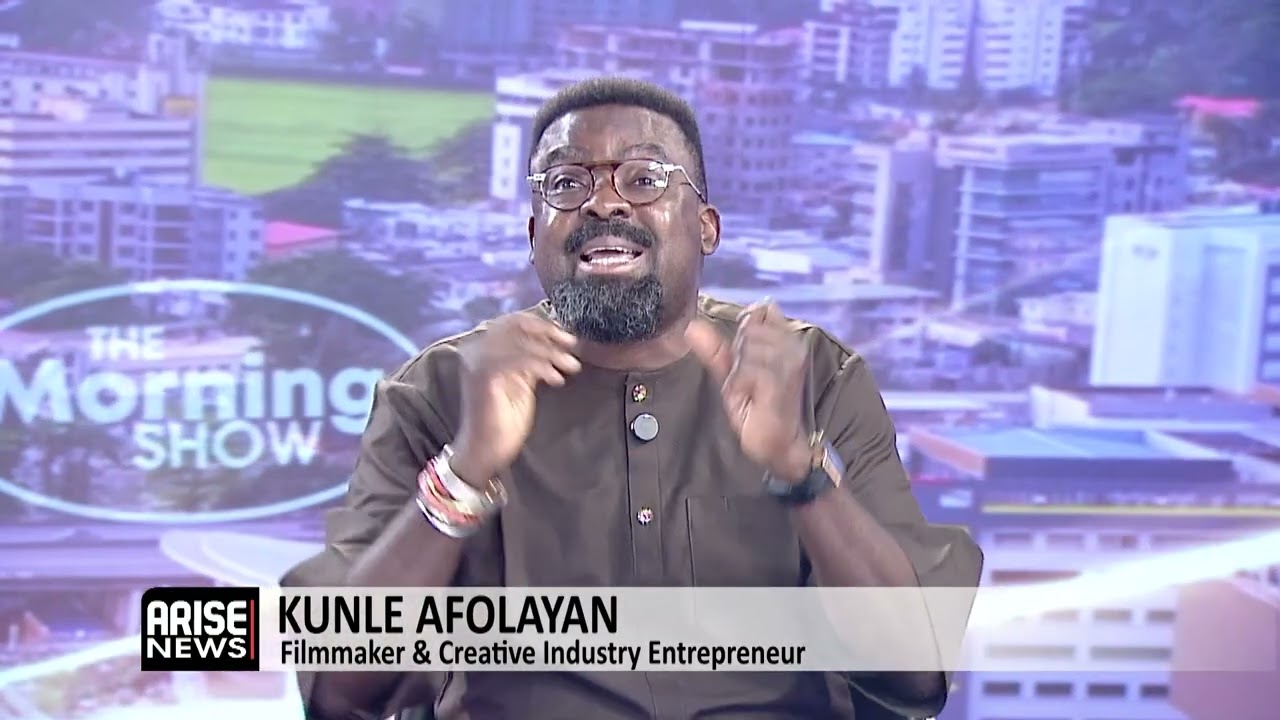
Award-winning filmmaker and creative industry entrepreneur, Kunle Afolayan, has revealed details of a heated phone call from actress and producer Funke Akindele, amid controversy over his remarks on film promotion strategies within Nollywood.
Speaking in an interview on ARISE News on Sunday, Afolayan said Akindele personally contacted him after media reports interpreted his comments at a film business forum as dismissive of colleagues who promote their movies through dance-driven campaigns.
“She called, and she said, ‘I know you don’t like me, but don’t mention my name in your interviews,’ she was yelling, and she dropped the phone after that,” Afolayan said.
He described the accusation as surprising, noting the long-standing personal and professional relationship between them.
“It was weird, and I’m like, where is this coming from. She’s like a sister to me. In Unilag, I would go to her hostel, her sister is also my friend, so I am not sure where this is coming from,” he said.
Afolayan stressed that his comments were taken out of context, insisting he never criticised Akindele or any filmmaker who adopts aggressive promotional tactics.
“I never said anything was wrong with it. For me, it’s draining. I have absolutely nothing against it. I’m just saying what I will not do,” he stated.
He explained that his remarks were made during a film business forum attended by cinema operators, where discussions focused on profitability and sustainability for filmmakers.
“The honest truth is, it was a forum, it was a film business forum, and we had the cinema operators there, and the cinema operators were asking me, when are you coming back to cinema, and I said, I can’t come to cinema if you cannot guarantee that I will make substantial money,” he said.
Addressing Akindele directly, Afolayan expressed disappointment over the backlash that followed.
“If for any reason she feels offended, I’m sorry,” he said.
“But one thing she has done, which I think is totally wrong, and I would never do this kind of a thing, is to use social media rats to come after whoever it is.”
Despite the controversy, Afolayan acknowledged Akindele’s success and influence, describing her growth as deliberate and strategic.
“I clearly said to them (young filmmakers), that if you want to adopt a model that I think will work for you now, then follow Funke Akindele’s model,” he said.
“Funke started at a younger age, and then she did Jenifa with minimal budget, rolling resources, and from then, look at Funke’s brand now, she has grown.”
Beyond the dispute, Afolayan also spoke on the strong performance of Aníkúlápó Season Two on Netflix, revealing that the project has exceeded expectations.
“So far, as of yesterday (Saturday), it’s top number one in Nigeria. It’s already number one most watched film after 24 hours,” he said, adding that Seasons Two and Three were shot back-to-back.
He also dismissed claims that Netflix had exited Nigeria, clarifying the difference between commissioning and acquisition.
“Netflix didn’t go anywhere. They stopped commissioning. They didn’t stop acquiring,” Afolayan said.
“They are still buying content. There are films licensed for ten years.”
Afolayan further reflected on his recent role curating screenings of his late father Ade Love’s films as part of Oyo State’s 50th anniversary celebrations, describing the experience as deeply emotional.
“For me, it was an emotional celebration. You cannot celebrate Oyo without celebrating the people who started the industry,” he said.
As debates continue over marketing styles, cinema economics and distribution models, Afolayan insisted his position was never personal.
“I have absolutely nothing against her. She’s my sister. We grew up together,” he said.
Faridah Abdulkadiri
Follow us on:


