


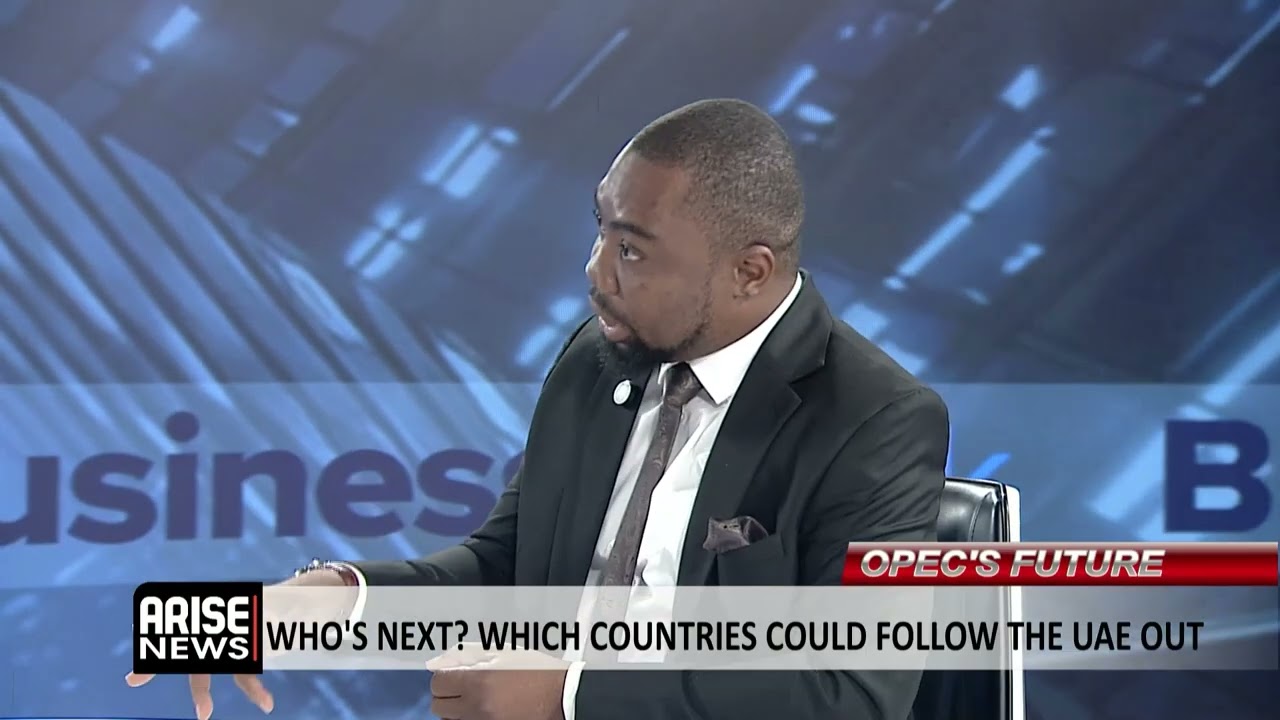
Energy expert Kelvin Emmanuel, Managing Partner at The Energy Consulting Practice, has called on Nigeria to reconsider its membership of OPEC, arguing that the cartel has lost its relevance and no longer serves the country’s strategic interests—particularly as the United Arab Emirates (UAE) exits the alliance.
Speaking in an interview on ARISE NEWS on Saturday, Emmanuel said, “It makes perfect sense for Nigeria to exit OPEC considering its crude oil refining strategy… The OPEC playbook is stale, and it’s time for Abuja to reassess its membership.”
His remarks come amid growing uncertainty within the oil cartel following the UAE’s decision to leave both OPEC and OPEC+, a move he described as a reflection of deeper structural and geopolitical fractures.
Providing historical context, Emmanuel explained that OPEC’s original purpose—to stabilise prices and coordinate production—has been steadily undermined over time.
“OPEC was formed to manage supply and price, especially after the oil glut of the late 70s and early 80s when a quota system was introduced,” he said. “But today, the dynamics have changed significantly.”
He noted widening disparities in pricing benchmarks, adding: “Before the war, the spread between spot cargoes and futures prices was about $1 or $2 per barrel. Now, it’s between $11 and $15 a barrel.”
According to him, the UAE’s exit mirrors earlier departures such as Qatar and Angola, both of which cited similar concerns over production constraints and strategic misalignment.
“Angola cited the same reasons the UAE has cited—limitations imposed by quotas despite having higher production capacity,” Emmanuel said. “The UAE has over 4.5 million barrels per day in installed capacity but is forced to operate between 2.7 and 3 million barrels.”
He added bluntly: “I’ve always said that OPEC is an alter ego for Saudi Arabia.”
Emmanuel also pointed to rising geopolitical tensions within OPEC members as a major factor behind the UAE’s decision.
“The UAE is asking: why would a member of OPEC attack another member?” he said, referencing regional conflicts involving Iran. “It doesn’t make sense to remain in an organisation where member states are undermining each other’s economic infrastructure.”
He argued that OPEC’s influence has significantly declined, noting: “OPEC effectively controls about 22% of global production today, and that share is shrinking.”
On the broader geopolitical implications, Emmanuel said the UAE’s exit signals a shift away from traditional alliances involving Russia and Iran towards new partnerships.
“The message is clear—the UAE wants to control its own supply and define its own partnerships,” he said. “You’re seeing a strategic shift from the Middle East and Eastern Europe towards Western Europe and North America. The geopolitical shift is already here.”
He added that global oil power is becoming more decentralised: “Between the US, Russia and Saudi Arabia, they produce about 30 to 40 million barrels per day—far more than OPEC.”
Turning to Africa, Emmanuel said the exits of Angola and now the UAE should serve as a wake-up call.
“Nigeria’s oil and gas landscape has shifted, and we need to shift with it,” he said.
He projected increased domestic production in the coming years, citing developments such as Bonga North and Dangote’s upstream investments.
“Over the next two to three years, you’re going to see production ramp up in Nigeria,” he said.
However, he stressed that Nigeria must prioritise domestic refining over crude exports.
“Dangote Refinery will need about 40 cargoes of crude per month, and Nigeria is not even supplying up to 50% of that,”he said. “We don’t have the crude feedstock to serve our domestic refineries.”
Emmanuel advocated sweeping reforms, including the establishment of strategic petroleum reserves and restrictions on crude exports until domestic demand is met.
“Set up a strategic petroleum reserve authority, trade crude globally, lease tank farms, and ensure domestic capacity is prioritised before exports,” he said. “This is a matter of national security.”
He further argued that Nigeria’s refining ambitions align poorly with OPEC’s quota system.
“Our strategy is backward integration—refine locally and export derivatives. That means retaining crude, not restricting it under OPEC quotas,” he said.
Emmanuel was unequivocal about the cartel’s declining influence.
“OPEC cannot single-handedly control prices anymore. It has to negotiate with Russia and even the United States,” he said. “So the question is: what is the use of OPEC?”
He concluded by urging Nigeria to rethink outdated frameworks.
“We need to readjust the playbook. What worked 20 or 30 years ago doesn’t work today because the commercial realities have changed.”
Boluwatife Enome
Follow us on:


