


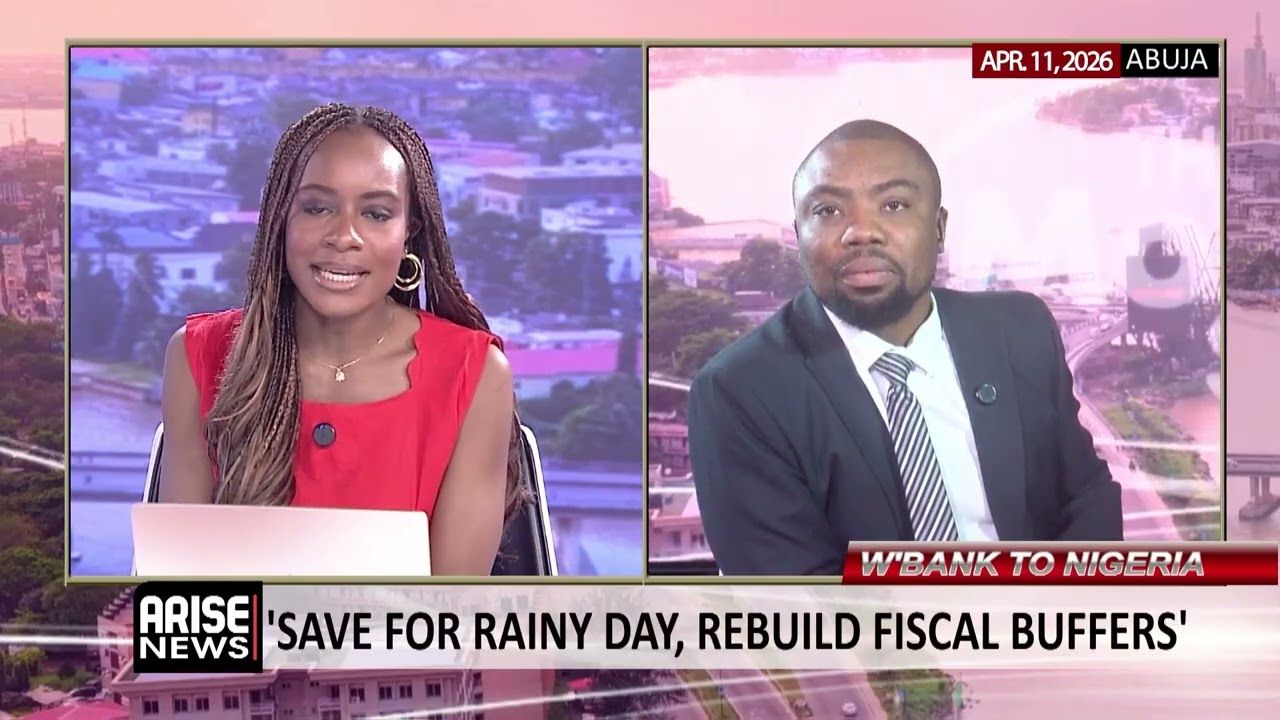
Managing Partners, Energy Consulting Practice, Kelvin Emmanuel has asserted that Nigeria is failing to convert a rare global oil price surge into meaningful national revenue due to deep structural flaws in its petroleum sector, arguing that the country is missing a critical economic window created by geopolitical tensions.
Speaking In an interview with ARISE NEWS on Saturday, Emmanuel stated that, the country is sitting on a major opportunity but failing to maximise it, stressing that the current situation should have triggered stronger fiscal gains rather than inefficiency and policy gaps.
“We’re wasting a good crisis, And this crisis is coming to an end because there’s going to be a truce and things are going to normalise over the next 36 months. And I say this because, you see, if Nigeria had a strategic petroleum reserve authority, Nigeria would have made so much money from trading.The reality is that, are we having indications from the presidency that we are willing to learn and make amends, right?”
Emmanuel argued on Nigeria’s failure to strategically position itself within the global oil market. “So, what are the implications for Nigeria? The implications for Nigeria is that typically we’re supposed to record like a quadruple of the revenues that the government was recording.”
He explained the widening gap between dated Brent and futures pricing reflected severe supply disruptions. “Nigeria is not profiting as much from this current war and the sharp increase in price for dated Brents, the crude oil budget benchmark for 2026 was $64.85. So you can imagine the premiums and the spreads that they are making in terms of profits.”
before there’s what is called dated Brent, and there’s what is called futures Brent, And that is also one of the reasons why you’ve seen that spread between dated Brent price, and the futures Brent price widening. What it simply means is that demand for spot cargoes has gone way higher than the supply for spot cargoes today.”
According to him, there’s what is called dated Brent, and there’s what is called futures Brent. “about 426 vessels are stuck in the Straits of Hormuz., That has 172 million barrels of crude loaded in them, about 13 million barrels of about 22 million barrels daily in the Middle East has gone offline, and also so before there’s what is called dated Brent, and there’s what is called futures Brent, before Intercontinental Exchange ICE The dated Brent is the crude oil price for delivering fiscal cargoes immediately.”
And it’s usually within a two-week time frame, while the futures price is the price for hedging crude oil price over a two or three-month period, okay?
“So while you can see that on the ticker for futures, it’s trading at around $99, $104, $105, $106 a barrel, the spot price or the dated Brent price today is trading at $144.10.”
Emmanuel criticised Nigeria’s oil revenue structure. “So what you have is that you have pre-sold cargoes that is obstructing the ability of the government, Your futures cargoes are the cargoes that has been pre-sold. And the people who are benefiting from the current hike in price from Nigeria’s crude oil are the companies and banks that gave Nigeria loans, right, and are collecting crude oil back to repay, because the price at which these loans were collected is not up to $70 a barrel.”
He also pointed to governance and institutional weaknesses in the oil sector, stating that. “NNPC is the concessionaire and is also a commercial operator that holds the oil and gas assets of the federal government of Nigeria. By FGN, I mean federal, state, and local governments, right? And they are responsible for revenue accretion. They are responsible for maximising the oil and gas potential of Nigeria, turning it into actual dollars.”
I’ll tell you that, first of all, the structure that we designed for our oil and gas sector is wrong. It is a structural flaw, So it’s a structural flaw that Norway’s first funding of its sovereign wealth fund was funded in 1990, Nigeria is borrowing to fund its budget and is not able to profit from hiking the crude oil price.”
Emmanuel went further to describe what he called structural flaws. So right now, you even have a situation where whatever crude oil that is not committed in four sale agreements are going to go to the excess crude account, Steve, no family in Nigeria, no company works when you spend all your income.” Nigeria spends everything it gets, it doesn’t only spend everything it gets, it goes ahead to borrow.”
Comparing Nigeria with other countries, he referenced Norway as an example of disciplined resource management. “Nigeria is borrowing to fund its budget and is not able to profit from hiking the crude oil price. Nigeria spends everything it gets, it doesn’t only spend everything it gets, it goes ahead to borrow.”
He also criticised the absence of a strategic petroleum reserve system. “Because crude oil and gas, crude oil especially, storage especially is national security.Having crude oil saved is national security, because at times like this, it will save you.We don’t have the crude oil feedstock.”
On revenue utilisation, Emmanuel argued that Nigeria had failed to create systems that allow it to fully benefit from windfalls. “whatever crude oil that is not committed in four sale agreements are going to go to the excess crude account that is under the authority of the Nigerian Economic Council. That account is a discretionary account because, you know, it’s not disclosed to the public. The governors can basically be invited to the state house for a NEC meeting. They sit down, they agree that they are going to, you know, draw money from ECA because of the new windfall, and they share the money, and nobody’s going to hear about it, and nobody can do anything about it.”
Erizia Rubyjeana
Follow us on:


