


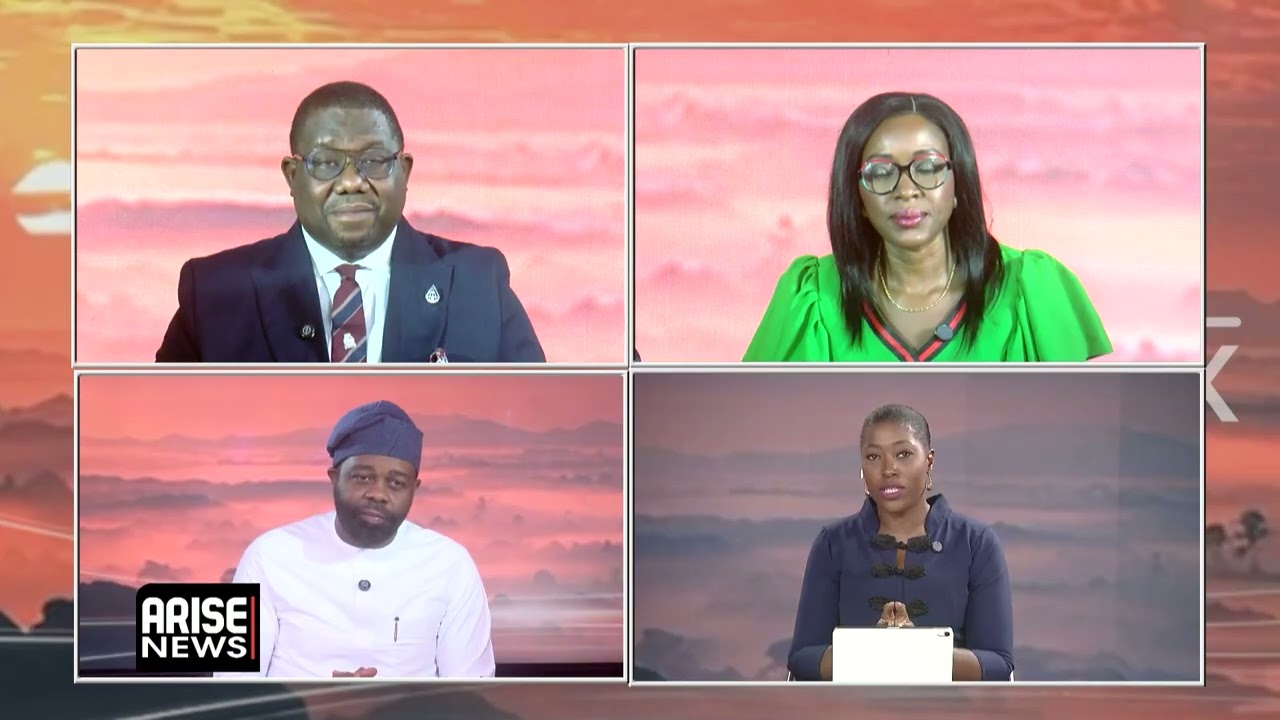
The Director-General of the National Health Insurance Authority, Dr. Kelechi Ohiri, says the agency is making health insurance enrollment easier for Nigerians, while also noting that with easier enrollnebt method, there is an increase in subscription to health insurance in the country.
Dr. Ohiri said this in an interview while discussing with ARISE NEWS on Tuesday.
“So, we’re making it more accessible to people to enroll in health insurance, and that’s partly why we have had an increase in demand and in subscription to health insurance.
“However, awareness is increasing, and that’s why when this administration came into office in 2023, there were about 16 million Nigerians enrolled in any form of insurance. Within the past two years, we’ve added an additional 5 million Nigerians, so the number right now is about 21.4 million Nigerians who have health insurance. So, progress is being made in that regard”, he noted.
The Director-general also said that Nigeria’s health insurance system started slowly, but new laws, enforcement, awareness campaigns, and government support are helping increase enrollment.
“Indeed, you’re right about the National Health Insurance Scheme; it was put in place in about 2006, and since then we’ve sort of stagnated over time. There are many reasons for this. When it started, it first started as a scheme that was targeted at just public sector workers and the organized private sector, and it was voluntary. And so, it being voluntary meant that people didn’t have to buy into it. This changed in 2022 with the NHIA Act that for the first time made health insurance mandatory. Now, of course, by making it mandatory, it means that every Nigerian resident has to have health insurance.
“The first is the enforcement of the mandate, and we have been fortunate that in September last year, following Mr. President’s direction, a service-wide circular had been issued to all MDAs not just to comply, but also to help in the enforcement of this, because it requires a whole-of-government approach.
The second thing is the level of awareness. Part of it is about information; part of it is also cultural”, he explained.
Dr. Ohiri further said that funding for poor and vulnerable Nigerians comes through the Basic Healthcare Provision Fund, which receives one percent of the country’s consolidated revenue.
“Well, first of all, the funding that goes to the poor is through the Basic Healthcare Provision Fund. That means 1% of consolidated revenue is targeted at the poor. About 50% of that goes through the health insurance window and about 45% of that goes through the National Primary Healthcare Development Agency. When we talk about financing healthcare, there is financing the supply and the production of healthcare, which the government—through the transformation of the primary healthcare centers—has tried to bring healthcare closer to the population, the poor and the vulnerable. And then through the NHIA, we work with the state health insurance schemes to enroll people. That funding came through last year, it came the year before, and it’s been consistent”, he explained.
Speaking on budget performance, Dr. Ohiri said funds are fully disbursed with oversight, noting that state schemes enroll verified Nigerians into health insurance.
“So, budget performance has been good. Almost all the funds that have come through for all the quarters last year and this year, we have disbursed—yes, close to 100%. And every quarter, there’s a ministerial oversight committee that meets, and this is public; it’s not something that is esoteric. There’s a committee that comes in—development partners and civil society are present—the approvals are given, the money is disbursed
“And the folks that are enrolled are people that can be identified—they all have NIN numbers because that was made a requirement under this administration—and they actually select primary healthcare centers. So we work in tandem”, he said.
On whether the 2024 budget release was low, Dr. Ohiri said that while the total annual allocation shows 15%, all quarterly funds were fully released and disbursed to cover beneficiaries.
“Yes, I mean I think my comment is factual. So every quarter in 2024, and every quarter in 2025, we had a full releases of funding and we disbursed those funding to get people covered. And I think that’s what obtained in 2024 and 2025”, he shared.
On donor funding, Dr. Ohiri explained that while donor funding supports healthcare, the government sets policy, coordinates with states, and ensures all partners align with its strategy.
“I think it’s important to understand that under this administration, first of all, there is a Nigerian Health Sector Renewal Investment Initiative. In terms of policy direction, the government sets policies and development partners align with the government’s policy, and that’s the principle of the sector-wide approach.
“So we have one strategy, we have clearer governance, and in fact, when you expand the conversation of governance, it’s not just with donors, it’s also the compact between the federal government and the state governments so that we’re all rowing in the same direction. And the Nigerian healthcare investment initiative is one where every development partner in Nigeria has aligned with where government is leading.
“Development assistance is welcome, but as we all know, things are changing in the landscape with the US government making decisions around USAID and their development assistance. And what Nigeria is saying is, well, whereas we are extremely grateful for the support over the years, ultimately it’s our responsibility to provide healthcare for citizens of Nigeria, and that’s why we’ve taken the bull by the horns to align this strategy”, he said.
When asked how Nigeria will sustain healthcare funding amid limited budgets and reduced donor support, Dr. Ohiri said it requires efficiency, streamlined programs, strong governance, fiscal reforms, and expanded health insurance to pool resources and reduce out-of-pocket costs.
“So, when we think about sustainability, there are three things we need to look at. There’s the financial sustainability, which means that, one, can we do more with the little we have? I mean, a lot has been written about the efficiency of a lot of the development funding.
“So the first thing is to create those efficiencies by using national systems to actually provide some of those services. The second thing is to localize those services in Nigeria so that you’re using Nigerians and basically you’re getting a bigger bang for the buck that you’re spending. This is not to say that we do not need to increase healthcare budget, but it means that we have to think strategically. Another thing is that the way we design programs have to change. we need to reduce parallel systems where government is doing something, some other donor comes in and does another thing, and we have duplication and waste.
“But lastly, since I’m the DG of NHIA, I’ll also mention here that health insurance remains a critical way to reduce out-of-pocket expenditure and for sustainability. And this is because it works in the principle of all of us coming together, pooling resources and pooling risk. That those who are paying and not using subsidize those who are not. So it makes it more affordable. So all these strategies have to come to play for us to actually move forward in creating a sustainable health system that is ours and that can meet the needs of people”, he explained.
Dr. Ohiri also mentioned that NHIA is working with the private sector and fintechs to make premium payments more flexible, helping especially those in the informal sector to afford insurance.
“Well, first, I think we need to be more nuanced when we make, you know, sweeping statements. It is true that, as I mentioned earlier on, that when the NHIS was set up, primarily it was set up for the organized private sector and for civil servants, and that has changed in 2022. We also have a change in the health insurance landscape. NHIA is not the only insurer. We have private health insurance agencies that are supposed to assist with ensuring that the poor and vulnerable are covered. We have several private health insurance agencies or HMOs, and they cater to different aspects of our population.”
He added that health insurance has been made mandatory for Nigerians across the country.
“Now, health insurance has been made mandatory because it’s important from an insurance perspective for that mandate to happen so that you actually have a risk pool that works for everybody. It is still much cheaper for you to be insured than to wait to pay out of pocket for healthcare. And that’s been our message consistently. Even for the informal sector, when somebody is sick, it’s not at 2:00 AM in the middle of the night that you want to go to—that you should start looking for money. If you have health insurance coverage, it means you can show up and you will get care because you’re covered, and what ails you is within the benefit package. And this is something that NHIA has been driving”, he stressed.
Responding to a question about premiums and coverage, Dr. Ohiri said that NHIA and state scheme premiums range from N15,000 to N37,000, depending on the plan, noting that these premium plans are annualised.
“Premiums vary, right? There are premiums for 24,000 Naira; In the NHIA schemes, there are premiums for 37,000, and for the state, there are premiums for 15,000. And what they cover varies. They cover all basic primary care; they also cover referral care: surgeries, treatment of medical conditions, and chronic conditions as well. There’s a whole list of what is in the benefit package that is covered. All the premiums mentioned are annualized premiums”, he concluded.
Favour Odima
Follow us on:


