


The national publicity secretary and spokesperson for the All Progressives Congress, (APC), Felix Morka, has described lobbying for political appointments as a common practice in democracies, but condemned the monetisation of such appointments, saying paying money to influence or secure government positions is wrong.
He said this in reaction to comments by Alwan Hassan, a spokesperson for the APC Presidential Campaign Council, who alleged that some ministers paid billions of naira to secure their appointments and subsequently sought to recoup the money after assuming office.
Speaking on Arise News on Wednesday, Morka said Hassan’s comments were ambiguous and that, following a conversation with him, he understood the remarks to have referred to historical practices rather than the current administration.
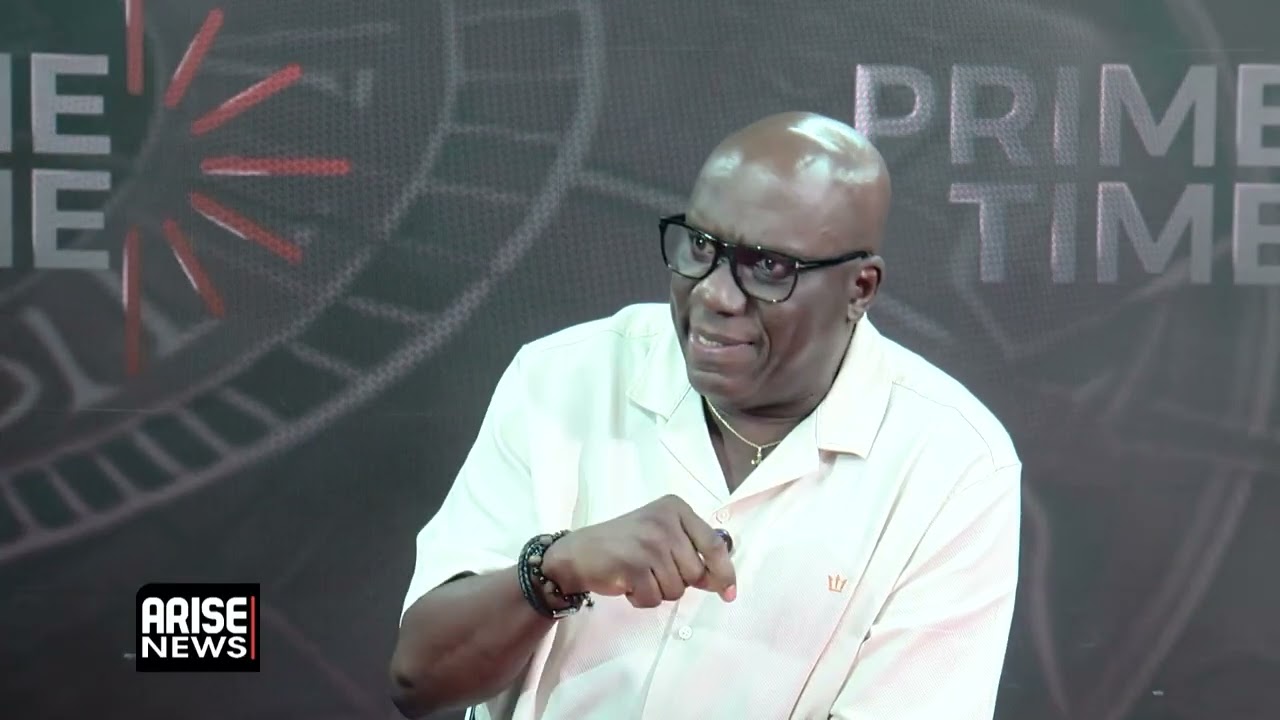
“Since that interview, I have had a moment to speak with Awan to also just, out of curiosity, understand what he was thinking when he made those comments. He explained that what he was referring to was not really about this administration, but he was speaking in a historical context. When he came back and said this thing predated the APC, that suggested to me that his frame of thought was really located not in the present, but really in the past.
“However, what he said left a lot of ambiguity, which some have suggested that he was speaking about appointments.
“In all democracies, lobbying for appointments is not something unusual. In the United States, there are firms that contract to lobby for individuals to get appointments to office. Those are usual things that happen in the background prior to appointments. But I think the concern here is when lobbying becomes monetized, where people pay money to authorities or to individuals to influence, to procure appointments. That I think is what is odious, what is really wrong.”
Categorically denying the allegations, the national publicity secretary of the APC, Morka, insisted that no ministers paid billions of naira to secure appointments under President Bola Tinubu’s administration, adding that ministers were appointed based on competence.
“I can tell you without equivocation that there’s no such thing. It didn’t happen. Our ministers were selected on the basis of the competence.”
Disclosing that Mallam Hassan had clarified his remarks during a private conversation, Morka said the APC campaign spokesperson insisted he was referring to historical practices rather than the current administration.
“What I’m saying is that the individual who made these comments, as I told you, I’ve had conversations with him, he’s clarified for me to my satisfaction that he was mud-slung in a moment of—he didn’t frame all of that. It sounded unequivocally clear.
“I had a discussion with him because I was curious to know, ‘did you really mean to say this?’ He said, ‘No, no. That’s not what I meant to say. I may have come up wrong. But actually, what I meant to say was to situate this problem, this thematic, in historical context.’ He said that to me.”
Turning to President Tinubu’s remarks blaming previous administrations for Nigeria’s poverty and hardship, Morka argued that the country’s economic challenges had deep historical roots, insisting that past leaders must also be held accountable for their failure to eradicate poverty.
“At no point from the past to the present should anyone discount historical antecedents, causal or causative factors in the making of a present reality. This president is not a president that dropped from, you know, outer space. He is a successor in office to presidents who came before him.
“He’s speaking in the context of a phenomenon like poverty that has been endemic in our country. Governor Obaseki had the opportunity as governor to eradicate poverty, he didn’t eradicate poverty. Atiku Abubakar, in association with his president, President Obasanjo, had eight years as vice president to eradicate poverty, they didn’t eradicate poverty.”
Morka argued that although poverty has worsened, its causes predate the Tinubu administration, blaming structural economic flaws, including fuel subsidies and the foreign exchange system. He defended the government’s economic reforms, describing them as difficult but necessary measures to lay the foundation for future prosperity.
“What the president said was true and was an uncontroverted fact, that poverty has been worse there before he came. But and he’s saying that he is doing more than Atiku ever did to fix poverty.
“Historically, like the contradictory sort of the distortions, for instance, the petroleum subsidy, the whole foreign exchange system, they were not addressed over time generationally.
“You can’t do that romantically. You can’t do that in a way that is sexy. You can’t. It’s impossible. You must do that with election. As I just spoke a few minutes ago, ‘Look, you know what, back in the country, this government’s policies, hard as they may be, were necessary, and I’m beginning to dare the kind of fruits we desire to reset the foundations of our country, for prosperity,'”
Favour Odima
Follow us on:


