


Former Lagos State Governor Babatunde Fashola has cautioned against placing responsibility for Nigeria’s electoral problems solely on the Independent National Electoral Commission, arguing that politicians, electoral officials and citizens must also take responsibility for the integrity of elections.
Speaking in an exclusive interview with ARISE News Anchor Ojy Okpe, Fashola said Nigerians needed to “look in the mirror” when assessing the credibility of the electoral process.
“What kind of democracy do they want?” he asked.
“The outcome is as good as participants want to make it.”
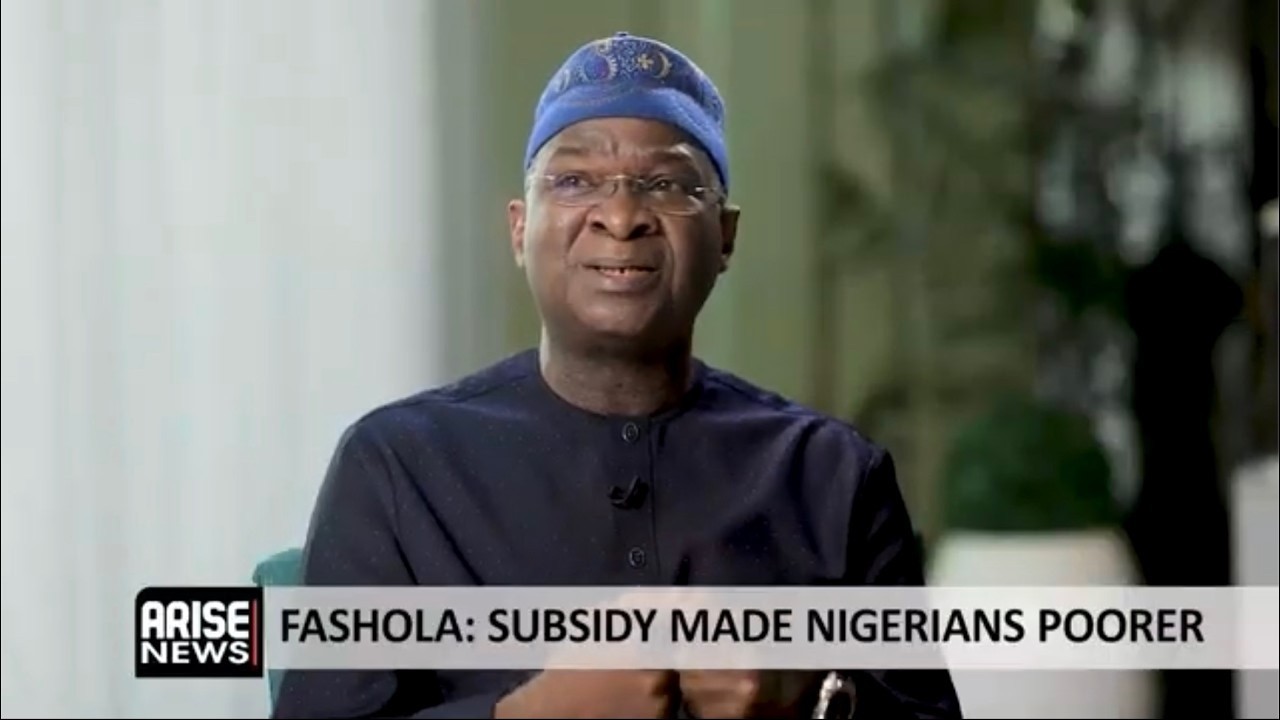
Fashola said citizens should follow electoral rules, avoid attempts to manipulate registration and voting processes, monitor voting and counting at polling units and retain records of results announced at their polling stations.
He was also challenged over whether an INEC chairman appointed by an incumbent president seeking election could be genuinely independent.
Fashola responded by questioning whether the method of appointment itself demonstrated that the chairman could manipulate an election.
“Which INEC chairman has not been appointed by the president?” he asked.
He argued that during a presidential election, the INEC chairman principally serves as returning officer, receiving results that have travelled through the electoral system from polling units through other levels of collation.
“In the presidential election, he’s the returning officer,” Fashola said.
“He sits in that conference hall, or wherever he designates, and waits for the results to come from the states.”
Fashola said Nigerians should therefore pay greater attention to what happens at the country’s polling units and throughout the collation process rather than assuming that the national chairman alone determines the outcome.
“If there has been any failure of the process, it has taken place in the remote 176,840 polling units where you and I have operated,” he said.
He said the sheer scale of conducting elections simultaneously across Nigeria made perfection difficult, noting that thousands of electoral personnel were required to perform similar tasks across vastly different locations and terrain.
“It’s never a perfect undertaking,” Fashola said.
“176,000 people can’t behave the same way in 176,000 different locations.”
He also pointed to the role of other officials in the electoral chain, including returning officers and academics appointed to supervise aspects of collation, saying some had performed their responsibilities properly while others had “dropped the ball.”
Fashola maintained that improving elections required responsibility at every level rather than concentrating all scrutiny on the person occupying the office of INEC chairman.
He urged voters to participate actively in protecting their votes by remaining engaged through the counting process.
“Stay and watch where ballot votes are counted,” he said.
For Fashola, the credibility of an election ultimately depends not only on the electoral commission but on the collective conduct of everyone participating in the process.
Demola Ojo
Follow us on:


