


The Executive Director of the Centre for Transparency and Advocacy, Faith Nwadishi, has blamed Nigeria’s political class and weak civic education systems for persistent voter apathy, warning that failure to address the problem could undermine participation ahead of the 2027 elections.
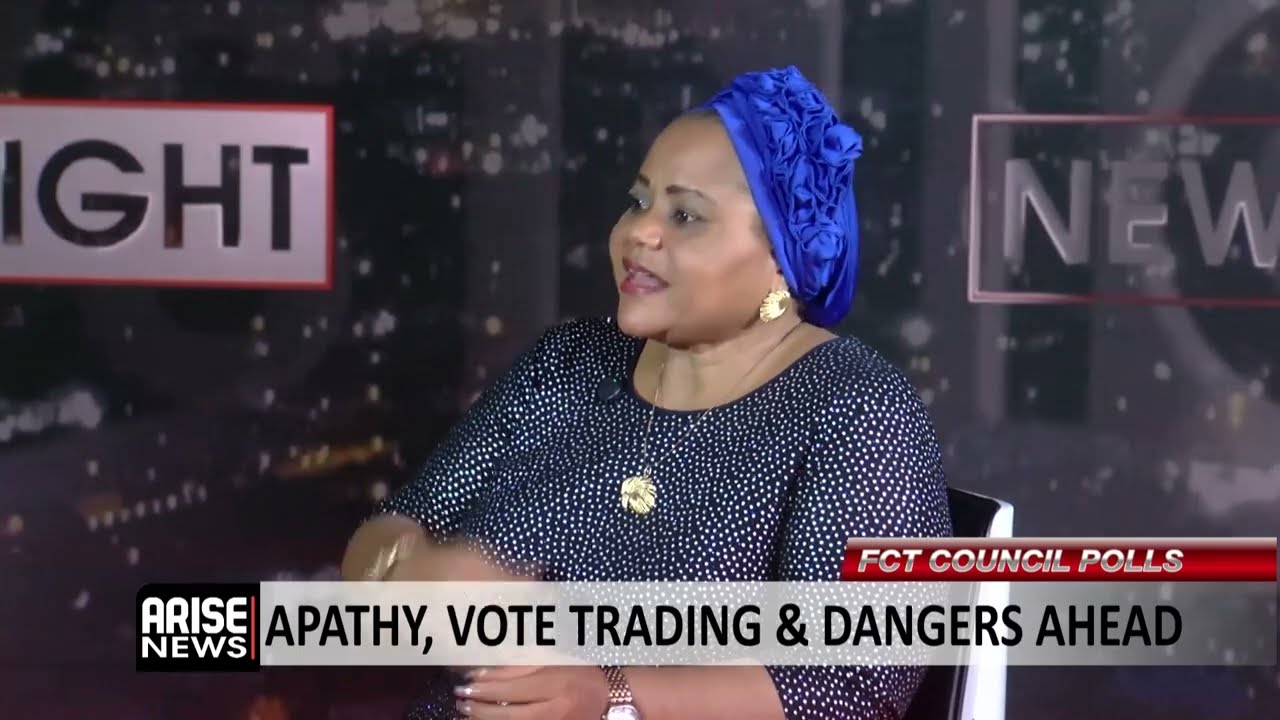
Speaking during an interview on ARISE News on Sunday, Nwadishi said political parties and government institutions have not done enough to educate citizens about their voting rights and responsibilities.
“Voter apathy has really been a recurring problem within our electoral processes. If you ask me where I lay the blame, I have two stakeholders I want to squarely hold responsible. The first is the political class. They do not do enough voter education,” she said.
According to Nwadishi, political parties once actively educated voters during grassroots campaigns but have since abandoned that responsibility.
“Growing up as a young girl, I used to hear politicians say they were going out for mosquito campaigns, and when they did those mosquito campaigns they carried out voter education alongside it,” she said.
“At that time you would see them going with sample ballot papers, showing people how to thumbprint and where to thumbprint while making promises to the people. But what you see these days is that politicians prefer to go on social media to do voter education. Elections are not held on social media.”
She said her organisation’s fieldwork ahead of the recent council elections in the Federal Capital Territory showed that many communities lacked direct voter education engagement.
“I was in communities before this election educating people in the markets, and people were asking us for money before they could even sit down to listen. Politicians were not there doing that voter education.”
Nwadishi also criticised the National Orientation Agency, saying it had not fully carried out its civic education mandate across the country.
“The second stakeholder I want to hold responsible for voter apathy is the National Orientation Agency. One of the mandates of the agency is to carry out civic education to prepare citizens for participation in governance,” she said.
“They say they have officers across the 774 local government areas, but when you go around the country before elections you do not see them on the field.”
She said that although the Independent National Electoral Commission had recently partnered with civil society organisations to conduct voter education, such efforts often start too close to election periods.
“Let me shock you a little. In the last election I saw INEC collaborating with civil society organisations to conduct civic and voter education close to the election, but we did not see the National Orientation Agency,” she said.
“When you ask, they say they are underfunded. But if we had a robust civic education system, you would not wait one or two weeks before elections to begin voter education.”
Beyond poor civic education, Nwadishi said citizens’ distrust of political leaders also discourages voter turnout.
“Sometimes politicians make promises they never keep. They come to communities, make promises, people line up to vote, and four or five years later they do not see any results,” she said.
She recalled the optimism among voters during Nigeria’s political transition in 2015.
“In 2015 people were so excited and expected change. There were lists of a hundred things government would deliver in the first hundred days. But after thirty days not one of those promises had been fulfilled.”
According to her, such disappointments over time have weakened public trust in electoral participation.
Despite criticising institutions and politicians, Nwadishi stressed that citizens must also recognise their responsibility to participate in elections.
“Where you have a right, you also have a responsibility. Most times the onus is on citizens to discharge that responsibility,” she said.
“It is the responsibility of voters to get registered and come out to vote. The power to vote is the power you activate to hire and fire leaders.”
She noted that many Nigerians fail to register or obtain voter cards even when eligible.
“There are people who are 56 years old and proudly say they have never registered. That is reneging on your responsibility as a citizen,” she said.
Nwadishi added that civic awareness should start at the family level, encouraging young Nigerians to register as soon as they reach voting age.
“When a child turns 18, it becomes their responsibility to be counted among those who decide who governs. The first step is to get registered,” she said.
“Even parents should make it part of their responsibility to ensure their children understand this civic duty.”
She also suggested integrating civic participation into educational institutions to encourage early democratic engagement.
“Perhaps we should go back to schools. If someone is 18 and going to university but has never registered to vote, that should be something we encourage them to correct,” she said.
Nwadishi concluded that addressing voter apathy would require coordinated action by political parties, government agencies, civil society organisations and citizens themselves.
Boluwatife Enome
Follow us on:


