


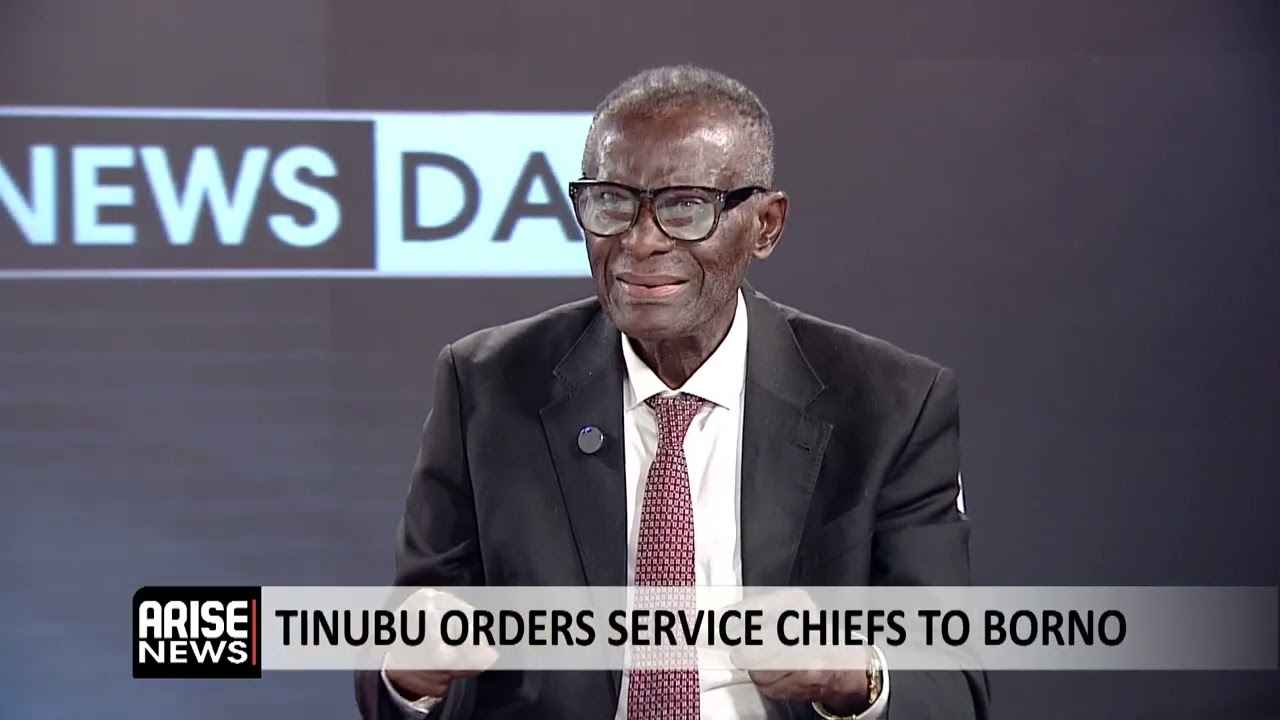
Arise news analyst, Dayo Sobowale, has cautioned that relocating Nigeria’s service chiefs to Maiduguri will not end terrorism, warning that the move could expose military leadership and potentially worsen the country’s security challenges.
Speaking during an interview with ARISE News on Wednesday, Sobowale questioned the effectiveness of the relocation strategy, arguing that similar measures in the past have failed to significantly reduce terrorist activities across the country.
“I’m in view of the fact that previous relocations have done pretty little to abate terrorism,” he said, stressing that the approach does not address the root causes of insecurity.
He warned that concentrating top military leadership in a single location could create vulnerabilities, making them easier targets for insurgent groups with access to modern surveillance technologies.
“Asking our service chiefs to move to Maiduguri means the enemy knows that they are all there,” he said. “If you have geolocation technologies, you should know where they are.”
Sobowale added that such a strategy could ultimately be counterproductive, especially in the context of modern asymmetric warfare where flexibility and intelligence are critical.
“That is not the solution, even though the President meant well. In fact, it can be counterproductive,” he said.
Drawing comparisons with global conflicts, he cited situations in the Middle East, particularly tensions involving Iran and Israel, where leadership concentration has led to targeted attacks.
“They have decapitated leadership on two or three occasions because they were gathered in one location,” he said, suggesting Nigeria should learn from such developments.
He also referenced ongoing conflicts such as the war between Russia and Ukraine, noting that modern warfare increasingly relies on technology, intelligence, and decentralized command structures.
“In modern warfare… you must learn from these conflict situations,” he said, urging Nigeria to adopt more advanced strategies including drone technology and improved intelligence systems.
Sobowale further criticized what he described as a lack of strategic coordination, pointing out that key security officials were not always present in the country during critical periods.
“It is not a good spectacle, and it does not seem wise in terms of strategy,” he said.
He stressed the need for Nigeria to modernize its intelligence architecture, improve surveillance capabilities, and adopt a more coordinated approach to tackling insecurity.
“We have to modernise our intelligence… look at our geolocation, teamwork, terrain and all that,” he said.
On the nature of insecurity in Nigeria, Sobowale noted that different forms of violence are spread across regions, from insurgency in the North-East to kidnappings and banditry in other parts of the country.
“They are almost geographically distributed,” he said, highlighting the complexity of the security crisis.
He called for the establishment of a centralized command system that would provide real-time information and improve decision-making.
“What is important for us is to have a command post… something like a dashboard for us to know what is going on,” he said.
Sobowale concluded that Nigeria must shift from reactive measures to proactive, intelligence-driven strategies if it hopes to effectively combat terrorism and restore security across the country.
Triumph Ojo
Follow us on:


