


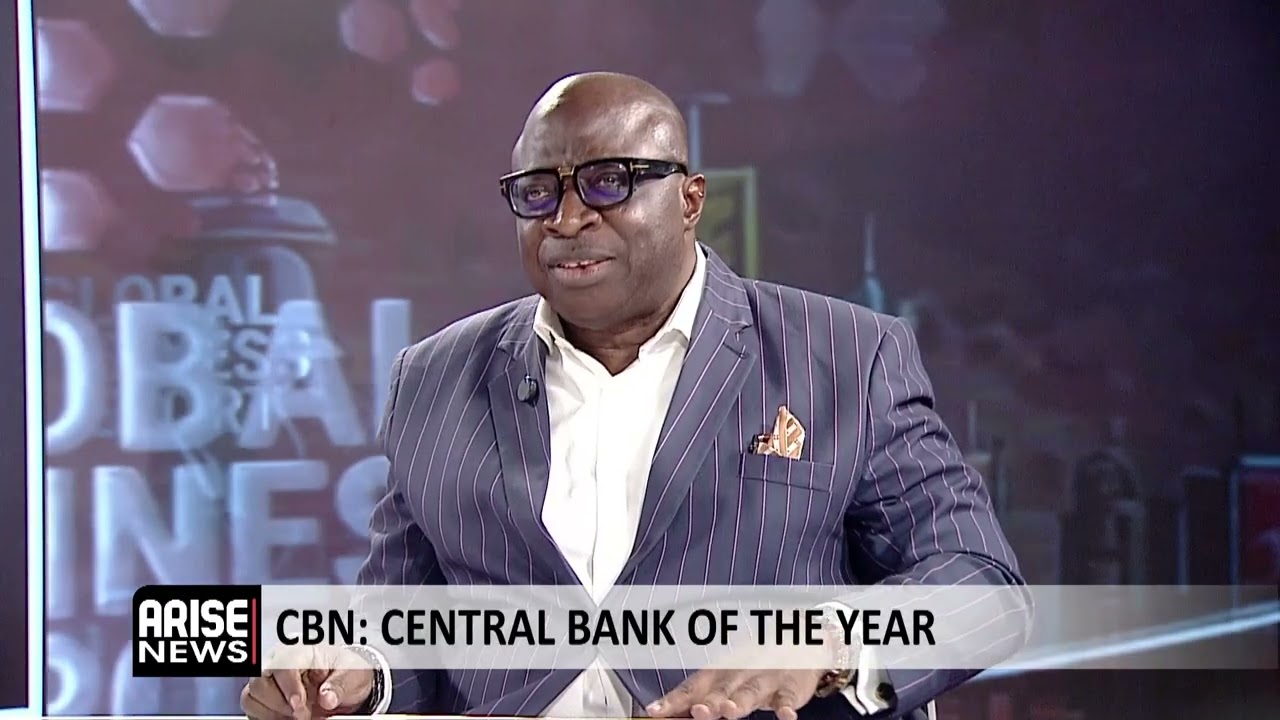
An ARISE Business analyst, Chika Mbonu, has commended the Central Bank of Nigeria’s reforms for restoring economic stability, while warning that the policies have worsened the cost-of-living crisis for ordinary Nigerians.
Speaking during an interview on ARISE News on Monday, Mbonu said the Central Bank of Nigeria inherited an economy that was deeply unstable, describing it as “a patient… very, very sick,” with rising inflation, a collapsing naira, and a dysfunctional foreign exchange system.
He noted that key reforms introduced by the apex bank, including exchange rate unification and tighter monetary controls, have helped restore order to the market. “They unified the exchange rate… and the FX system started to become a real FX market, which is how it should be,” he said.
Mbonu also praised efforts to curb excessive money supply, stating that “they stopped the reckless printing of money,” which had previously worsened inflationary pressures across the economy.
According to him, these interventions have improved investor confidence, particularly by addressing foreign exchange backlogs that discouraged foreign participation. “Foreign portfolio investors were not coming… because they could not repatriate their funds,” he explained.
He added that the naira has shown signs of stability compared to earlier projections of severe depreciation. “People were saying the exchange rate was going to go to 2,000 or 3,000… but that sense of fear is reducing,” he said.
However, Mbonu stressed that the gains at the macroeconomic level have come with severe consequences for ordinary Nigerians. “Their income is being wiped away. Their purchasing power is being wiped away,” he said, describing the current reality faced by many households.
He pointed to sharp increases in the prices of essential goods and services, noting that “the price of things has doubled or tripled in most cases,” including food, transportation, and electricity.
The analyst also highlighted the impact on healthcare, revealing that “a drug you used to buy for 5,000 before became 50,000 naira,” underscoring the burden of inflation on vulnerable citizens.
While acknowledging that economic reforms are necessary, Mbonu likened the process to surgery, stating that “like every surgery, the patient will feel pain before recovery.”
He, however, criticised the lack of adequate social support to cushion the effects of these reforms, arguing that government intervention has been insufficient. “Policy must meet empathy,” he said, stressing the need for stronger palliative measures and better communication.
According to him, citizens need to understand the purpose of the hardship. “If you’re suffering now, what am I going to gain after this surgery?” he asked.
Mbonu concluded that while the Central Bank deserves commendation for stabilising key economic indicators, the real measure of success lies in the lived experiences of Nigerians. “The true measure of reform is not just stability… it’s how Nigerians feel and breathe again. And Nigerians are struggling to breathe,” he said.
Triumph Ojo
Follow us on:


