


Former Secretary to the Government of the Federation, Babachir Lawal, has disclosed how he persuaded Peter Obi and Rabiu Kwankwaso to join the African Democratic Congress (ADC), revealing that both politicians had reservations about former Vice President Atiku Abubakar’s presence in the coalition and preferred a consensus arrangement for choosing its presidential candidate.
Lawal, who is now a chieftain of the Nigeria Democratic Congress (NDC), said he played a central role in assembling the opposition coalition, including personally persuading Obi to commit to the ADC and using his longstanding relationship with Kwankwaso to convince him to join.
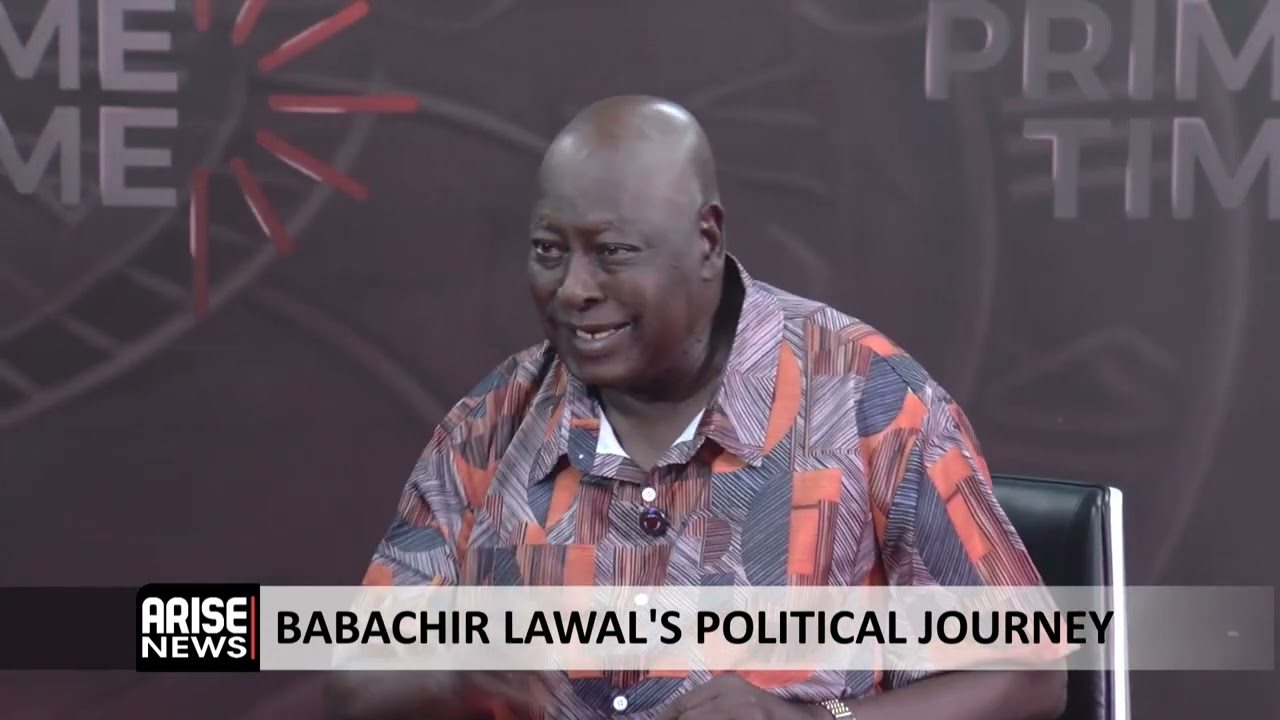
Speaking in an interview with Arise Television, Lawal said Obi had initially been moving in and out of discussions about the ADC before he intervened.
“At one time, Peter was playing in, out, in, out. I was the one that finally dragged Peter into the ADC. Committed him to join the ADC,” he said.
Lawal said he was also appointed to lead discussions with the New Nigeria Peoples Party (NNPP) when the party was considering joining the ADC coalition.
Although the formal discussions did not produce a merger at the committee level, he said his longstanding relationship with Kwankwaso eventually helped him convince the former Kano State governor to join the ADC.
Lawal said the major problem within the coalition later centred on Atiku’s presence and the question of who would emerge as its presidential candidate.
He claimed that Kwankwaso was apprehensive about Atiku’s involvement, while Obi was opposed to a primary that would pit him against the former vice president.
He said another aspirant, Mohammed Hayatu-Deen, also preferred a consensus arrangement, but that the various contenders ultimately wanted the consensus to produce them. “Eventually, the chairman could not work out the consensus. They all agreed that they wanted consensus, provided it is me,” Lawal said.
According to him, the inability to reach a consensus left the coalition facing a presidential primary, but concerns soon emerged over whether the party had the logistics and finances to conduct a credible exercise.
Lawal said Obi and Kwankwaso had already paired up by that stage, hoping to work together within the ADC, and eventually decided to leave the party. He said he remained with the ADC for some time, supporting the chairman and attempting to address problems arising from the congresses.
According to him, he took steps to ensure that people of integrity were appointed to positions in the congress committees in his zone, but alleged that those efforts were unsuccessful. “All of them succumbed. Everywhere it was like that,” he said.
Lawal said the experience eventually convinced him that he could no longer remain in the party.
Lawal said he had known Obi since the 2023 election and regarded him as someone who would approach the government differently. He also said his longstanding knowledge of Kwankwaso had influenced his decision to support the two politicians.
“First of all, Peter is there. I had known that he’s a man of integrity and who tried to do things differently, even from our relationship in 2023. I know Kwankwaso. I’ve known Kwankwaso for years,” he said.
He said he had followed Kwankwaso’s career as minister of defence, governor of Kano State and head of the Kano water agency, adding that he had also observed programmes involving the education of children from poor backgrounds.
Lawal also revisited his role in the emergence of President Bola Tinubu as the presidential candidate of the All Progressives Congress (APC) in 2022, claiming that he drove the campaign strategy that eventually delivered the party’s ticket to Tinubu.
He said Tinubu, whom he described as a longtime friend, approached him in 2022 to seek his support for his presidential ambition.
Lawal also provided fresh insight into his relationship with former President Muhammadu Buhari and the political calculations surrounding Tinubu’s emergence as the APC candidate.
He said he had known Buhari for most of his life and had worked with him through several unsuccessful presidential campaigns before the formation of the APC.
Even after Buhari removed him as SGF, Lawal said their relationship continued, with the former president still seeking his views on political matters.
According to Lawal, Buhari had reservations about Tinubu and had expressed those suspicions to him on more than one occasion, but explained that his argument was that Buhari had benefited from Tinubu’s support during his own presidential campaigns and therefore could not subsequently use the same political relationship against him.
He said Tinubu had played a significant role in helping Buhari’s political campaigns, including providing organisational support and helping to raise funds.
Lawal also rejected the suggestion that Buhari had actively sought to prevent Tinubu from succeeding him, saying the former president did not believe it was his responsibility to nominate a successor.
He said Buhari ultimately supported the electoral process and later acknowledged voting for Tinubu. Lawal said his own relationship with Tinubu eventually deteriorated over issues surrounding the choice of running mate and the director-general of the presidential campaign.
Lawal also rejected the suggestion that his movement across different political platforms represented political inconsistency, explaining that his return to active politics was driven by his belief that the Obi and Kwankwaso could work together and provide a government focused on practical development rather than simply gaining political power.
Emmanuel Addeh
Follow us on:


