


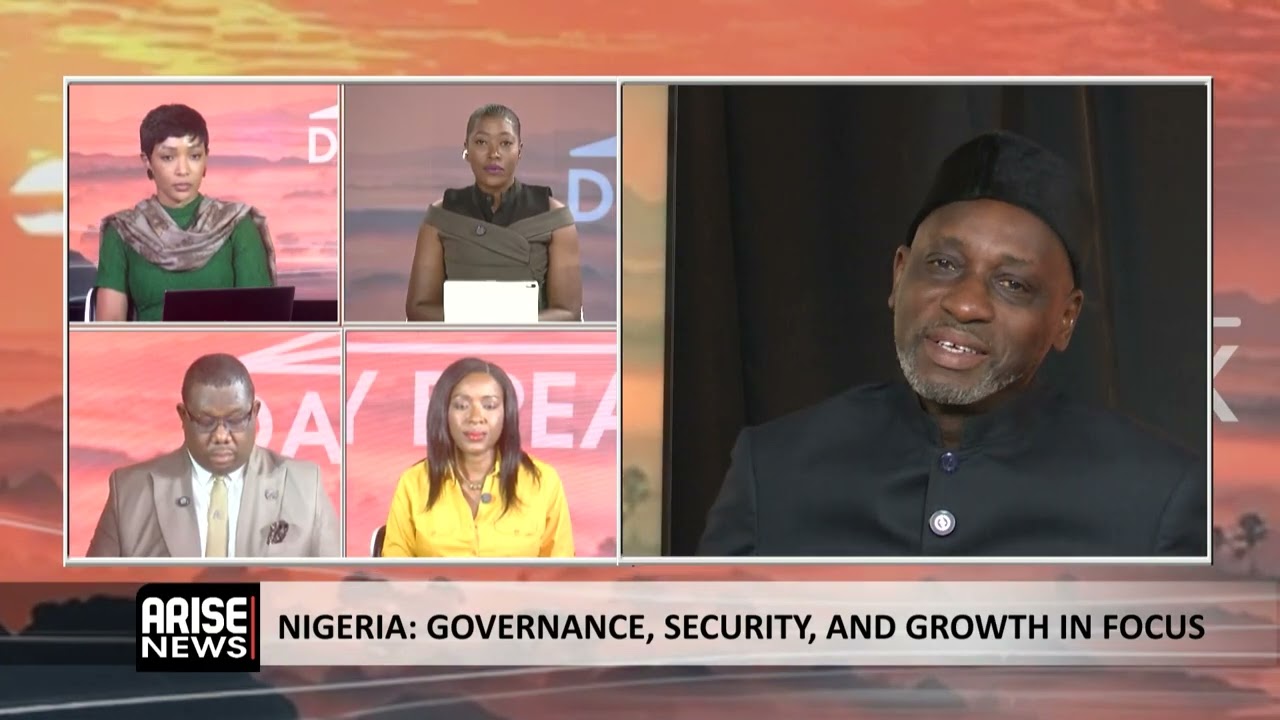
The Director General of the National Institute for Policy and Strategic Studies, Professor Ayo Omotayo has said that security agencies cannot protect Nigeria’s vast pipeline network alone, noting that third-party support strengthens surveillance, and should not be seen as a weakness.
He said this in an interview with ARISE NEWS on Wednesday where he discussed Nigeria’s governance and security.
“I don’t believe this reflects weaknesses in our security sector. Instead, it’s a pragmatic joint action for protecting the pipelines. With miles of pipelines across the country, it’s impossible for our security forces to cover every inch. The 4 billion is a small amount compared to what we’ve lost in the past. Bringing in a third party ensures comprehensive coverage and doesn’t signify weakness”, he stated.
On whether it is a pragmatic approach for the federation to negotiate with armed groups, the researcher said:
“Government’s primary purpose is to secure its people and assets. A responsible government will explore all means to ensure protection. Negotiating with Gumi or other forces doesn’t mean weakness, it’s a welcome step if it leads to securing the people”, he said.
He maintained that security had improved and that, with proper support, forces can handle the recent attacks.
“While there has been a recent upsurge, we previously had some semblance of peace. Anyone perceptive knows where this resurgence is coming from. Our security forces will be on top of it with the necessary support. Negotiating with those who kill our people is acceptable if it leads to safety.”
Speaking on India’s ambassador rules, Prof. Omotayo said that Nigeria-India relationship is strong, and that their policy must be respected.
“Regarding India, our relationship has always been respectful, with many Indian companies operating here. I wouldn’t advise the federal government to go against India’s laws and policies. If they don’t take ambassadors with less than two years left, that’s their law. It doesn’t mean the country has done anything wrong. We’ve had our own problems and are coming out of a recession. If India doesn’t want our ambassadors now, we have other staff who can manage affairs”, he noted.
Adding, he said: “I don’t believe it’s a foreign policy failure. We had issues and must live with the challenges. This is the time we can send ambassadors, and the President will do so. Not having ambassadors everywhere doesn’t necessarily matter; some countries combine ambassadors for multiple nations. However, for a country like India, it is important. I’m sure India might reconsider given our long-term relationship.”
Stressing the need for strategic communication to manage international perceptions, Prof. Omotayo said:
“Regarding international security perception, I believe we must manage it diplomatically. People often think our security problems are religious, but evidence-based research shows they are multidimensional, involving historical community issues and climate change. We need to manage this perception through strategic”, he advised.
On matters of insecurity, Prof. Omotayo said the DSS and local intelligence are working, but arrests require verified knowledge of perpetrators, noting that politics can complicate things.
“No, it’s not about them not working; it’s about having the knowledge of who these perpetrators of terrorism are. They cannot rely on hearsay. You have to be sure before you pick someone up. A whole lot of politics goes on there. So government has to be very careful. I believe our defense architecture is not where it should be, but in the circumstances that we are, they are doing their best to arrest perpetrators. I tell you, there could have been more damages done if these people are not working. Every day the enemies of the government are doing one thing or the other to ensure that they embarrass the government, and I’m sure our defense intelligence apparatus have been doing all to counter this.”
Prof. Omotayo further urged the public to report to appropriate authorities with information about sponsored terrorism, as this could help the fight against terrorism in the country.
“But I must say that if any individual knows who is a sponsor of terrorism, take the name to the DSS, they will check it out. If they find evidence to that effect, I’m sure they will do something about it. I’m certainly sure that they’re not afraid of arresting anybody who is sponsoring terrorism”, he urged.
He also said that the National Institute for Policy and Strategic Studies effectively trains political leaders and advises the government directly, noting the tangible impact of their work.
“We develop capacities; beyond developing capacities of our bureaucrats, military men, and the rest of them, we also at all times carry out researches in order to be able to advise government on the right path to take on matters. We do strategic foresight, and of course all of our research efforts are sent to the government.
“And I want to assure you that the National Institute is doing its best at all times. When we find the need to send advisories to government, we will do so and we have always done so. And of course, the effect of all of our hard work are out there”, he said.
Prof. Omotayo refuted claims that the government pays ransom to terrorists and kidnappers, emphasizing that efforts are aimed at rescuing victims of terrorism and kidnapping.
“Well, I do not believe that we have been paying ransom. The federal government has not said that they pay ransom. The important thing that we have heard is that these people have been rescued. Don’t forget that the perpetrators of all this evil also understand the power of propaganda, they want to put on narratives that are not true. There is no evidence that the Federal Government has been giving them money”, he stressed.
Reiterating that negotiation with bandits can save lives, he stated that it is better to get victims released and pursue the criminals later than to risk innocent lives.
“Simply, we can say, ‘Okay, we know who you are. On this occasion, release these children.’ I will not allow 150 children to die simply because I want to kill or take in a bandit. Of course, the bandit is still out there; we already know who they are. They can hide for a few more weeks or months, but the federal government will get to them.
“I personally believe that if I’m going to let a bandit live in order to save 150 Nigerian children, that is better for me than to let 150 children die and I also kill one bandit. And don’t forget that those children belong to some people. So if the federal government uses that to bargain, then it’s fine because we have our children back”, he explained.
Favour Odima
Follow us on:


