


The National Grand Patron of the Renewed Hope for Greater Nigeria, former Secretary to the Government of the Federation, and a former Senate President, Senator Anyim Pius Anyim, has expressed his belief that the presidency should move to the North after President Bola Tinubu’s second term, before returning to the South East after eight years.
Anyim said the arrangement would be consistent with the principle of rotational presidency, arguing that after the North’s turn, power should return to the East, which he said would require building alliances across the country.
“Certainly, the President has taken it from the Southwest and is entitled to a second term. After his second term, I believe in rotation, and it will go to the North. After the North, it will come down to the East after eight years. You need to support others so that they can support you.
“Political parties should be like a family with a common understanding and objective.”
On his relationship with Peter Obi, Anyim clarified that while he respects him as a friend and political figure, he did not endorse his 2023 presidential bid, stressing that they belonged to different political parties and camps.
“There was a publication where the Governor of Benue State then, Ortom, publicly endorsed Peter. There were media reports that Ortom, myself, and others endorsed Peter. I had to issue a statement to clarify. One, Peter is my friend and my brother, and I respect him. Two, I respected Peter for walking out within three days and making the impact he made.
“But I belong to a separate party from where he is, so I did not endorse him. Peter is my friend, but we are not in the same political family. We are in different political camps.”
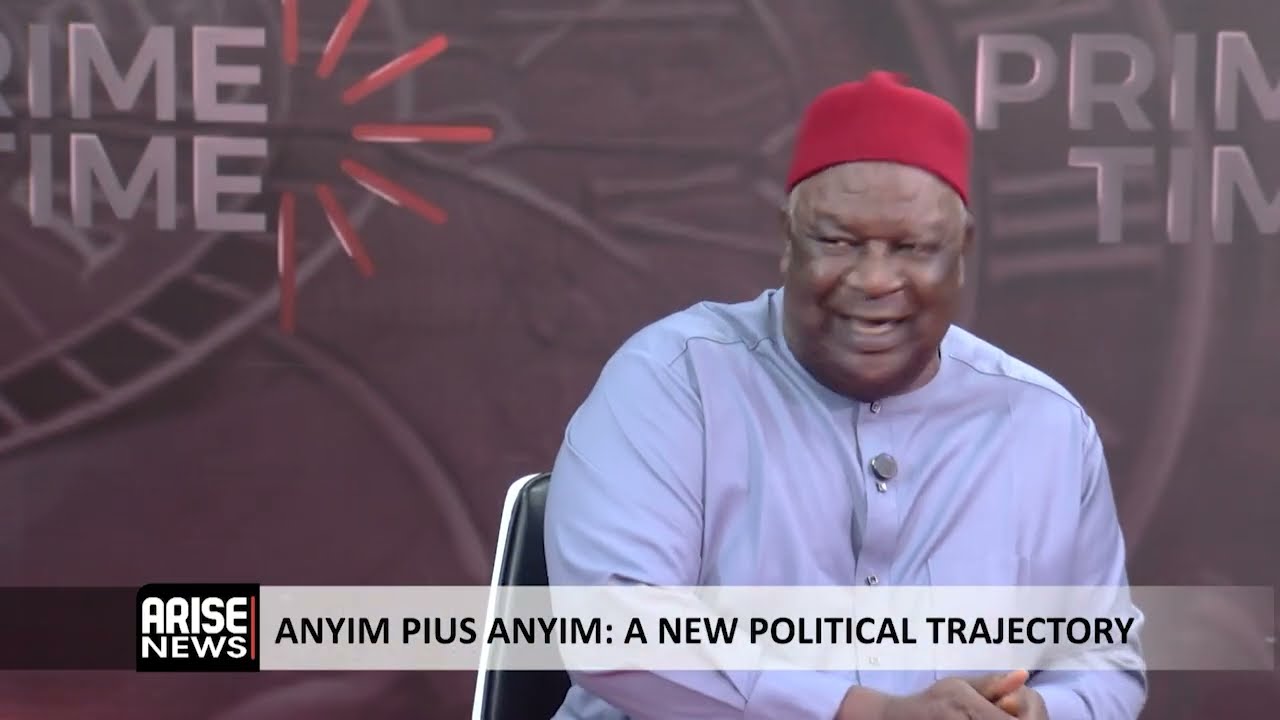
Expressing confidence that the All Progressives Congress (APC) would make a significant impact in the Southeast despite Peter Obi’s strong political influence in the region, Anyim said the party had every reason and ground to expand its presence there.
“As far as I’m concerned, APC as a party has every reason and ground to make its own impact in the Southeast, and I can assure you that APC will greatly impact the Southeast.”
Turning to the Southeast’s political future, Anyim said the region must look beyond immediate political gains and developmental projects, maintaining that its leaders should pursue long-term alliances capable of securing greater inclusion, opportunity and a stronger sense of belonging for future generations.
“I have given you one reason from the beginning: you need to align with another region in order to get your ultimate goal. This is political arithmetic, not about what he has done for that region or for Nigeria. You should expect that I am not going to argue that he built a road or provided bread. Those are bread-and-butter politics. It’s not the substance of democracy, nor is it the substance of a stable nation. They are indicators of an unstable nation where you have nepotism, corruption, and all those things.
“When you talk about democracy and nation-building, you should be talking about principles, institutions, fundamental objectives, liberty of the individual, rights of citizens, justice, inclusivity, and the rule of law.
“The leaders of the Southeast—I can name them for you—just name how many leaders in the Southeast are not in the APC. It’s not about what you see today; it’s about that long-term objective. We are all looking for it, not for personal gain. My concern is not what I become—God has been so kind—but in my lifetime, I should be able to be sure that one day my children, my children’s children, and the younger generation in the Southeast will have that sense of inclusion and belonging, knowing that opportunities will come when they can aspire.”
On Peter Obi’s 2027 prospects, Anyim said virtually all Southeast leaders support the APC and their followers would do the same.
“I am not INEC. But I am convinced, and very convinced, that virtually all the leaders in the Southeast support the APC, and their followers will support the APC.”
Speaking on President Tinubu’s leadership, Anyim said he admired him as an “iconic leader”, particularly for taking difficult decisions he believes are advancing Nigeria’s liberal economic objectives, including fuel subsidy removal.
“If you ask me about Tinubu’s leadership, I can tell you I greatly admire him, and I can describe him as an iconic leader.
“When you don’t have a stable nation, if you ask me, I would be looking for a leader who, no matter how unpopular it will be by the policies he implements, will want to stabilize the nation.
“For me, when people talk about fuel subsidy removal, I don’t look at it as the cost of fuel. I look at who has been able to take such a strike on our liberal economic objective. Tinubu came and struck it. It takes courage to take that decision, and it has driven our liberal market economy objectives, ” he said.
Favour Odima
Follow us on:


