


Political Economist, Adakole Ijogi has raised concerns over the ongoing fuel crisis in Nigeria, describing it as a situation that “greatly affects the Nigerian people.”
He stressed that a fuel price hedge should have been implemented to prevent prices from spiralling out of control.
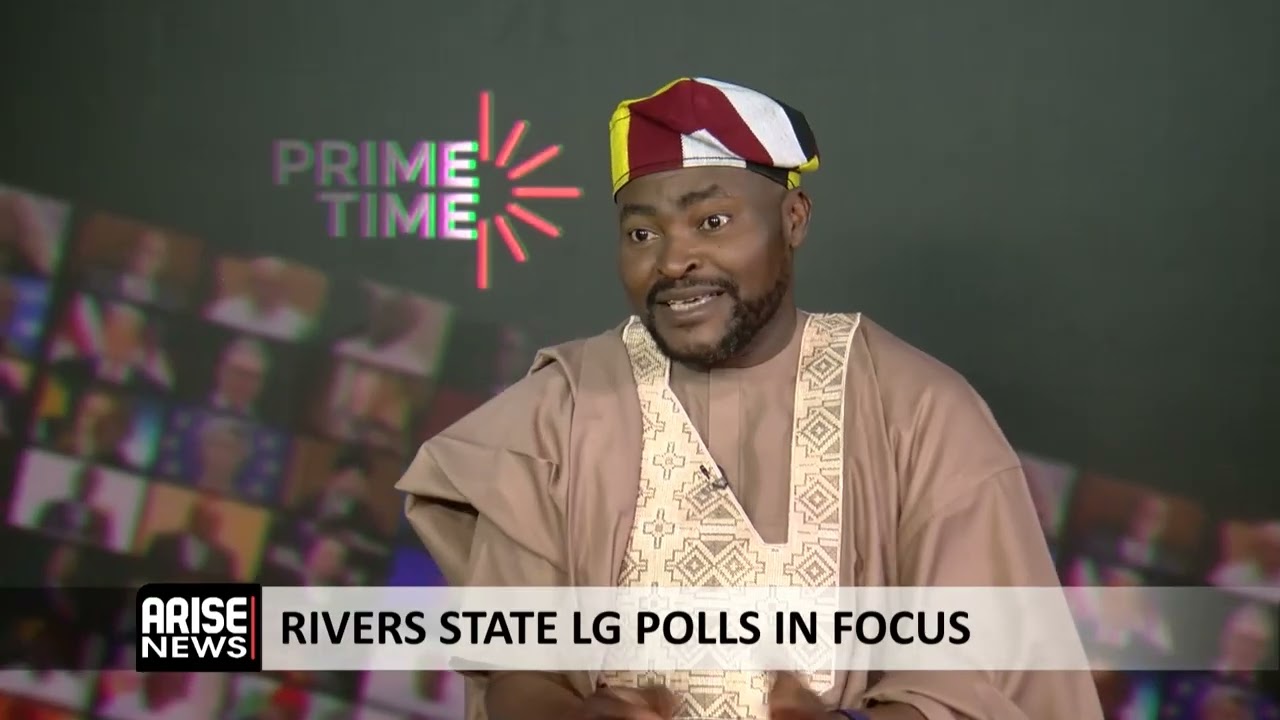
He said this in an interview with ARISE NEWS on Tuesday, where he discussed fuel prices and the impact on the Nigerian economy.
“Let me say that the disruptions that you have greatly affect the Nigerian people. Greatly, because fuel is the lifeline of the Nigerian economy. We are exposed to all the shocks that you have from the instability that you have in the oil sector. I was thinking that with this Middle East crisis, that there should have been a hedge. The government should have hedged some financing from our foreign reserve so as to peg the price of fuel not to go above N900,” he suggested.
Explaining further, Ijogi emphasised that while the suggested measure may resemble a subsidy, it is merely a temporary hedge aimed at preventing fuel prices from tripling.
“Well, it is subsidy, but it is just hedging just for this period of time so as not to triple the prices.”
Ijogi expressed frustration over Nigeria’s low crude production, noting that the country produces far less than its potential.
“For us to say that we’re not even producing up to 1,500 million barrels per day, it is embarrassing. I mean Saudi Arabia does 10 million. I mean it is embarrassing to say the least. I think that we need to take the process of governance seriously and take care of the Nigerian people,” he said.
The Political Economist argued that the current government is unlikely to meet labour’s demands, noting rising tariffs on electricity, phone, and fuel.
“Knowing this government, I don’t think that they will respond. Because if you check from inception, everything around the Nigerian has been increased. From your NEPA—what do you call it? Electricity tariffs. Even your phone tariffs have gone up. They’ve increased fuel. The problem essentially is on the supply side and not on the demand side. The problem is that we have the money, you’re receiving the money but your money is buying less,” he explained.
Speaking on the decline of Nigerians’ purchasing power, Ijogi described the situation as an “economic contradiction.”
“The purchasing power is very, very low. And like I usually say, this APC administration has created what I call an economic contradiction.
“Nigeria supposedly has the largest economy in Africa. Right now it has been reduced to less than 200 billion US dollars. It’s about 199 billion US dollars. Before then it was 540 billion US dollars. But as at the time they came in, we had the biggest economy in Africa yet the Nigerian Naira is not in the top 10 currencies in the world,” he lamented.
Adding, he said: “They should try as much as possible to get the Naira to start gaining grounds against the dollar. Because the Naira is so weakened.”
Ijogi acknowledged that while the naira has stabilised, there has been no real improvement in its value.
“It has stabled, but there’s no improvement. My plea is that they should be sensitive to the Nigerian people,” he urged.
Speaking on Aliko Dangote’s recent suggestion, Ijogi noted that remote work could serve as an effective coping mechanism.
“I think there’s a possibility because I mean with the way the world is going when you look at technology and access to data and spread of the internet, I don’t think that you need physical bodies to be in a place.
“I think it’s something that the government needs to consider more seriously for and the private sector too, for people to work 80% at home and 20% maybe in their offices until this is resolved. Because you can’t beat that physical contact thing of sharing ideas and we’re talking to each other, that is what I think that we’re going to miss. But moving forward, I think the government should seriously consider that.”
Favour Odima
Follow us on:


